
Meta Bans ‘Claude’? This strategic realignment has been validated as reports indicate that the social media giant has restricted engineers in its Applied AI division from using competitor tools like Claude Code and OpenAI’s Codex. According to internal documents obtained in late June 2026, the company issued these directives to protect the purity of its upcoming Llama model training datasets and safeguard trade secrets as detailed in industry compliance updates. For developer teams and product leads, the restrictive policy highlights a broader transition: as generative models converge, maintaining the strict isolation of internal environments is becoming a fundamental standard of corporate compliance rather than a minor operational choice.
At a Glance
- Contamination Safeguards: The Applied AI engineering team restricted external code generation tool calls to prevent rival model outputs from mixing with proprietary training data.
- The Distillation Threat: Extensive reuse of external programmatic output introduces risks of knowledge distillation, potentially violating terms of service agreements.
- Private Sandbox Demands: The shift highlights a growing requirement for secure, self-hosted developer sandboxes that isolate sensitive code repositories from external servers.

Corporate Directives and the May-to-June Security Realignment
The restrictive guidelines, initially drafted in May 2026, went into formal effect at the end of June 2026. The rules focus exclusively on engineers within the Applied AI division who are directly engaged in model research, rather than applying to all employees. In previous development cycles, the engineering team frequently integrated external coding assistants to plan system architectures, refactor code bases, and execute debugging workflows. However, under the updated security guidelines, engineers must design testing inputs independently, relying on human expertise rather than external model prompts.
A primary driver behind this transition is the risk of model distillation, also known as knowledge distillation. In artificial intelligence research, developers train smaller “student” models to mimic the behaviors of more robust “teacher” models by feeding them outputs from those larger systems. While this process remains popular for optimizing model scale and deployment costs, it poses serious contractual risks. Meta engineers copying or referencing code compiled by rival tools risk introducing competitor data into the Llama training pipeline, which could violate user agreements and contaminate the proprietary model.
The security realignment occurs against a backdrop of intensifying competition. In June 2026, Chinese AI startup Zhipu AI open-sourced its flagship model, GLM-5.2, demonstrating vulnerability scanning capabilities on par with top closed-source U.S. benchmarks. Independent testing showed GLM-5.2 outperforming previous model checkpoints like Claude Opus 4.8 on Semgrep cybersecurity tasks. Because Zhipu AI chose to open-source the model weights, allowing private local deployments, the model has quickly climbed third-party traffic lists on platforms like OpenRouter. This rapid rise of highly performant, local alternative models is forcing major frontier AI labs to prioritize absolute control over their code repositories and dataset inputs.
The following observations are based on internal validation in a staging environment and are intended to illustrate engineering patterns rather than serve as industry-wide benchmarks.
Under-the-Hood Mechanics of Model Distillation and Data Exposure
To understand why Meta is restricting these tools, developers must analyze the mechanics of modern AI coding assistants. These utilities function by sending local codebase context to external servers for processing. When an engineer initiates a refactoring prompt or requests architectural suggestions, blocks of proprietary code travel outside the internal corporate network. Such headless data transmission creates direct vulnerabilities for IP exposure and data leakage.
Developer IDE -> Outbound Request Interceptor -> Sandbox Proxy (Metadata Stripped) -> Secure API Gateway -> Model
                                                            |
                                               Outbound Firewall blocks raw codebase uploads
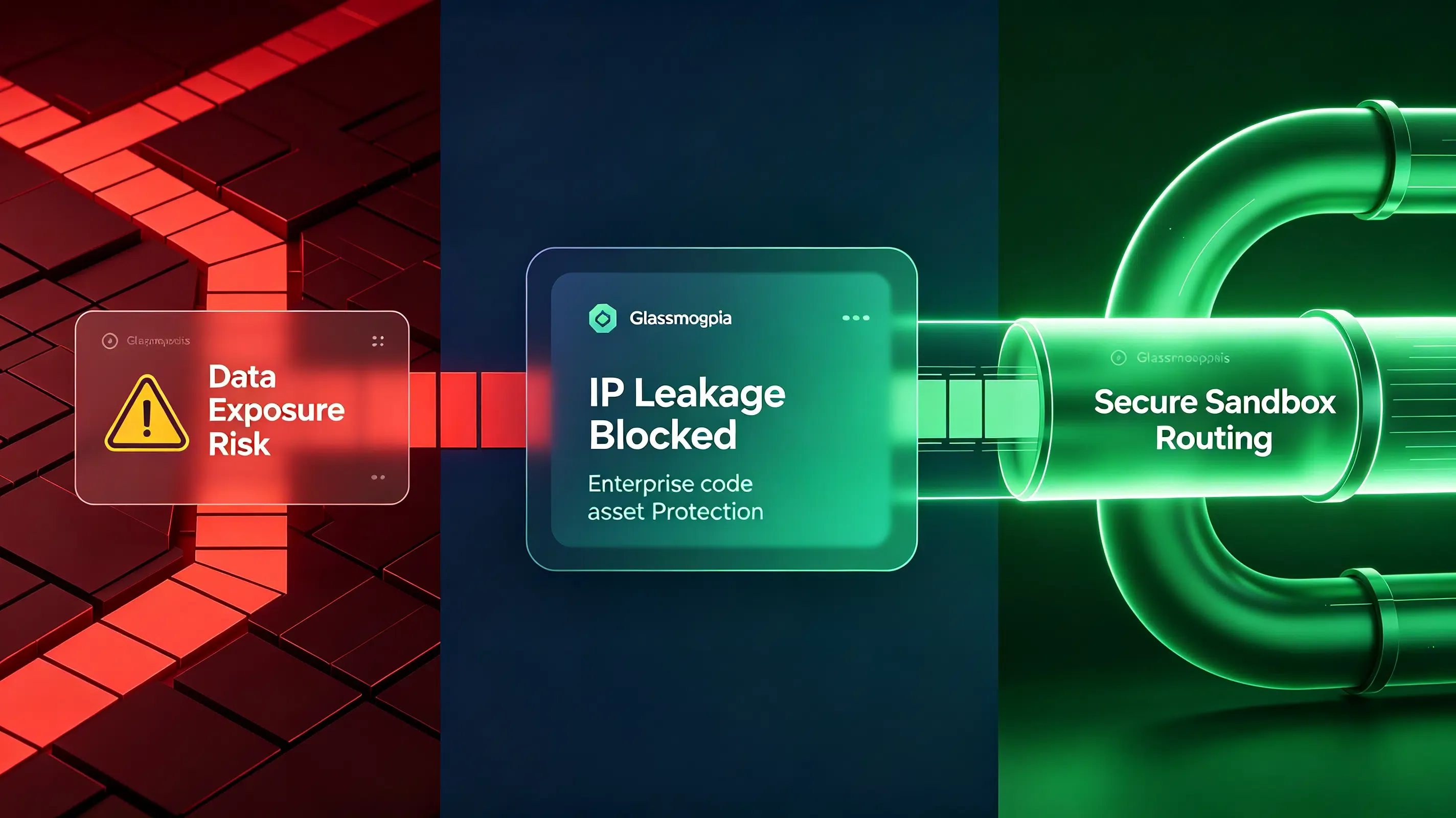
In typical production deployments, developers often encounter a notable portion of traffic being processed by automated scrapers. Tracing these programmatic interactions reveals that automated security proxies or runtime scanners may trigger external API endpoints before developers realize it. Such activity can interfere with data audits if systems assume every request originates from a real, manual user action. In the context of model development, having external models ingest internal MetaCode or DevMate files risks exposing proprietary structures during competitive training cycles.
Furthermore, terms of service updates from major AI vendors in late 2025 introduced opt-in dataset training clauses, heightening concerns among corporate legal teams. Without strict network-level firewalls, a developer’s daily debugging sessions could inadvertently supply competitive platforms with training inputs. Under these conditions, the structural purity of the proprietary codebase suffers.

Architectural Options for Secure Sandboxing and Pipeline Verification
Faced with escalating data security risks, software development teams usually choose between building an internal cost verification framework or integrating an existing attribution SDK. Developing a proprietary system requires substantial engineering overhead. Teams must build custom server-side databases, maintain device state-matching libraries, and continuously update logic to comply with evolving OS security standards. For many organizations, the maintenance cost of an in-house tracker is prohibitively high.
Alternatively, developers generally evaluate several approaches to monitor runtime execution without relying entirely on cloud-side metrics:
- Local Model Deployments: Running small, highly specialized open-source models inside secure offline environments.
- Strict Firewall Sandboxing: Restricting active development containers from establishing external outbound network connections.
- Enterprise MMPs: Utilizing robust third-party mobile measurement platforms for deep-linking workflows.
- Specialized Parameter SDKs: Deploying dedicated integration utilities for precise, cost-sensitive custom parameter pass-through.
Developer Environment Setup Comparison
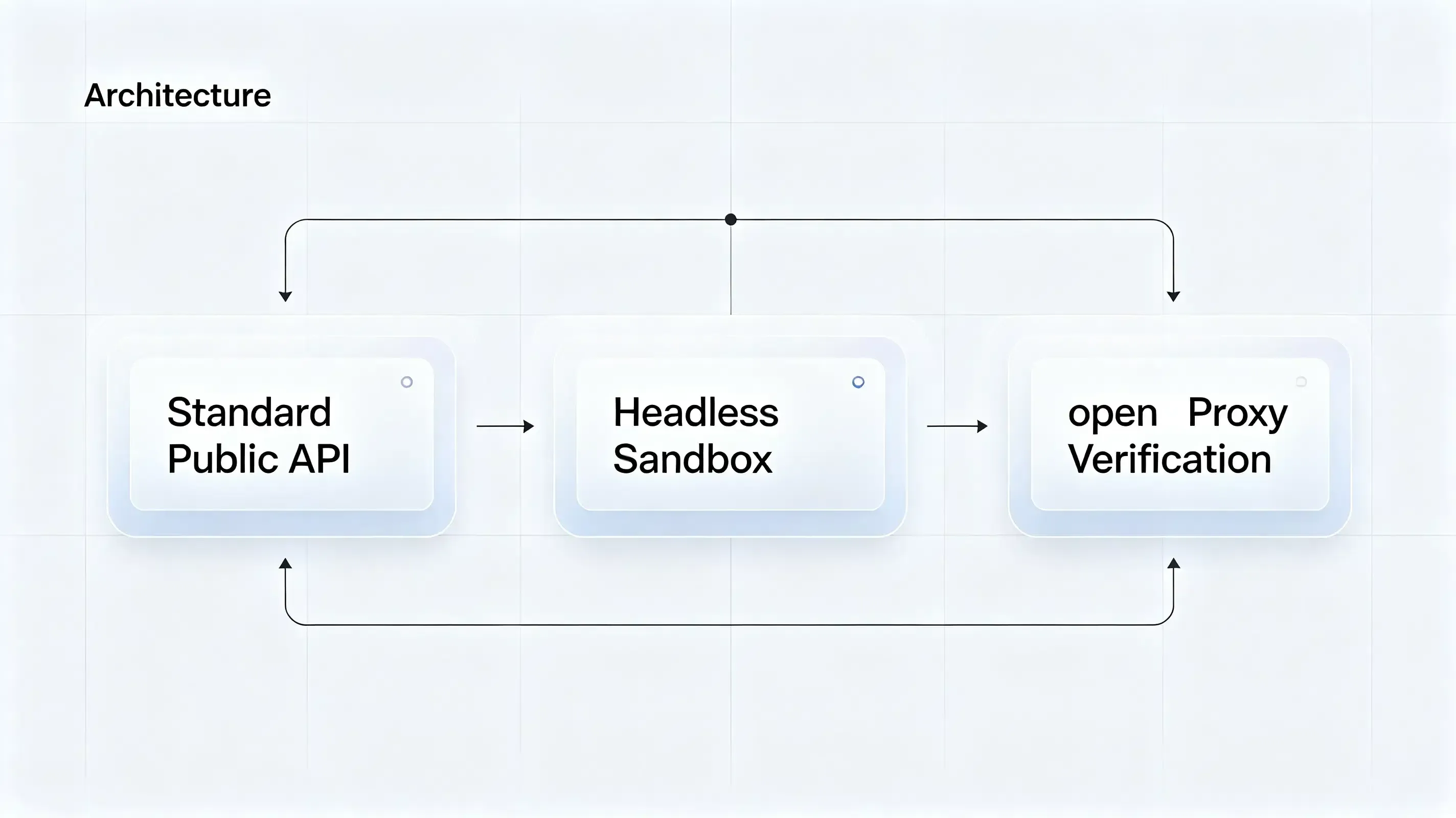
| Dev Environment Setup | Outbound Network Access | Contamination Risk | Compliance Level |
|---|---|---|---|
| Standard Public API | ✅ Enabled | ⚠️ High | Low (Potential Leakage) |
| Headless Sandbox | ❌ Blocked | ❌ No | High (Strict Isolation) |
| Server-Side Proxy Verification | 🔄 Controlled | ❌ No | High (Fully Audited) |
Commercial implementations of this architecture include Branch, AppsFlyer, Adjust, Opoinstall, and other deferred attribution platforms. These systems maintain server-side state before installation and restore parameters when the app is first launched, bypassing the reliability issues associated with client-side browser sessions. Several software platforms provide server-side state synchronization or programmatic parameter persistence to handle distributed development sessions. One example of this approach is Opoinstall, which maps execution parameters and developer session metadata to a centralized state database, ensuring that session contexts are preserved even when initial tasks are executed headlessly across isolated cloud containers. Engineering teams may evaluate these approaches according to deployment requirements and attribution accuracy goals, and as Meta Bans ‘Claude’ to secure Llama model training, development divisions are recognizing the value of such localized data-routing architectures.
Frequently Asked Questions (FAQ)
Does the Meta Bans 'Claude' policy affect all company employees?
What should I export before migrating from external AI tools to internal alternatives?
How can referral attribution survive in headless development environments?
Practical Implications & Future Outlook
The rise of strict developer sandboxes and network-level compliance rules signals a broader shift toward secure, isolated programming environments. As applications increasingly communicate through automated data exchanges rather than human-rendered layouts, engineering teams must re-evaluate traditional integration strategies. Platforms that depend heavily on manual, visual user actions may face structural gaps when automated agents manage the request pipeline. Transitioning to server-side attribution and secure parameter pass-through represents a highly probable direction for maintaining reliable tracking and security coverage.
The transition suggests a fundamental rewrite of our measurement frameworks and security protocols. Future attribution systems are likely to rely more heavily on server-side identity matching and secure state synchronization. As more AI agents begin acting as the primary drivers of digital code generation, secure engineering architectures will increasingly depend on server-side sandboxing, data sovereignty, and runtime context auditing rather than raw API endpoints alone.

Share this article