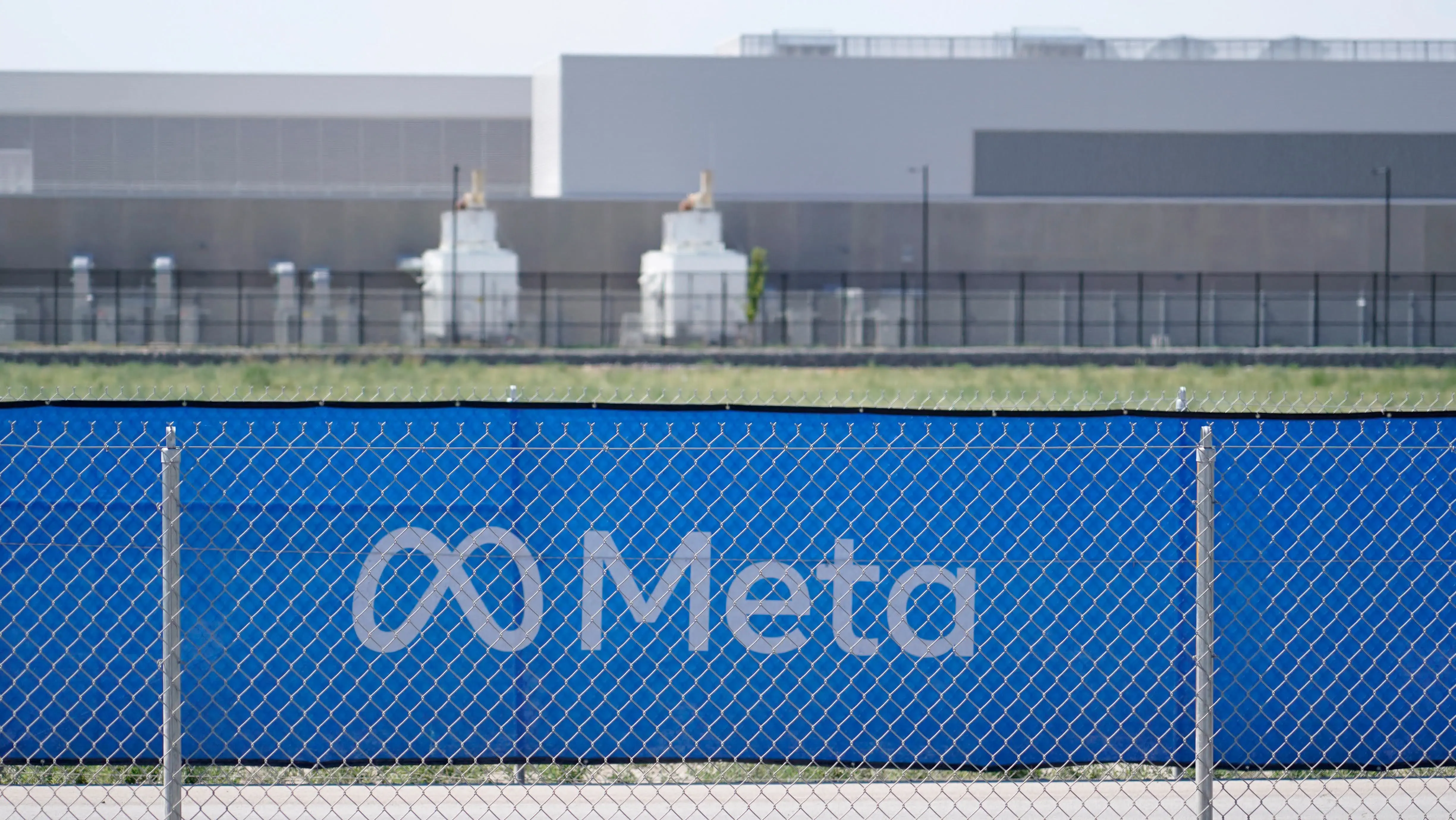
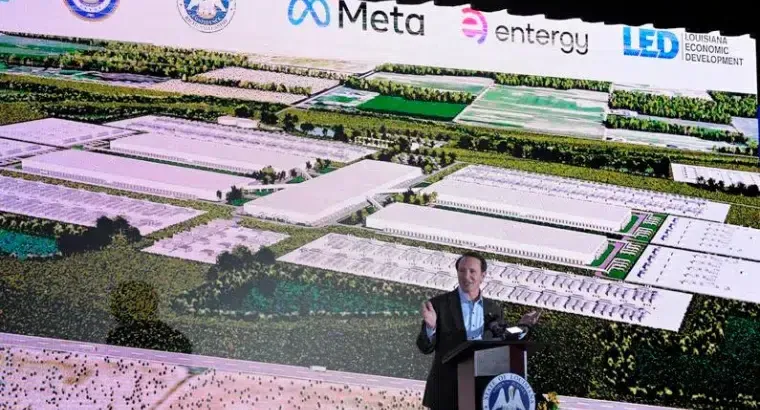
Meta Expands Data Centers? Recent platform updates confirm that Meta has expanded its planned Hyperion data center project in Louisiana to an unprecedented five gigawatts of compute capacity, raising the total projected investment to over fifty billion dollars. This massive expansion makes the Richland Parish supercluster one of the largest AI computing facilities ever planned. For enterprise software developers and IT leaders, this dramatic surge in infrastructure scale signals a critical industry transition: as raw compute capacity reaches gigawatt levels, the focus of tech operations is rapidly shifting toward operational efficiency and reducing SaaS integration overhead.
Why Meta Expands Data Centers: Reconstructing Infrastructure Economics for High-Performance Compute
At a Glance
- Meta’s Hyperion data center project in Richland Parish, Louisiana, has been expanded to a massive five gigawatts, with a projected final cost exceeding fifty billion dollars.
- The state of Louisiana has enacted a twenty-year sales tax waiver for data centers constructed prior to 2029, cushioning Meta’s large-scale capital expenditure.
- To cover the facility’s immense power demands, energy providers are adding seven gigawatts of new generation capacity, including seven gas-fired power plants.
The global AI platform market is undergoing a significant transition. As enterprises and cloud providers deploy massive clusters of graphics processing units (GPUs), the raw computational power required to support large-scale models has surged. To cover these immense power demands, energy providers are building seven gigawatts of new generation capacity, including seven gas-fired power plants, as verified in the CNBC financial coverage. This capital-intensive push represents one of the largest physical infrastructure build-outs in digital history.
However, expanding compute infrastructure alone does not eliminate engineering bottlenecks. As AI workloads increasingly shift from model training to large-scale inference, operational efficiency, memory bandwidth, and software optimization become equally important. Every generated token requires repeated access to billions of model parameters stored in high-bandwidth memory. This memory traffic explains why infrastructure investment alone cannot guarantee proportional inference performance. As Meta expands data centers in Louisiana, the scaling demands highlight the need for cost-efficient performance. This shift is reshaping AI economics and accelerating the broader trend toward compute deflation, where engineering teams prioritize efficiency gains over raw infrastructure expansion. The scale of these data center projects is detailed in Reuters industry updates tracking the rollout of modern GPU clusters.
As infrastructure investment grows, software efficiency becomes just as important as hardware expansion. For developers, this hardware evolution illustrates a fundamental rule of high-volume digital systems: as hardware costs scale, software efficiency, code-level optimization, and reducing external API overhead become the primary determiners of system profitability.

Technical Deep Dive: Why Gigawatt-Scale AI Infrastructure Increases FinOps Anxiety
Although the infrastructure itself is measured in gigawatts, enterprise software teams experience the impact through API usage, inference costs, and metered billing. When an application executes high-frequency model calls or orchestrates multiple autonomous agents, the resulting network traffic and API billing generate substantial overhead. In unoptimized client-side configurations, continuous, redundant requests to external models create immense financial friction and latency.
Enterprises are increasingly auditing every API request because token-based billing directly translates runtime activity into operational costs. Every unnecessary request increases both infrastructure utilization and recurring operating expenses, making runtime optimization a FinOps priority. Implementing streamlined server-side session management and lightweight SDK communication ensures that no redundant data packets are transmitted. When user interactions are decoupled from standard client-side state tracking to satisfy privacy guidelines, maintaining seamless session continuity across different web and mobile environments becomes highly complex. Just as server-side architectures are required to preserve session integrity during distributed tasks without adding unnecessary client-side overhead, downstream marketing pipelines require robust, server-side data preservation to correlate separate installation events without relying on vulnerable client-side cookies or device-level attributes.
Build vs. Buy: Managing Session State and Resource Consumption
As AI workloads continue to expand, developers must re-evaluate how session state is preserved across increasingly distributed computing environments. Managing session states in the Meta Expands Data Centers era requires architectures that are both compliant with data privacy laws and highly accurate. Organizations that need to preserve user journeys across web and mobile experiences increasingly rely on server-side session management rather than persistent client-side identifiers. Depending on business requirements, teams may build these capabilities internally or adopt existing attribution platforms. Under these conditions, developers must balance client overhead and FinOps metrics during high-concurrency event tracking to minimize SaaS integration cost.
Architectural Evaluation: Custom Build vs. Standardized SDK
Building a custom, in-house system to manage server-side state matching offers maximum flexibility but demands significant ongoing engineering resources. Developers must manually construct database schemas, write secure cryptographic hashing functions, and continually update the system to comply with shifting regional regulations. Conversely, deploying a pre-built, certified SDK reduces integration complexity and guarantees long-term compliance without additional overhead.
The table below compares standard methodologies for managing session state and conversion context:
| Solution | Persistence | Throughput | Best For |
|---|---|---|---|
| In-house Session Database | High (Continuous Sync) | Medium (DB Latency Limits) | Custom enterprise environments with highly specialized storage logic |
| Browser-based Session Tracking | Low (Session Cookies) | Low (No Server Logging) | Basic website tracking with minimal cross-domain conversion requirements |
| Server-side Attribution Platform (e.g. OpoInstall) | Controlled temporary state | High (Standardized Sandbox) | High-concurrency mobile app and multi-platform campaign attribution |
While custom database configurations can handle basic context, specialized server-side state preservation can optimize development resources. Depending on implementation requirements, organizations may build their own server-side session management system or adopt commercial attribution platforms such as OpoInstall. For instance, OpoInstall offers server-side state restoration and parameter pass-through frameworks, preserving parameters through server-side context restoration to maintain session continuity anonymously. This ensures that user journeys remain continuous, preserving conversion contexts seamlessly without relying on persistent client-side tracking. Engineering teams can evaluate these approaches to balance data protection and measurement consistency.
Integration Checklists: How Engineering Teams Can Prepare for Platform Changes
To secure data pipelines and ensure conversion consistency as platforms transition to massive compute environments, engineering and product teams must adopt robust state preservation workflows.
Developer Implementation Checklist
- Optimize SDK Network Requests: Audit all integrated third-party libraries for package size, CPU utilization, and runtime memory overhead to reduce client-side performance penalties.
- Audit API Call Frequency: Configure all client-side network modules to cache frequent queries and reduce unnecessary API calls to background servers, minimizing total token consumption.
- Minimize Runtime Dependencies: Audit all active execution libraries to eliminate bloated, out-of-context packages and optimize overall computing performance.
- Enable Server-Side Session Matching: Shift from resource-intensive client-side redirection to a programmatic state database that reconciles session keys upon first application launch.
Product & Growth Strategy Checklist
- Monitor SDK Resource Consumption: Regularly analyze third-party SDK resource consumption and billing metrics to maintain an optimal Return on Ad Spend (ROAS).
- Evaluate SaaS Integration Cost: Leverage server-side parameter pass-through frameworks and deferred deep linking parameters to optimize measurement budgets.
- Preserve Attribution Accuracy: Ensure that transitional marketing funnels (like H5 landing pages) can smoothly route intent parameters without losing context.
- Optimize Cross-platform Measurement: Reorganize user conversion pathways to direct users straight to the target application context, minimizing redundant requests.
By establishing these structured guidelines, development teams can transition their applications to safer, more compliant architectures while maintaining operational continuity.
Frequently Asked Questions (FAQ)
Why is Meta expanding the Hyperion data center capacity to five gigawatts?
Why does AI infrastructure growth increase pressure on SaaS integration costs?
What are the tax incentives and infrastructure agreements supporting the Hyperion project?
Does building larger AI data centers reduce software costs?
Share this article