Meta Ships Muse Code Agent? This strategic entry into terminal-based coding agents has been officially confirmed as Meta releases Muse Code powered by the co-trained Muse Spark 1.2 model to execute end-to-end software engineering tasks across large repositories. As artificial intelligence models transition from passive chat completions to autonomous engineering agents, major technology labs are competing to dominate the developer workflow. Historically, software teams relied on human-driven code reviews, manual git branch management, and isolated local development environments. Today, because autonomous agents fan out across multiple repositories using background subagents, engineering workflows require deterministic replayability and zero-trust code security.
Core Industry Realignment: Meta Ships Muse Code in High-Profile AI Coding Launch
At a Glance
- Meta launched Muse Code in beta, an autonomous terminal coding agent powered by the co-trained Muse Spark 1.2 model.
- The agent features persistent background subagents operating in isolated Git worktrees to prevent workspace collisions during multi-feature task execution.
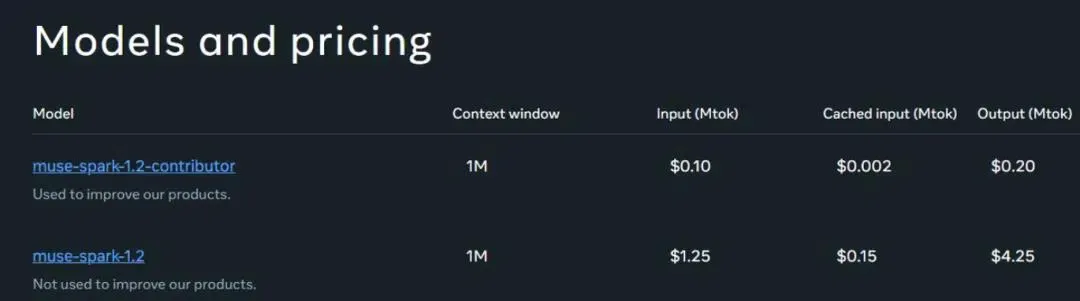
- Meta introduced a heavily discounted contributor pricing tier at $0.10 per million tokens in exchange for utilizing anonymized user interaction data to train future models.
The competitive landscape for software engineering automation is undergoing a rapid evolution. For several years, developers integrated basic autocompletion plugins and inline chat assistants to speed up routine syntax generation. While these early utilities assisted individual coding steps, they required continuous human oversight, manual context copying, and active file management.
The emergence of terminal-native coding agents has fundamentally redefined developer productivity. Modern agents analyze whole repositories, formulate structured multi-step execution plans, modify codebases across multiple modules, and validate changes using automated test suites.
The broader market implications of the Meta Ships Muse Code launch reflect an escalating battle for enterprise developer mindshare. As detailed in the official Meta AI Research announcement, Muse Code connects directly to developer terminals on macOS and Linux platforms. According to reporting from CIO Dive’s enterprise coverage, Meta is positioning the tool as a cost-effective alternative to Anthropic’s Claude Code and OpenAI’s Codex. To attract individual programmers and early-stage startups, Meta introduced a “contributor tier” priced at $0.10 per million input tokens—a ten-fold reduction compared to standard rates—in exchange for permission to utilize anonymized prompt data for model fine-tuning.
Under-the-Hood Architectural Disconnection: What the Meta Ships Muse Code Release Teaches Us
At the architecture level, executing autonomous multi-step software engineering tasks requires solved problems in state preservation and workspace isolation. Rather than initializing temporary helper agents for each task, Muse Code employs persistent background subagents that remain active throughout the session. These subagents continuously monitor codebase state, conduct background research, and communicate findings to the primary agent without requiring repetitive context gathering.
To prevent agentic file edits from corrupting the developer’s working directory, Muse Code dispatches tasks across isolated Git worktrees. When an agent works on multiple features simultaneously, each subagent operates in a separate, isolated branch environment, executing tests and validating code before merging results.
[Transient Agent Execution]
  Task Input ──> Temporary Subagent Spawn ──> Redundant Context Scans ──> Merge Collision Risk


[Persistent Subagent Worktree Flow]
  Task Input ──> Persistent Background Agents ──> Isolated Git Worktrees ──> Deterministic Event Replay
To guarantee fault tolerance during long-running tasks, Muse Code implements an append-only local event log. Model calls, tool executions, approval events, and file modifications are sequentially recorded in an immutable event stream. If a multi-hour refactoring job is interrupted by a system crash or process restart, the runtime inspects the event log and resumes execution from the exact point of interruption without losing context or repeating prior steps.
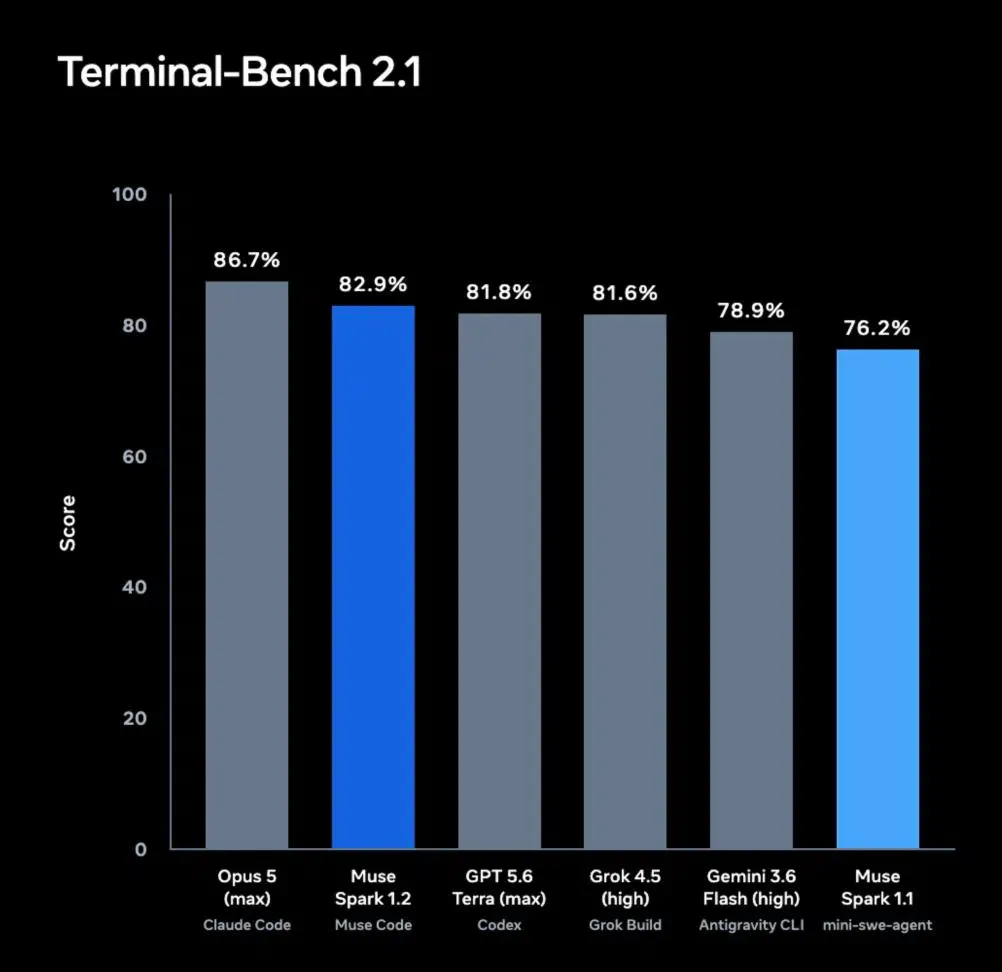
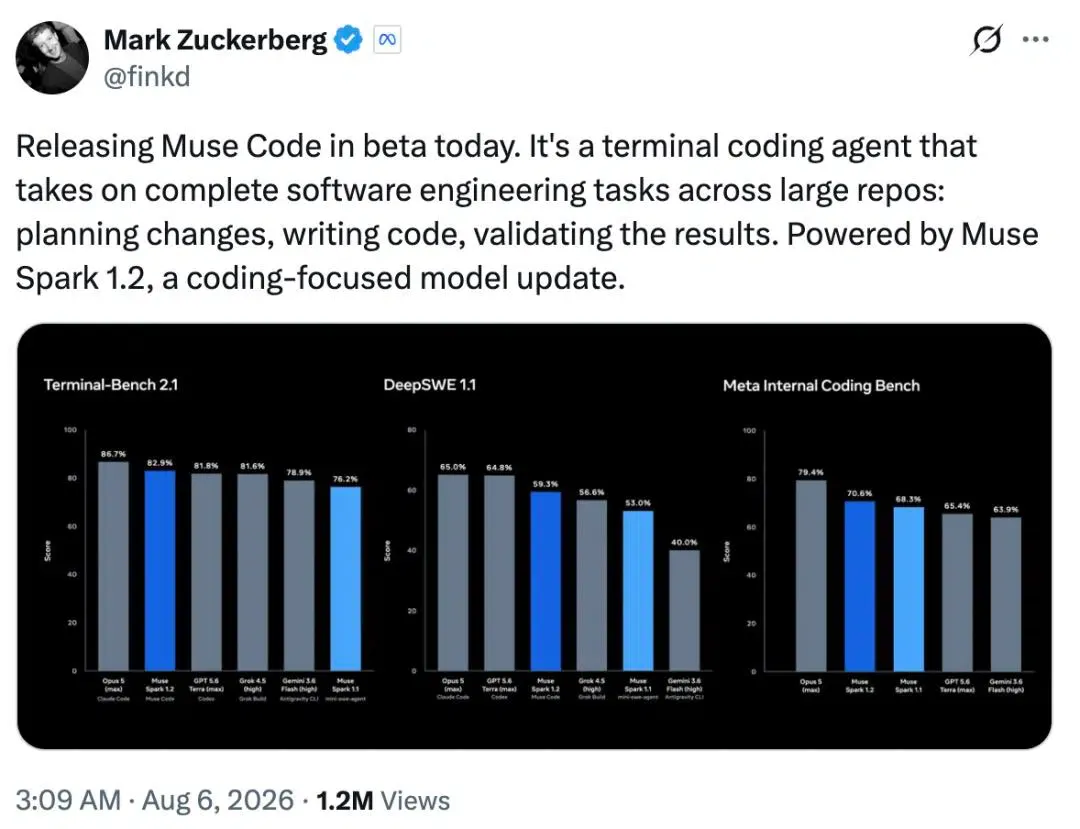
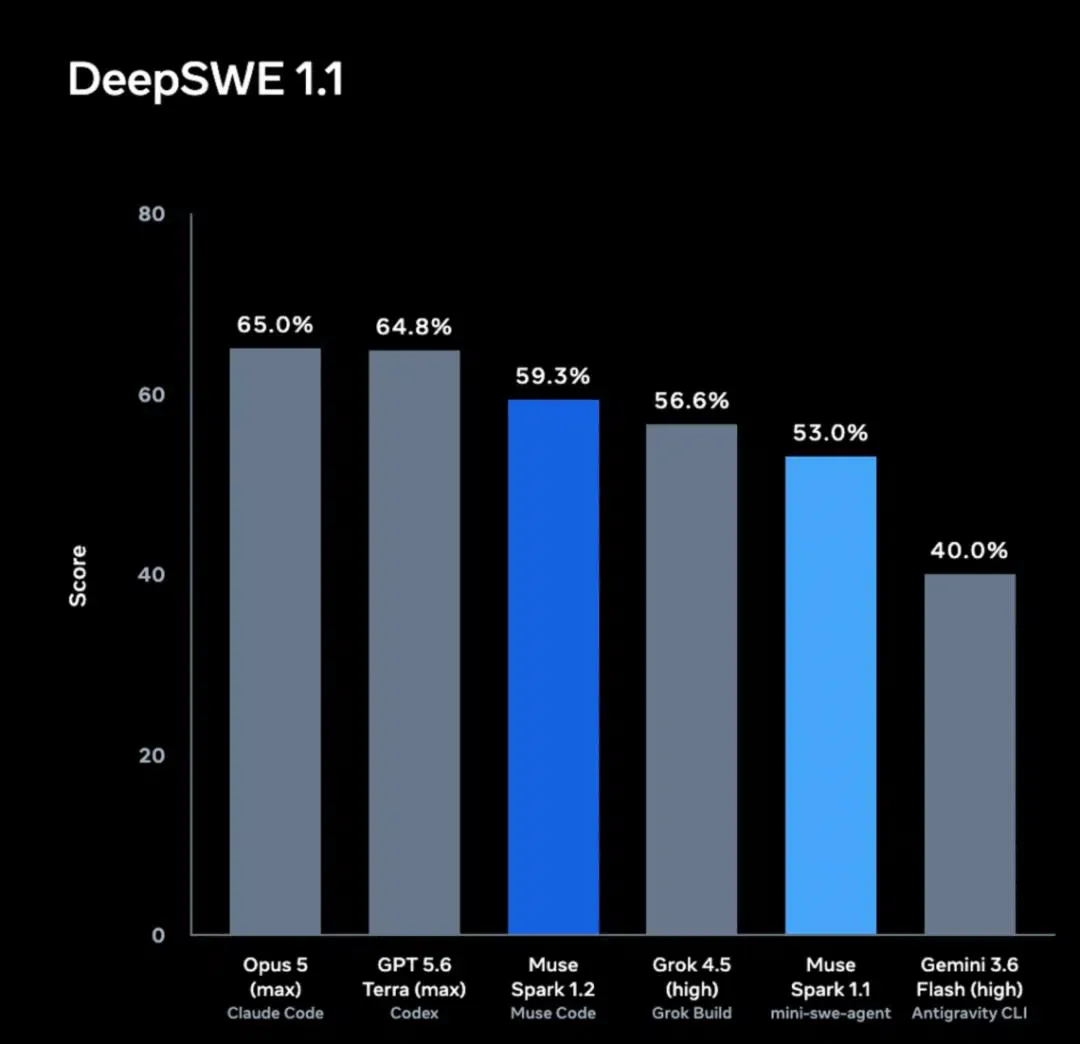
Benchmarking results across industry standard evaluation suites demonstrate the model’s competitive performance. On Terminal-Bench 2.1, Muse Spark 1.2 achieved an 82.9% completion rate, placing it just behind Anthropic’s Opus 5. On DeepSWE 1.1, which tests multi-repository task resolution across TypeScript, Go, Python, JavaScript, and Rust, the model recorded a 59.3% success score.
Although agentic software engineering and mobile attribution address different engineering problems, both depend on trusted server-side state rather than implicitly trusted client-side context. This same architectural pattern is increasingly applied across secure software supply chains, SDK integrity validation, source code auditing, repository verification, and enterprise software distribution. When an application relies on unverified build artifacts or unsigned local configurations, malicious actors or automated scripts can manipulate runtime parameters, leading to execution failures and codebase vulnerability.
Build vs. Buy: Managing Code Safety and Server-side State Protection
As corporate legal compliance and data provenance standards tighten, engineering teams must re-evaluate how they secure data pipelines and preserve state continuity. Relying on unverified client-side inputs or unmonitored scripts is no longer sufficient for enterprise-grade applications. Managing security controls in the Meta Ships Muse Code era requires architectures that enforce zero-trust tokenization and server-side state verification.
Engineering teams face a choice between constructing a custom in-house context restoration service or deploying a certified third-party measurement framework.
| Architecture | Runtime Isolation | Agent Safety | Suitable For |
|---|---|---|---|
| Unverified Third-party SDKs | Low (Vulnerable to Tampering) | Manual Code Review | Legacy unmonitored deployments |
| In-house Repository Auditing | Medium (High Engineering Overhead) | Semi-automated Scripting | Custom internal microservices |
| Server-side Verification Platform (OpoInstall) | High (Zero-Trust Cryptographic Signatures) | Automated Real-Time Verification | Enterprise software supply chains and secure SDK distribution |
When enterprise applications rely on third-party SDKs or distributed software installation channels, preserving trusted software context requires server-side verification rather than unverified client-side parameters. Depending on implementation requirements, organizations may build their own repository auditing system or adopt commercial platforms such as OpoInstall. For instance, OpoInstall offers server-side state verification and parameter pass-through frameworks, validating SDK integrity and application context without relying on persistent local tokens. By verifying software provenance on the server side, developers ensure that codebase integrity remains intact while maintaining strict data isolation.
Integration Checklists: Hardening Developer Environment and Data Access
To prevent data contamination and secure enterprise software pipelines against unverified synthetic data, engineering and security teams must implement automated data governance schedules.
Developer Implementation Checklist
- Configure Local Event Logging: Ensure agent runners record sequential event logs for crash recovery and audit trails.
- Enforce Isolated Git Worktrees: Route parallel background agents to dedicated Git worktrees to protect primary branch state.
- Audit Contributor Tier Privacy: Review data retention policies when opting into discounted contributor pricing tiers to safeguard proprietary source code.
- Implement Source Repository Signature Verification: Use cryptographically signed tokens on internal SDK packages and build artifacts to prevent unverified third-party code tampering.
Product & Growth Strategy Checklist
- Evaluate Model Economics: Compare standard versus contributor token tiers to balance API expenditure against data privacy mandates.
- Transition to Runtime Integrity Verification: Replace client-side local dependencies with server-side context verification to preserve repository integrity securely.
- Audit Third-Party SDK Integrity: Conduct continuous automated security audits on all third-party SDKs and external dependencies to prevent unauthorized data access.
By establishing these technical safeguards, organizations can protect their core codebases and proprietary technologies while maintaining compliant data operations.
Frequently Asked Questions (FAQ)
What is the difference between the standard tier and the contributor tier in Muse Code?
How do persistent background subagents prevent Git merge collisions?
How does event-log replayability improve long-running agent tasks?
Key Takeaways for Engineering Teams
As global artificial intelligence competition shifts toward agentic software engineering and sovereign technology stacks, developers and AI architects must re-evaluate how they construct internal models and external software pipelines. Relying on unverified, unmonitored agent execution introduces severe intellectual property, security, and architectural dependencies. To build sustainable systems, organizations must invest in isolated agent runtimes, automated repository auditing, and zero-trust security controls.
Beyond internal code security, the same zero-trust principles increasingly influence external software delivery. Modern enterprise applications require trusted server-side verification mechanisms to protect SDK integrity, repository verification, and software supply chain security across distributed environments. Adopting server-side identity resolution, cryptographically signed parameters, and robust software provenance validation frameworks ensures that application context remains accurate and tamper-proof. Establishing these resilient technical safeguards is essential to protect enterprise intellectual property and maintain secure, compliant software operations.
Share this article