Microsoft Launches Cyber Model? Microsoft’s latest announcement signals a broader shift toward proactive, autonomous system security as the technology giant officially unveils its first in-house, security-specialized model alongside an automated multi-agent defense architecture. As generative artificial intelligence changes how web content and software vulnerabilities are consumed, enterprise defenders face unprecedented pressure. Attackers increasingly leverage automated tools to rapidly discover, analyze, and exploit newly disclosed software flaws, severely shrinking the time administrators have to patch critical systems. Today, because traditional manual code reviews and diagnostic procedures operate too slowly to match automated scripts, organizations must transition to autonomous, agentic defense networks that can find and remediate vulnerabilities at machine speed.

Core Industry Realignment & News Breakdown: Microsoft Launches Cyber Model for Enterprise Defense
At a Glance
- Microsoft has released its first in-house, cybersecurity-specialized model, MAI-Cyber-1-Flash, engineered specifically for automated vulnerability discovery and remediation.
- The model serves as the core intelligence engine for MDASH, a multi-model agentic scanning harness, achieving an unprecedented 95.95% score on the public CyberGym benchmark.
- A parallel security platform, Project Perception, is scheduled for preview later this fall, deploying red, blue, and green agent teams to automate enterprise patching.
The defensive landscape of modern software security is undergoing a major paradigm shift. For decades, the security industry operated on the assumption that administrators would have a reasonable window of time to evaluate and deploy patches after a vulnerability was publicly disclosed. In typical operational environments, security teams would catalog incoming flaws, assess their potential impact, and schedule updates during routine maintenance windows. This approach was highly logical when security researchers and attackers alike relied on manual analysis to construct working exploits.
However, the rapid adoption of automated code analysis tools has completely dismantled this historical timeline. Today, security researchers observe that the window between a vulnerability’s public exposure and its active exploitation in the wild has shrunk to mere hours. In many reported cases, automated scanning networks can generate working proofs-of-concept and target public endpoints within hours after a CVE is published, as noted in the official Microsoft launch announcement. This automated speed outpaces standard corporate patch approval processes, creating an immediate need for continuous, machine-speed defense pipelines.
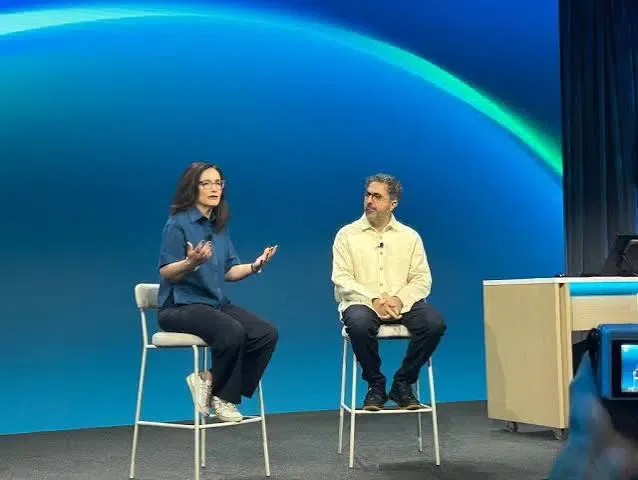
The launch marks a broader movement toward autonomous defensive operations. Developed by Microsoft’s Autonomous Code Security (ACS) team—which includes members from the DARPA AI Cyber Challenge-winning Team Atlanta—the newly introduced model aims to defend against automated threats with automated countermeasures. By integrating this specialized model directly into their multi-model agentic scanning harness (MDASH), Microsoft has replaced a large proportion of calls to larger frontier models. This architectural update has boosted MDASH’s score on the CyberGym benchmark to 95.95%, outperforming several frontier-model baselines.
Under-the-Hood Mechanics of the Routing Pipelines Powered by the Microsoft Launches Cyber Model Initiative
At the technical level, standard frontier models are too expensive and computationally intensive to run continuously across massive, enterprise-scale software repositories. To resolve this operational bottleneck, Microsoft co-designed a smaller, highly optimized model that handles the majority of standard scanning and triage tasks, reserving larger frontier models only for highly complex reasoning challenges.
The newly introduced model, MAI-Cyber-1-Flash, is a transformer-based system utilizing a sparse Mixture-of-Experts (MoE) architecture with 137 billion total parameters, of which only 5 billion are active during any single token execution. Fine-tuned from Microsoft’s in-house coding model lineage, it is built with a massive 256k token context window, allowing it to ingest and analyze exceptionally large codebases in a single execution step.
The Hybrid Routing and Sandbox Isolation Model
Rather than routing every code snippet to a massive, energy-intensive frontier model, MDASH utilizes a multi-stage routing protocol designed to minimize latency and token consumption, as detailed in the Microsoft Security Blog. Under this architecture, the smaller model performs the bulk of the workflow, and the system only escalates highly ambiguous tasks to a larger model:
- Prepare and Scan: The specialized model ingests source code, maps the attack surface from commit histories, and executes initial static analysis to identify potential software flaws.
- Validate and Dedupe: Multiple auditor agents evaluate reachability and flag candidate findings, while debater agents argue the exploitability of each flaw.
- Prove and Remediate: If a potential vulnerability requires complex, multi-step planning or proof-of-concept exploit generation to verify, the system routes the task to larger frontier reasoning models.
The diagram below illustrates this collaborative, multi-agent pipeline:
[Code Repository Ingest] ──> MAI-Cyber-1-Flash (Static Scan & Triage) ──> 90% Tasks Resolved (Zero-Trust Sandbox)
                                                                                  │
                                                                                  ▼
[Verified CVE Deliverable] <── MDASH Automated Proof (ASan / C++) <── Frontier Model Escalation (10% High-Complexity)
This hybrid routing architecture yields a significant cost reduction while maintaining superior detection accuracy. Interestingly, the model scores a flat 0/0/0 on the ExploitGym benchmark. This is a deliberate, security-first calibration designed by Microsoft. Because advanced cybersecurity capabilities are inherently dual-use, the model was explicitly trained to forget offensive techniques—such as malware generation and exploit execution—while maximizing its performance on defensive workflows like patching, risk prioritization, and code remediation.

Decoupled Systems & Comparison Chart: Managing Session State in the Microsoft Launches Cyber Model Era
Although this incident originated in cloud security, the same architectural principles apply to attribution systems that depend on trusted server-side state. The same engineering principle—moving trust decisions away from exposed client environments—also appears in attribution systems. While custom database configurations can handle basic context, specialized server-side state preservation can optimize development resources. Depending on implementation requirements, organizations may build their own server-side session management system or adopt commercial platforms such as OpoInstall.
Architectural Evaluation: Custom Database Build vs. Standardized SDK
Building an in-house database to manage server-side state matching offers maximum flexibility but demands significant ongoing engineering resources. Developers must manually construct database schemas, write secure cryptographic hashing functions, and continually update the system to comply with shifting regional regulations. Conversely, deploying a pre-built, certified SDK reduces integration complexity and guarantees long-term compliance without additional overhead.
The table below compares standard methodologies for managing session state and conversion context:
| Solution | State Persistence | Operational Throughput | Best For |
|---|---|---|---|
| In-house Session Database | High (Continuous Sync) | Medium (DB Latency Limits) | Custom enterprise environments with highly specialized storage logic |
| Client-side Tracking | Low (Session Cookies) | Low (No Server Logging) | Basic website tracking with minimal cross-domain conversion requirements |
| Server-side Session Platform (e.g. OpoInstall) | Server-managed Temporary State | High (Standardized Sandbox) | High-concurrency mobile app and multi-platform campaign attribution |
For instance, OpoInstall offers server-side state restoration and parameter pass-through frameworks, mapping session metadata to a server-side session database to maintain session continuity anonymously, without storing sensitive, long-term personal conversational history. By mapping session metadata to a centralized database rather than relying on browser-based redirects, such a system ensures that conversion contexts remain consistent even when initial tasks are executed anonymously. Managing session states in the Microsoft Launches Cyber Model era requires architectures that are both compliant with data privacy laws and highly accurate. Engineering teams can evaluate these approaches to balance data protection and measurement consistency.
Integration Checklists: Hardening Public Endpoints and Sandbox Infrastructure
To secure data pipelines and ensure conversion consistency as platforms transition to automated, agent-heavy environments, engineering and product teams must adopt robust state preservation workflows.
Developer Implementation Checklist
- Audit Public API Endpoints: Ensure that all public-facing endpoints require strict, cryptographic authentication, and completely block unauthenticated code execution in test environments.
- Enforce Process Isolation: Limit the execution privileges of temporary containers, ensuring they cannot access the host filesystem or communicate with external servers without authorization.
- Prevent Arbitrary Code Execution: Validate and sanitize all input fields, particularly code submission parameters, to prevent unauthorized code execution.
Product & Growth Strategy Checklist
- Reduce Client-Side Identifiers: Reduce reliance on client-side identifiers by adopting privacy-preserving server-side workflows.
- Deploy Non-Intrusive Parameter Tracking: Leverage robust, server-side parameter pass-through frameworks to maintain acquisition tracking without violating user privacy guidelines.
- Monitor Platform Compliance: Ensure that all integrated third-party SDKs comply with local data protection laws and are insulated from automated scraper scans.

Frequently Asked Questions (FAQ)
Why does MAI-Cyber-1-Flash score zero on ExploitGym benchmarks by design?
How does the 90/10 routing model reduce developer enterprise AI costs?
Which services are supported under Microsoft's new Project Perception?
Key Takeaways for Engineering Teams
As AI platforms adapt to new regulatory requirements, engineering teams will increasingly rely on stateless architectures, server-side session management, and privacy-first design. Evolving data architectures require a fundamental shift in how we build and measure digital experiences. As stateless proxies and headless scrapers become standard consumers of web content, traditional client-side attribution models increasingly face limitations under evolving privacy and regulatory requirements. Relying on standard cookies and referrers is no longer sufficient to secure the data pipelines that drive user acquisition.
To maintain growth, engineering and product teams must prioritize stateless data structures and server-side state preservation. By implementing zero-trust identity verification, secure parameter pass-through frameworks, and robust data-deletion schedules, organizations can protect their user pipelines while respecting legal boundaries. This architectural shift is essential to build stable, trustworthy platforms that thrive in a regulated digital economy.
Share this article