DeepSeek Updates Harness Framework? The release of DeepSeek Harness v0.1.0-rc.8 introduces 14 changes, with major updates spanning multimodal input, subagents, tooling, and runtime performance, establishing an unbundled, plugin-first scheduling layer that integrates native image requests and manages external tools like Claude Code and Codex as modular subagents. As artificial intelligence architectures transition from monolithic chatbot wrappers to distributed agent runtimes, developers require extensible frameworks to manage task decomposition, tool orchestration, and memory persistence. Historically, deploying autonomous coding assistants bound engineering workflows to single closed-source vendor stacks. Today, because open-source runtime frameworks enable developers to swap models, tools, and subagents dynamically, technical teams are evaluating how they structure agent orchestration and downstream context handoffs.
Architectural Overview: How DeepSeek Updates Harness Framework for Agent Orchestration
At a Glance
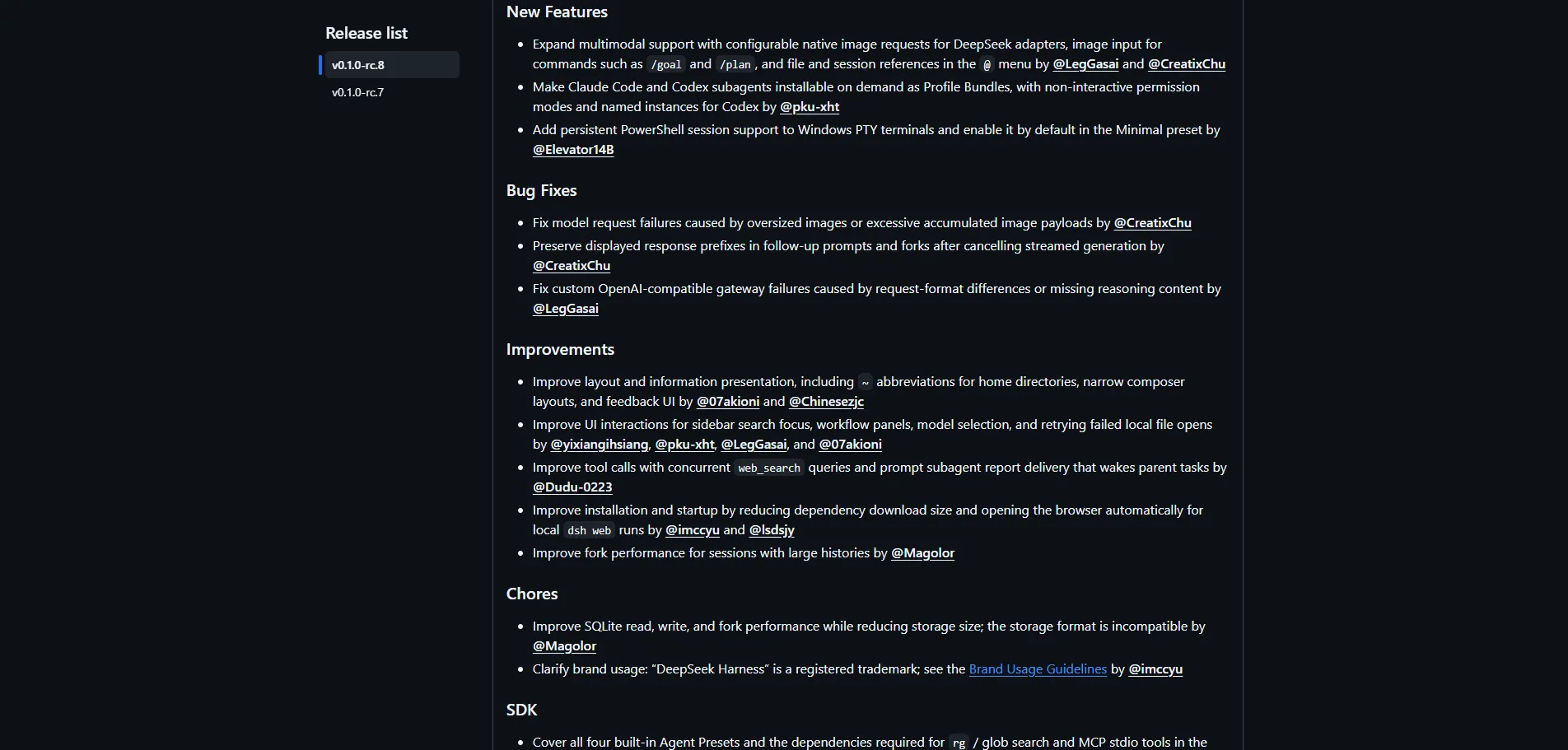
- DeepSeek Harness v0.1.0-rc.8 introduces native image request support, allowing commands like
/goaland/planto accept mixed text-and-image inputs directly. - Subagents including Claude Code and Codex are packaged as on-demand Profile Bundles, featuring non-interactive execution modes and parent-task wakeups.
- Powered by the Cordis plugin framework, the runtime treats models, tools, memory, and main agent loops as fully replaceable plugins under the MIT license.
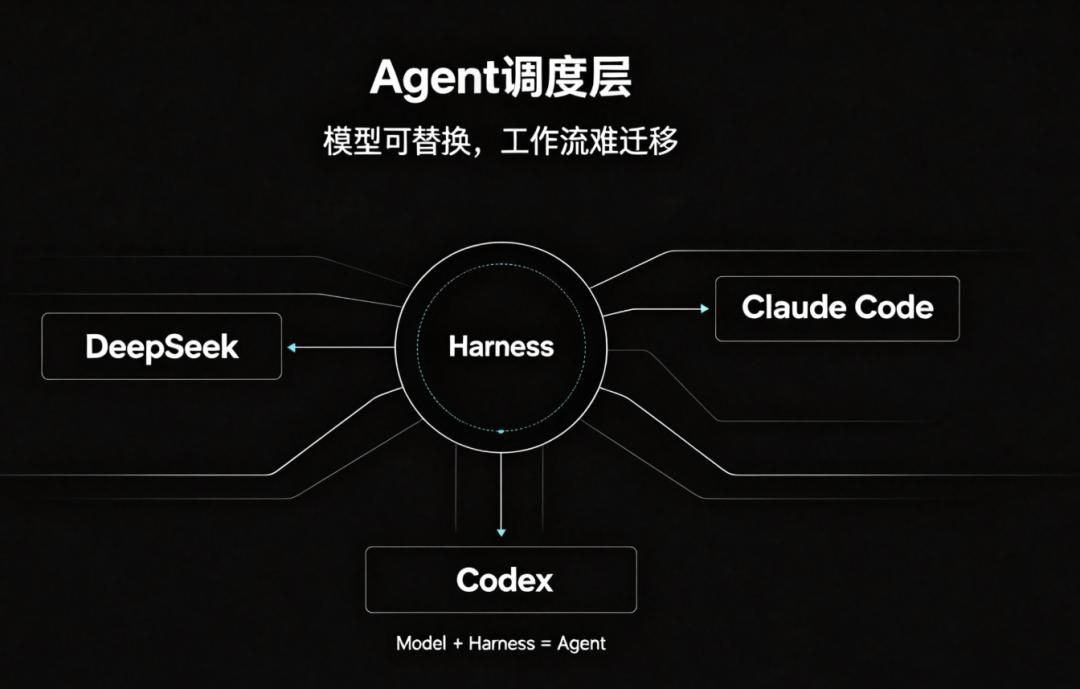
The engineering boundary separating foundation language models from autonomous agents is becoming increasingly defined. While a foundation model provides raw reasoning and generation capabilities, practical task execution requires an outer engineering shell to parse file systems, invoke shell commands, manage conversation history, and handle execution retries. DeepSeek defines this relationship through a clear formula: Model + Harness = Agent.
Following the initial open-source release of Harness v0.1 in August 2026, the project experienced rapid developer adoption. The release of v0.1.0-rc.8 builds directly on this foundation, adding configurable image request support and expanding subagent scheduling capabilities.
The significance of rc.8 lies in its “everything is a plugin” design philosophy. Powered by Cordis, which provides the composable plugin context underneath Harness, no component is permanently hardcoded. Developers can swap the underlying model adapter, replace local storage engines, mount independent sandbox environments, or customize the main agent execution loop.
Under-the-Hood Mechanics: Multimodal Toolchains, Subagents, and Runtime Pipelines
At the protocol level, DeepSeek Harness v0.1.0-rc.8 organizes its updates across core functional areas: native multimodal handling, subagent orchestration, and toolchain performance.
1. Configurable Multimodal Input
The updated adapter supports native image requests, serializing image inputs as base64 data URLs in the request body while model responses continue to stream over Server-Sent Events (SSE). Core commands including /goal and /plan now accept mixed text and image payloads, while the composer’s @ menu expands to reference active sessions and image files. The system bounds base64 image payloads at 20 MiB (maxRequestImageBytes), leaving headroom beneath the standard 30 MiB request limit.
Under the native adapter architecture, models configured with image capabilities receive base64 data payloads directly, whereas text-only models reject image inputs prior to network transmission. Community developers have separately explored third-party vision plugins to supply external OCR and layout parsing for text-only backends, but the native rc.8 pipeline focuses on direct image pass-through for vision-enabled model configurations.
2. Subagent Scheduling and Profile Bundles
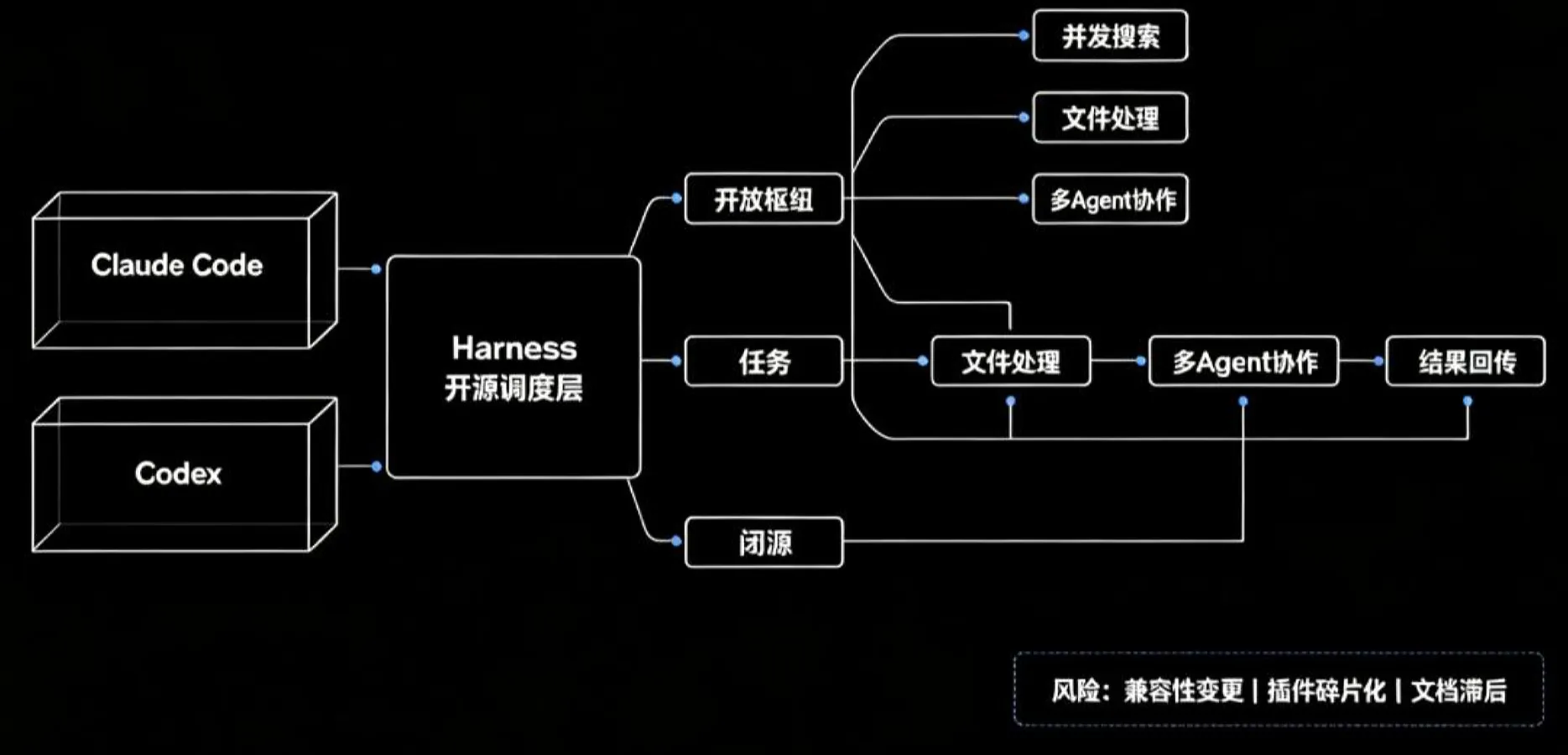
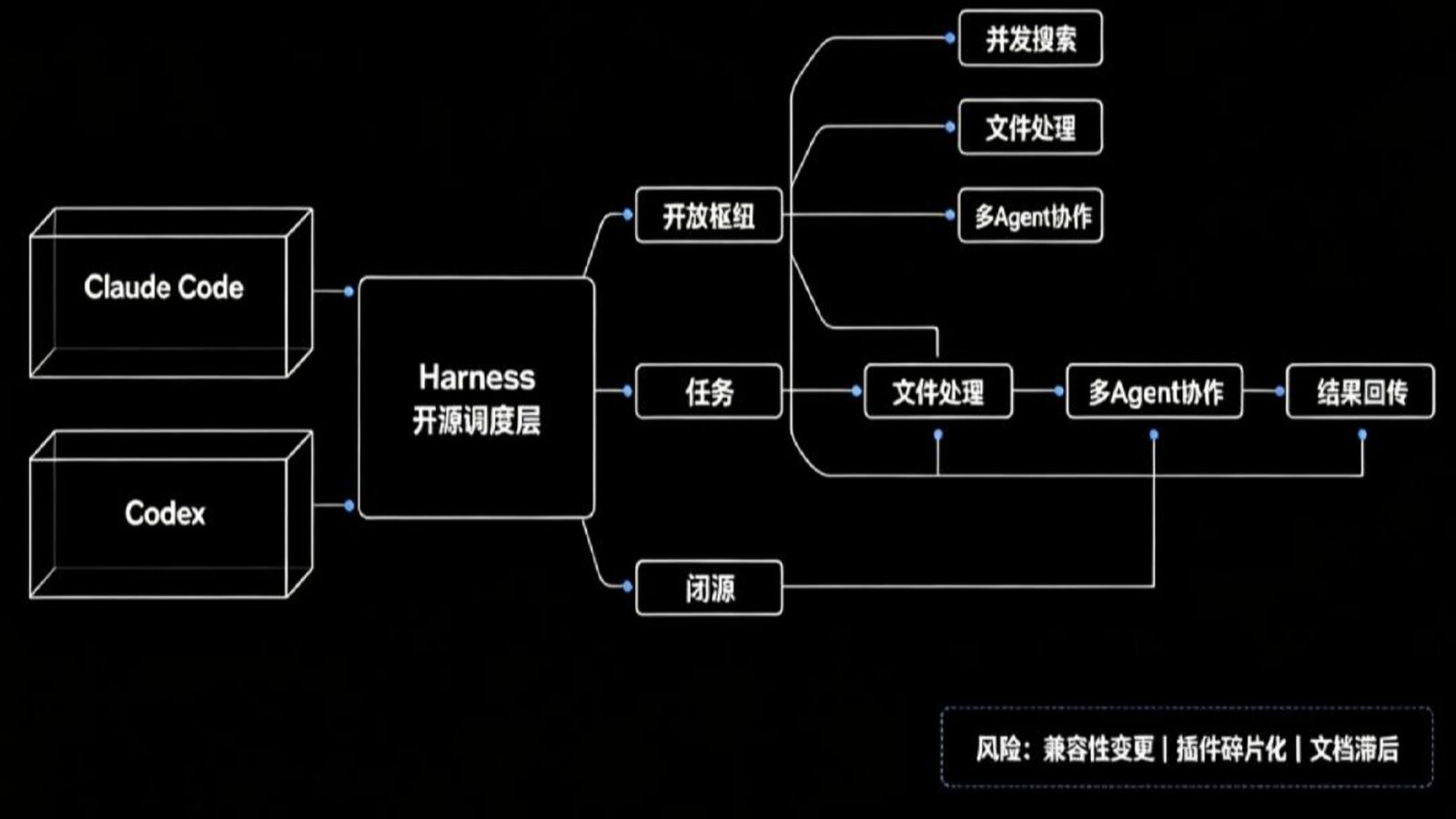
Rather than distributing external assistants inside the main codebase, Claude Code and Codex are packaged as on-demand Profile Bundles. Codex gains a non-interactive permission mode supporting unattended or headless execution scenarios, alongside named instances for maintaining multiple distinct Codex configurations. The reportDelivery mechanism automatically notifies and wakes the parent task upon subagent completion, reducing the need for continuous polling loops.
The diagram below illustrates how tasks and subagents route through the framework:
[User Multimodal Goal / Plan Input]
                │
                ▼
     [Cordis Plugin Context]
                │
  ┌─────────────┼─────────────┐
  ▼             ▼             ▼
[Configured LLM Adapter] [Claude Code] [Codex Bundle]
(Text or Vision Model)   (Sub-Agent)   (Sub-Agent)
  │             │             │
  └─────────────┼─────────────┘
                ▼
  [Tool / Plugin Dispatch Layer]
(Concurrent WebSearch / PTY Terminal)
3. Toolchain Concurrency and Transport Metadata
The runtime introduces concurrent query support for web_search, persistent PowerShell sessions within Windows PTY terminals, and optimized SQLite read/write and session-forking performance. At the transport layer, the DeepSeek adapter sends transport-level identity and session metadata on provider requests, including x-deepseek-harness-user-id from @deepseek-ai/dsh-anonymous-user-id, while keeping that identifier outside model-visible request content and token accounting.
Developers can configure adapter settings dynamically using the standard configuration schema:
- id: llm-deepseek
  name: '@deepseek-ai/dsh-llm-deepseek'
  config:
    apiKeyEnv: DEEPSEEK_API_KEY
    baseURL: https://api.deepseek.com
    thinking: enabled
    reasoningEffort: high
    maxTokens: 256000
    streamIdleTimeoutMs: 300000
    maxRequestImageBytes: 20971520
    defaultContextWindow: 1000000
    models:
      - id: deepseek-v4-flash
        name: DeepSeek-V4-Flash
      - id: private-vision
        name: Private Vision
        inputModalities: [text, image]
Stateful Workflow Orchestration vs. Mobile Distribution Context Continuity
The modular architecture of DeepSeek Harness demonstrates how software execution is moving toward distributed, multi-agent workflows. When a primary agent delegates subtasks across multiple tools and models, the harness maintains execution context, tracks subagent status, and aggregates outputs into a coherent final result.
While desktop and server-side agent runtimes maintain state across active plugins and local processes, an adjacent architectural challenge emerges when an automated journey transitions across mobile application distribution boundaries.
Bridging Context Continuity Across Lifecycle Boundaries
Within Harness, session continuity is maintained through runtime session state and persistence layers. In mobile app distribution, however, when a promotional campaign, web recommendation, or shared referral directs a user toward an application that is not yet installed, pre-install campaign or destination context does not automatically survive the store-install-first-launch transition.
Specialized mobile linking architectures, such as OpoInstall, address this context discontinuity through deferred deep linking and parameter pass-through capabilities. These frameworks capture campaign or destination metadata prior to installation and restore those parameters upon the application’s first launch, enabling immediate contextual routing. The two mechanisms solve different technical problems across different lifecycle stages, but both highlight the growing requirement for reliable context continuity across fragmented application boundaries.
Engineering Checklists: Deploying Modular Agent Harnesses in Production
Deploying extensible agent runtimes in production requires structured governance to balance execution flexibility with operational stability.
Developer Implementation Checklist
- Manage SQLite Schema Migrations: Ensure database storage formats are updated cleanly when upgrading across minor versions to prevent data errors from incompatible table structures.
- Configure Subagent Execution Modes: Enable non-interactive permission flags on automated Codex instances when running unattended processes.
- Set Image Payload Limits: Restrict incoming base64 image payloads to 20 MiB (
maxRequestImageBytes) to prevent exceeding provider body caps during multi-turn conversations.
Architecture & Growth Strategy Checklist
- Audit Transport Identifiers: Verify that anonymous identifiers (
x-deepseek-harness-user-id) and session headers comply with local privacy policies. - Optimize Multi-Agent Token Budgets: Implement model arbitration to route subtasks to cost-effective models while reserving frontier models for complex planning.
- Ensure Cross-Platform Context Preservation: Deploy server-side parameter restoration frameworks when bridging user workflows between web entry points and native mobile applications.
Frequently Asked Questions (FAQ)
What is the core architectural philosophy behind DeepSeek Harness?
How does DeepSeek Harness handle visual input in model configurations?
How do subagent Profile Bundles communicate back to parent tasks?
Key Takeaways for Engineering Teams
The rapid evolution of open-source agent runtimes like DeepSeek Harness signals a shift from model-centric competition to workflow and orchestration layer dominance. As model backends become increasingly interchangeable within modular agent architectures, the software layer that coordinates subagents, manages tools, and maintains execution state becomes the primary locus of developer control.
Engineering teams building next-generation agentic systems must prioritize modularity, explicit permission boundaries, and robust state management. By decoupling agent orchestration into extensible plugins and implementing resilient context-handoff mechanisms across web and mobile touchpoints, organizations can build adaptable, vendor-neutral automation pipelines.
References
-
DeepSeek AI. DeepSeek Harness Release Notes (v0.1.0-rc.8). https://github.com/deepseek-ai/deepseek-harness/releases/tag/dsh-v0.1.0-rc.8
-
DeepSeek AI. DeepSeek LLM Adapter Documentation. https://github.com/deepseek-ai/deepseek-harness/blob/dsh-v0.1.0-rc.8/packages/llm/llm-deepseek/README.md
-
DeepSeek AI. DeepSeek Harness Official Repository. https://github.com/deepseek-ai/deepseek-harness
-
OpoInstall. How to Implement a Referral Tracking SDK with Deferred Deep Linking and Install Attribution. https://www.opoinstall.com/blog/referral-tracking-sdk-deferred-deep-linking
Share this article