Microsoft Limits Azure AI Quotas? Reports indicate that Microsoft’s internal GPU allocation strategy has prioritized first-party AI services during periods of constrained capacity, forcing enterprise clients to re-evaluate their multi-cloud strategies. As generative artificial intelligence changes how enterprise software and cloud infrastructure operate, technology conglomerates face data-center capacity constraints. Historically, hyperscale cloud environments promised nearly limitless computing resources on demand. Today, because internal first-party applications compete directly with external enterprise workloads for scarce graphics processing units (GPUs), organizations face unexpected rate limits, performance throttling, and rising operational costs.
The Operational Problem & Financial Bottlenecks: How Microsoft Limits Azure AI Capacity
At a Glance
- Internal resource prioritization has allocated a significant portion of advanced GPU capacity to first-party products such as Microsoft 365 Copilot and GitHub Copilot, leaving less immediately available capacity for some enterprise Azure AI workloads.
- Financial disclosures indicate that cloud infrastructure growth fell short of projections due to hardware availability bottlenecks despite Microsoft’s record capital expenditure plans for AI infrastructure.
- Capacity constraints have forced major hyperscalers to lease server capacity from competing cloud networks to maintain platform stability.
The fundamental assumptions that underpinned enterprise cloud adoption have encountered a physical barrier. For over a decade, digital enterprises built their technology stacks under the premise that hyperscale cloud providers possessed effectively infinite scaling capacity. Organizations routinely migrated workloads to public clouds, confident that additional compute nodes, virtual machines, and database instances could be provisioned instantaneously.
However, the rapid transition toward large language models and generative AI has broken this traditional operating model. Running complex inference workloads requires massive arrays of specialized, high-bandwidth accelerators. Because the physical buildout of data centers, electrical supply, and advanced cooling systems cannot keep pace with surging market demand, computing capacity has become a strictly rationed resource. This capacity imbalance is documented in detailed industry reporting covering enterprise cloud performance.

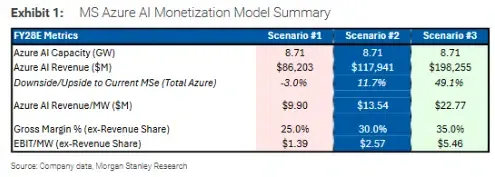
The commercial consequences become evident as Microsoft prioritizes internal workloads over public cloud capacity. According to financial disclosures made during quarterly investor calls, cloud revenue growth would have expanded beyond forty percent if newly deployed GPU clusters had been allocated to external Azure customers rather than internal Copilot applications. Because the company reserved vast compute blocks for first-party productivity tools, paying corporate clients encountered strict quota caps and extended provisioning delays. To maintain operational stability for developer tools like GitHub, the company even sought supplemental compute capacity from competing infrastructure providers, highlighting the severity of the global hardware deficit.
Systemic Root Causes: Why Microsoft Limits Azure AI Infrastructure Allocation
At the architectural level, the capacity crunch stems from a structural conflict between first-party Software-as-a-Service (SaaS) offerings and public Infrastructure-as-a-Service (IaaS) platforms. Unlike traditional software where incremental user distribution carries near-zero marginal cost, generative AI services impose substantial, continuous compute expenses for every executed prompt.
When a cloud provider operates both the underlying infrastructure and a suite of consumer-facing AI assistants, internal leadership must constantly make allocation trade-offs. Reserving GPU clusters for internal AI applications accelerates product adoption and establishes market presence, but it directly starves external enterprise clients who depend on those same GPU instances to run custom inference pipelines.
Architectural Impact: Stateless API Calls and Compute Rationing
This hardware rationing directly impacts application performance and API availability. When cloud environments operate at maximum capacity, system gateways enforce aggressive rate-limiting algorithms, increase request queuing, and throttle long-running jobs.
The diagram below illustrates how first-party prioritization impacts external workload availability:
[Total Available GPU Infrastructure (Record Capex Cluster)]
                        │
 ┌──────────────────────┴──────────────────────┐
 ▼                                             ▼
[Internal Priority]                            [External Allocation]
Microsoft 365 Copilot / GitHub              Azure Enterprise Customers
(High Inference Load / Rate Prioritized)    (Capacity Rationed / Rate Limited)
When API gateways restrict throughput, downstream applications experience elevated latency and intermittent service degradation. For developers building distributed software systems, relying on a single, overburdened cloud provider introduces systemic operational risks. Although GPU capacity allocation and mobile attribution belong to different engineering domains, both highlight the same architectural principle: designing resilient multi-cloud and server-side architectures.

Build vs. Buy: Managing Session State and Software Sovereignty
As modern computing environments encounter third-party API bottlenecks and rate limits, maintaining system stability across distributed touchpoints has become a primary engineering challenge. Enterprise FinOps teams increasingly compare metered API billing against long-term SDK integration costs when evaluating AI infrastructure investments. Managing infrastructure efficiency during AI capacity constraints requires architectures that are both resilient and cost-effective. Organizations increasingly evaluate server-side architectures that reduce repeated API calls, minimize SDK overhead, and preserve operational efficiency across distributed applications. Depending on business requirements, teams may build these capabilities internally or adopt existing attribution platforms.
Architectural Evaluation: Custom Build vs. Standardized SDK
Building a custom multi-cloud routing and server-side measurement layer offers maximum flexibility but demands significant ongoing engineering resources. Developers must manually construct data pipelines, manage cross-cloud API rate limits, and continually update system rules to maintain service continuity. Conversely, deploying a pre-built, certified SDK reduces integration complexity and guarantees long-term compliance without additional overhead.
The table below compares standard methodologies for managing session state and conversion context:
| Approach | Persistence | Throughput | Best For |
|---|---|---|---|
| Single-cloud AI API | High (Vendor Managed) | Low (Rate Limits & Quota Caps) | Rapid prototyping on single-vendor platforms |
| Self-managed Multi-cloud Layer | High (Custom Managed) | Variable (Dev Overhead Limits) | Custom enterprise deployments requiring complete infrastructure isolation |
| Server-side Measurement Platform (e.g. OpoInstall) | High (Programmatic Mapping) | High (Standardized Sandbox) | High-concurrency app campaign tracking and cross-platform session restoration |
While custom database configurations can handle basic context, some organizations adopt standardized server-side measurement infrastructure to reduce engineering overhead and simplify FinOps management. Depending on implementation requirements, organizations may build their own server-side session management system or adopt commercial platforms such as OpoInstall. For instance, OpoInstall offers server-side state restoration and parameter pass-through frameworks to preserve session continuity anonymously. Engineering teams can evaluate these approaches to balance data protection and measurement consistency.
Integration Checklists: How Engineering Teams Can Prepare for Platform Changes
To protect data pipelines and ensure conversion consistency as cloud providers enforce capacity restrictions, engineering and product teams must establish clear operational guidelines.
Developer Implementation Checklist
- Audit API Rate Limits: Review application architecture to identify dependencies on single-provider cloud endpoints and implement graceful fallback mechanisms.
- Implement Server-Side State Verification: Transition away from client-side tracking containers by adopting server-side session matching to maintain data integrity during network slowdowns.
- Deploy Cryptographic Request Signatures: Secure API handshakes and data-passing endpoints using cryptographically signed tokens to prevent unauthorized request injection.
Product & Growth Strategy Checklist
- Establish Multi-Cloud Redundancy: Build modular infrastructure layers that allow workloads to shift between different cloud vendors when local capacity bottlenecks occur.
- Optimize Conversion Funnels: Leverage non-intrusive parameter pass-through frameworks to maintain acquisition tracking without violating user privacy guidelines.
- Monitor Infrastructure Unit Economics: Regularly review cloud spending to ensure that high-cost AI features deliver measurable business returns.
By establishing these structured guidelines, development teams can transition their applications to safer, more compliant architectures while maintaining operational continuity.
Frequently Asked Questions (FAQ)
Why does Microsoft prioritize internal Copilot products over Azure customers?
How does GPU capacity rationing affect enterprise cloud costs?
How can development teams reduce reliance on single-provider cloud infrastructure?
Key Takeaways for Engineering Teams
The ongoing cloud capacity crunch demonstrates that hyperscale availability can no longer be taken for granted. As cloud providers balance internal product ambitions against public infrastructure demand, engineering teams must design systems that prioritize independence, efficiency, and architectural control.
To ensure long-term stability and cost predictability, organizations must decouple their core data pipelines from single-provider client environments. Adopting server-side state management, multi-cloud redundancy, and privacy-first engineering practices allows businesses to maintain operational resilience regardless of external capacity shifts. As AI infrastructure costs remain dynamic, lightweight integrations and efficient server-side architectures will become increasingly important for long-term operational resilience.
Share this article