Mozilla Ships Firefox 155? Mozilla has officially released Firefox 155, introducing Happy Eyeballs v3 and QUIC v2 protocol support to concurrently race connection pathways and reduce transport-layer connection delay on supported platforms. As modern digital architectures handle increasingly distributed user flows, connection setup time directly influences navigation smoothness across web properties and mobile touchpoints. Historically, multi-stack network handshakes operated with sequential fallback mechanisms, causing noticeable delays when resolving dual-stack endpoints or transitioning between protocol versions. Today, because modern client engines can discover server capabilities concurrently through modern domain name system (DNS) records, transport-level connection optimization can reduce connection-establishment delays in navigation flows that require new connections or encounter degraded network candidates.
Core Transport Realignment: Mozilla Ships Firefox 155 with Multi-Protocol Racing
At a Glance
- Firefox 155 incorporates Happy Eyeballs v3 to concurrently probe IPv4, IPv6, HTTP/2, and HTTP/3 pathways using modern DNS service bindings, initially rolling out on desktop platforms.
- Native QUIC v2 support is introduced for HTTP/3 connections to validate version negotiation and prevent protocol ossification.
- Transport-layer handshake optimization aims to reduce connection setup delays, providing performance insights for complex web navigation and multi-hop redirection funnels.
The evolution of client-side web networking is moving toward aggressive protocol parallelism. For years, dual-stack network connectivity relied on basic Happy Eyeballs implementations (RFC 8305), which primarily focused on racing IPv6 and IPv4 address records to prevent connection hangs on broken IPv6 routes. While effective at resolving basic transport failures, legacy algorithms treated application-layer protocols as sequential negotiations, often falling back to standard TLS handshakes before discovering whether an endpoint supported modern transport options like HTTP/3.
With the release of Firefox 155, the connection lifecycle has been re-architected around multi-protocol concurrency on supported platforms, as noted in the MDN Firefox 155 release notes for developers. By leveraging modern DNS records such as Service Binding (SVCB) and HTTPS resource records, the browser can determine server protocol support prior to initiating the transport handshake. This allows the client to concurrently race HTTP/2 over TCP and HTTP/3 over QUIC alongside traditional address resolution, establishing secure connections through the fastest available pathway. Technical details of this deployment are documented in Phoronix release coverage and official Mozilla distribution repositories.
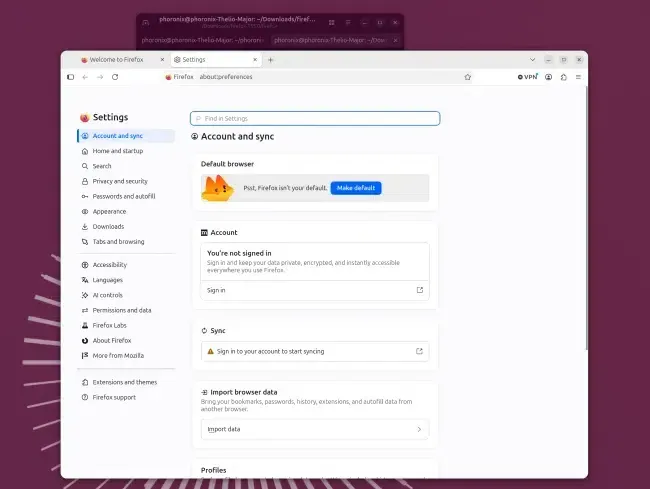
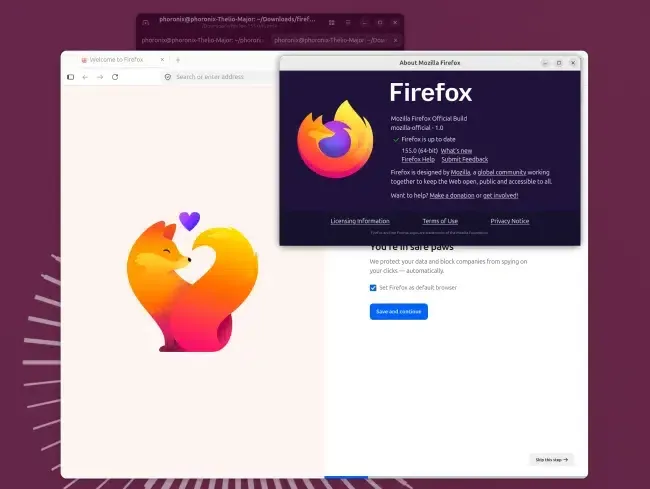
This architectural transition demonstrates why Mozilla Ships Firefox 155 as a notable performance milestone. In addition to transport concurrency, the release enables QUIC version 2 (RFC 9369) for HTTP/3 connections, allowing the browser to mitigate ossification risks and validate version negotiation mechanisms. For infrastructure engineers and system administrators, these client-side optimizations provide immediate benefits by reducing connection-setup delay by avoiding prolonged waits on unreachable or suboptimal connection candidates across desktop networks, while mobile platforms continue testing in preview channels.
Under-the-Hood Architecture: How Happy Eyeballs v3 and QUIC v2 Reduce Connection Delays
At the network protocol layer, latency in complex navigation funnels can accumulate across distributed endpoints. Redirect chains can accumulate additional connection overhead when individual hops require new origins or new transport connections. Under suboptimal cellular conditions, sequential connection attempts to distinct hosts can introduce noticeable delays before the final content payload begins rendering.
Happy Eyeballs v3 reduces this cumulative lag by transforming connection establishment into a concurrent race. Rather than waiting for an IPv6 connection attempt to time out before testing an IPv4 route, the algorithm launches staggered connection attempts separated by standard millisecond-level delay timers, dynamically picking whichever route completes the cryptographic handshake first.
Protocol Comparison: Sequential Fallback vs. Concurrent Protocol Racing
The diagram below illustrates the structural difference between legacy connection negotiation and the Happy Eyeballs v3 pipeline implemented in Firefox 155:
[Legacy Sequential Connection Flow (Higher Fallback Delay)]
  DNS A/AAAA Query ──> IPv6 Timeout ──> IPv4 Fallback ──> TCP Handshake ──> TLS ──> HTTP/2

[Happy Eyeballs v3 Multi-Protocol Racing]
  DNS SVCB/HTTPS ──> Staggered Concurrent Race [IPv6/QUIC vs. IPv4/TCP] ──> Fastest Viable Candidate Wins (Reduced Fallback Delay)
By integrating modern DNS parameter discovery with native QUIC v2 support, client handshakes reduce the delays associated with broken transport routes. Furthermore, QUIC also avoids TCP-style cross-stream head-of-line blocking, which can improve responsiveness across independent HTTP/3 streams when packet loss occurs.
Although transport-layer connection racing and application-layer parameter restoration operate at different levels of the network stack, both address different technical problems within the broader user journey. When digital marketing campaigns direct users across web and mobile surfaces, reducing transport-level connection latency may reduce network-level friction during intermediate web navigation. However, preserving the user’s intended journey across the boundary from web browsers into native mobile applications represents a distinct application-layer challenge that transport protocols do not resolve.
Architectural Evaluation: Managing Context Continuity Across Fast-Loading Redirect Chains
As transport-layer protocols become faster and more resilient, system architects must evaluate how overall conversion funnels behave across complex navigation paths. While Happy Eyeballs v3 can reduce connection-establishment delays within web navigation, campaigns designed to move users from web touchpoints into native mobile applications encounter a physical install boundary when the target application is not yet present on the device.
Technical Trade-offs Across Transport and Attribution Layers
Engineering teams utilize different tools depending on whether their primary objective is network-level acceleration, direct OS application routing, or cross-platform parameter preservation:
| Approach | Layer & Technology | Install Boundary Context Recovery | Best For |
|---|---|---|---|
| Browser Transport Optimization (Happy Eyeballs v3) | L4 / L7 Connection Racing (TCP/QUIC) | None (Browser Runtime Only) | Accelerating web page load and initial connection setup |
| Direct OS Deep Linking (Universal Links / App Links) | OS-Level App/Web Association | No deferred context; falls back to web if app is missing | Direct in-app routing for users with the app installed |
| Deferred Deep Linking (e.g. OpoInstall) | Application-Layer Parameter Mapping | Supported for eligible pre-install parameters | Preserving campaign and destination context across app installs |
When web-to-app campaigns direct users to a native mobile application that is not yet installed, browser-side protocol acceleration alone cannot bridge the app-store install boundary. Developers managing cross-platform acquisition funnels frequently utilize specialized parameter pass-through frameworks. For example, the OpoInstall documentation details how deferred deep linking captures campaign metadata at the web touchpoint and restores it upon first app launch, maintaining destination context without requiring persistent browser cookies. Engineering teams can evaluate these approaches alongside transport optimizations to build seamless acquisition pipelines.
Engineering Checklist: Optimizing Web-to-App Redirection Handshakes
To maximize the performance benefits of modern browser connection protocols and support robust conversion tracking workflows, engineering and operations teams can implement structured configuration guidelines.
Systems & Infrastructure Implementation Checklist
- Deploy DNS HTTPS and SVCB Records: Publish modern Service Binding records on authoritative DNS servers to allow browsers to discover HTTP/3 and ALPN parameters prior to connection initiation.
- Enable QUIC v2 Version Negotiation on Edge Nodes: Configure reverse proxies and content delivery networks to support compatible QUIC version negotiation (RFC 9369) alongside standard HTTP/3.
- Optimize Intermediate Redirect Hops: Minimize the number of HTTP 301/302 redirects across promotional and tracking endpoints, ensuring that necessary redirects utilize modern keep-alive and connection pooling.
Mobile & Growth Engineering Checklist
- Benchmark Web-to-App Latency: Measure time-to-first-byte (TTFB) and total redirection duration across diverse network conditions to identify drop-off points in acquisition funnels.
- Configure Universal Links and Fallback Chains: Ensure mobile routing configurations provide graceful fallbacks to web landing pages or app stores when deep links fail to resolve.
- Deploy Parameter Pass-Through Mechanisms: Implement deferred deep linking pipelines to help preserve eligible campaign parameters and referral attributes across the install boundary for first-time application users.
By aligning transport infrastructure with robust mobile routing frameworks, organizations can deliver high-speed navigation while preserving end-to-end conversion integrity.
Frequently Asked Questions (FAQ)
How does Happy Eyeballs v3 differ from previous connection racing algorithms?
Why does Firefox 155 support QUIC v2 if it is not designed as a performance upgrade?
Does faster browser page loading eliminate the need for deferred deep linking?
Practical Implications & Future Outlook
The release of Firefox 155 reflects a broader industry movement toward multi-protocol concurrency and transport-level efficiency. As client engines adopt advanced DNS discovery and modern transport standards like QUIC v2, the latency penalty traditionally associated with complex web navigations and secure redirections will continue to decrease.
For software architects and engineering teams, optimizing digital user journeys requires a multi-layered approach. Modern transport protocols resolve low-level connection bottlenecks across the public internet, while robust application-level routing frameworks ensure context continuity across mobile operating systems. By combining high-performance transport infrastructure with resilient parameter restoration workflows, organizations can construct lower-friction web and Web-to-App experiences across digital ecosystems.
References
-
Mozilla / MDN. Firefox 155 Release Notes for Developers. https://developer.mozilla.org/en-US/docs/Mozilla/Firefox/Releases/155
-
IETF. Happy Eyeballs Version 3: Better Connectivity Using Concurrency. draft-ietf-happy-happyeyeballs-v3. https://datatracker.ietf.org/doc/draft-ietf-happy-happyeyeballs-v3/
-
IETF. RFC 9369: QUIC Version 2. https://www.rfc-editor.org/rfc/rfc9369
-
IETF. RFC 8305: Happy Eyeballs Version 2: Bettering Dual-Stack Readiness. https://www.rfc-editor.org/rfc/rfc8305
-
Phoronix. Firefox 155 Available With Faster Page Loads Via Happy Eyeballs v3, QUIC v2 For HTTP/3. https://www.phoronix.com/news/Firefox-155-Released
-
OpoInstall. Developer Documentation & Integration Guide. https://www.opoinstall.com/docs
Share this article