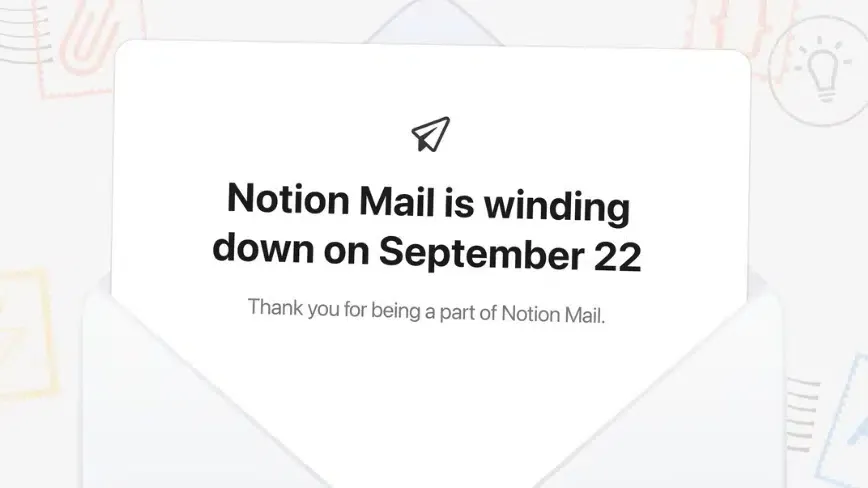
Notion Mail Shuts Down? Notion announced that the email client will be discontinued on September 22, 2026. Beyond the product shutdown, the move reflects a broader shift toward AI-assisted workflow automation across SaaS platforms as documented in the official sunset resources. For developer teams and product leads, this discontinuation highlights a technical transition: AI assistants are increasingly becoming an additional layer between users and digital communication, bypassing the traditional visual inbox completely.
At a Glance
- The Hard Sunset: Notion will officially close the Notion Mail client across web, desktop, and iOS on September 22, 2026, permanently deleting all unsaved drafts and snippet configurations.
- The Agentic Takeover: A significant portion of the platform’s user base managed their correspondence using automated workspace workflows, bypassing the graphical inbox completely.
- Broken Synced Pipelines: The termination of native database-to-email synchronization threatens to disrupt custom ledgers, contact logs, and automated referral confirmation loops.
Structural Realignment Following the Email Sunset
Acquiring secure communications startup Skiff in February 2024, the product team set out to integrate secure workspace communication directly into its productivity suite. That transaction led to the rapid closure of Skiff’s encrypted platform within six months, taking @skiff.com email addresses offline. On April 15, 2025, former Skiff executives launched Notion Mail to the public as a customizable Gmail frontend. They aimed to merge calendar management, reusable snippets, and database interactions within a unified workspace. This hybrid model struggled to expand its user base beyond a highly specialized niche of Google Workspace accounts. The lack of native Windows support and non-Gmail compatibility limited its market adoption, culminating in the news that Notion Mail Shuts Down on September 22, 2026.
According to Notion’s official sunset announcement, many users manage their correspondence through custom workflows directly within their databases. The product retirement suggests that Notion is prioritizing investment in AI-assisted workflows over maintaining a standalone email client. By transitioning from visual client interfaces to autonomous platform systems, SaaS providers appear to be prioritizing program-native data exchange protocols over traditional human-centric frontends. This shift may have contributed to the strategic pivot toward custom developer agent platforms.
SaaS providers are rapidly repositioning to avoid obsolescence. Software teams are exploring agentic email infrastructure to support programmatic inbox workflows. Expanding this automated trend, major productivity suites have acquired agent-building technologies to execute complex cross-system tasks. Operating in parallel, enterprise chat platforms have deployed AI-assisted capabilities within their native systems. This industry-wide consolidation indicates a probable direction where backend integration takes precedence over standalone desktop software.
The Protocol Breakdown: How Headless Scrapers Disrupt Attribution
Many enterprise email gateways and AI assistants automatically inspect incoming links before users interact with them. From the perspective of attribution systems, this changes the entire request chain.
When a human user clicks a link, a standard web browser loads the page, executes tracking scripts, and writes a cookie. In contrast, an AI agent fetches the page programmatically. It sends a headless HTTP request directly from a cloud server. Because the request executes inside a stateless sandbox, there is no visual DOM, no browser history, and no cookie store. Headless routing often isolates the session from the client-side system. Traditional browser-based attribution methods may no longer capture the complete user journey because they rely on browser cookies to link the initial click to the installation. Under these conditions, the attribution accuracy decreases significantly across the communication stack.
Traditional Human Flow:
Email Link -> Visual Click -> Browser Session (Cookies, DOM) -> App Store -> App Install (Attributed)


Agent-Managed Headless Flow:
Email Link -> Programmatic Scan -> Headless HTTP Request (No UI, No DOM, No Cookies) -> Link Visited
App Install (Later) -> App Launches -> Blank Client State (Attribution Lost)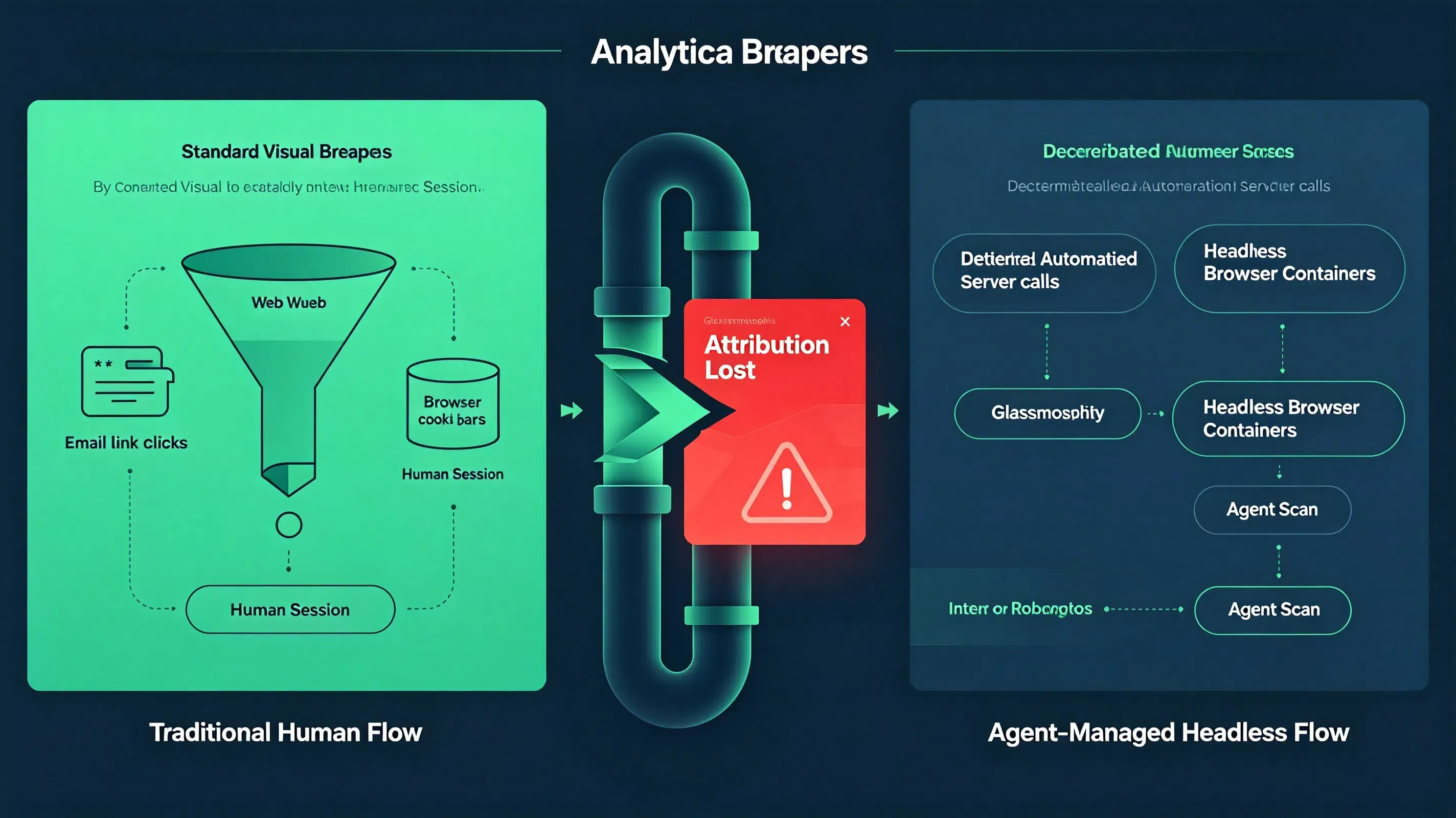
In typical production deployments, developers often encounter a notable portion of traffic being processed by automated scrapers. Tracing these programmatic interactions reveals that email security gateways or automated mailbox scanners may visit links before end users do. This behavior can interfere with browser-based attribution if systems assume every request originates from a real user. Consequently, in some implementations, the original referral context may no longer be available to the client application, resulting in significant attribution gaps.

Architectural Solutions: Build vs. Buy in State Restoration
In practice, engineering teams usually choose between building an internal attribution pipeline or integrating an existing attribution SDK. Developing a proprietary system requires substantial engineering overhead. Teams must build custom server-side databases, maintain device state-matching libraries, and continuously update logic to comply with evolving OS security standards. For many organizations, the maintenance cost of an in-house tracker is prohibitively high.
Alternatively, developers generally evaluate several approaches to preserve session state without client-side cookies:
- In-House Custom Services: Building proprietary state-matching databases on top of internal cloud architecture.
- Platform-Specific Tools: Relying on basic utilities like Firebase Dynamic Links (or their platform-native alternatives).
- Enterprise MMPs: Deploying mobile measurement partners such as Branch, AppsFlyer, or Adjust for deep-linking workflows.
- Specialized Parameter SDKs: Utilizing dedicated integration utilities for precise, cost-sensitive custom parameter pass-through.
Link Generation -> Pre-register Metadata on Central State Server
                                     |
Scraper/User clicks URL -> Register Temporary Server-Side State Lock
                                     |
App Launches on Device -> SDK Programmatic Context Query -> Match State Lock & Restore parameters
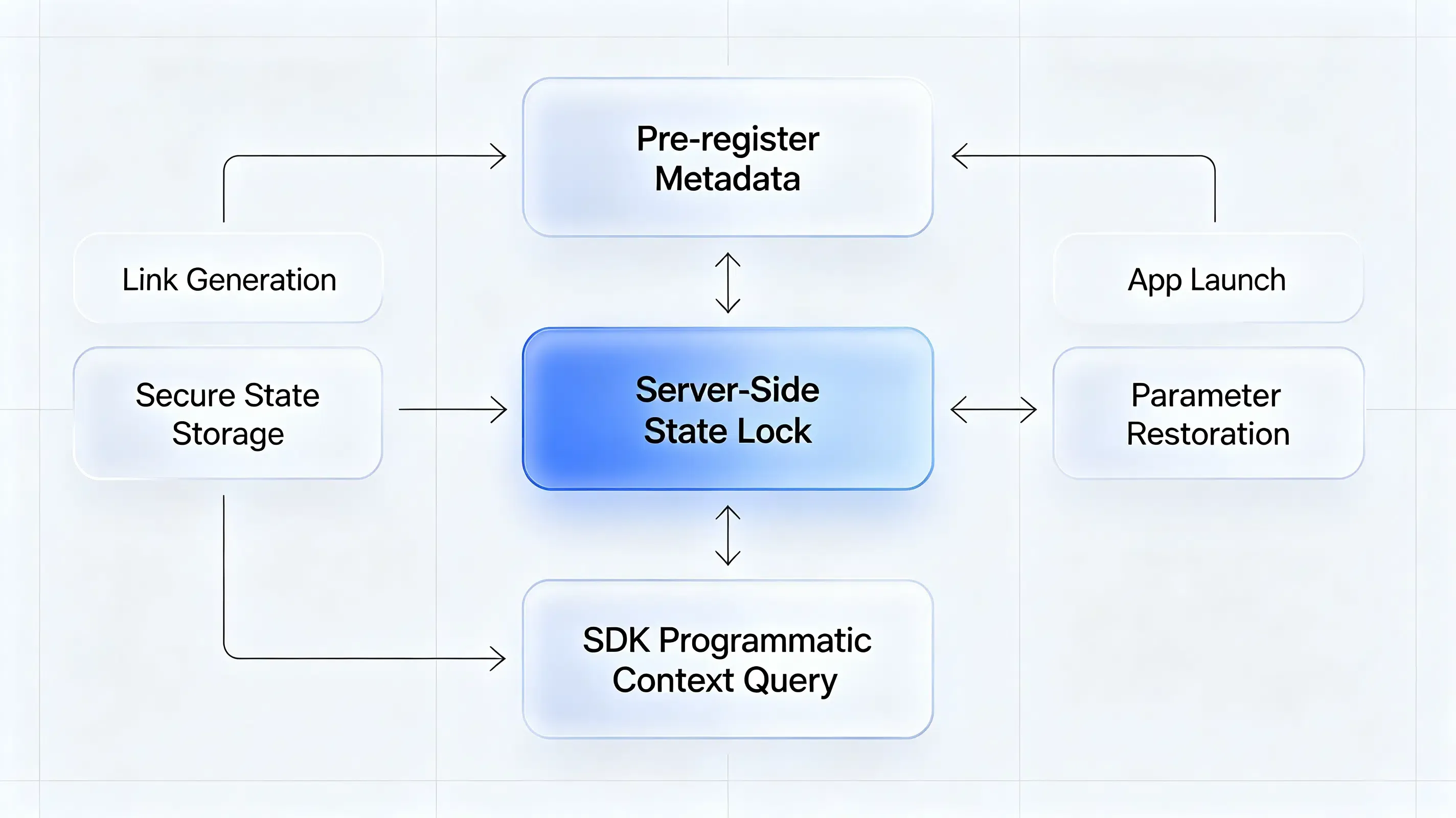
Several commercial attribution platforms have adopted this server-side state-locking architecture. Commercial implementations of this model include Branch, AppsFlyer, Adjust, Opoinstall, and other deferred attribution systems. These platforms maintain server-side parameters before installation and restore them when the application first launches, bypassing the reliability issues associated with client-side browser sessions.
Operational Team Adaptations After Client Retirement
Backend engineering teams face the immediate task of auditing all active database integrations before the September 21, 2026, data preservation deadline. Product leads should redesign invitation and registration loops to accommodate non-visual user journeys. Instead of assuming the user will read an email and click a button, product leads should design workflows that expect programmatic triggers. Growth teams must update their performance metrics. When autonomous software handles triage, open rates and click-through rates become less reliable. Marketing operations should focus on downstream in-app telemetry and transaction-verified conversion milestones, optimizing campaigns based on the actual actions performed within the application.
Enterprise Sunset and Migration Checklist
To ensure data continuity before the final shutdown on September 22, 2026, engineering teams should execute the following steps:
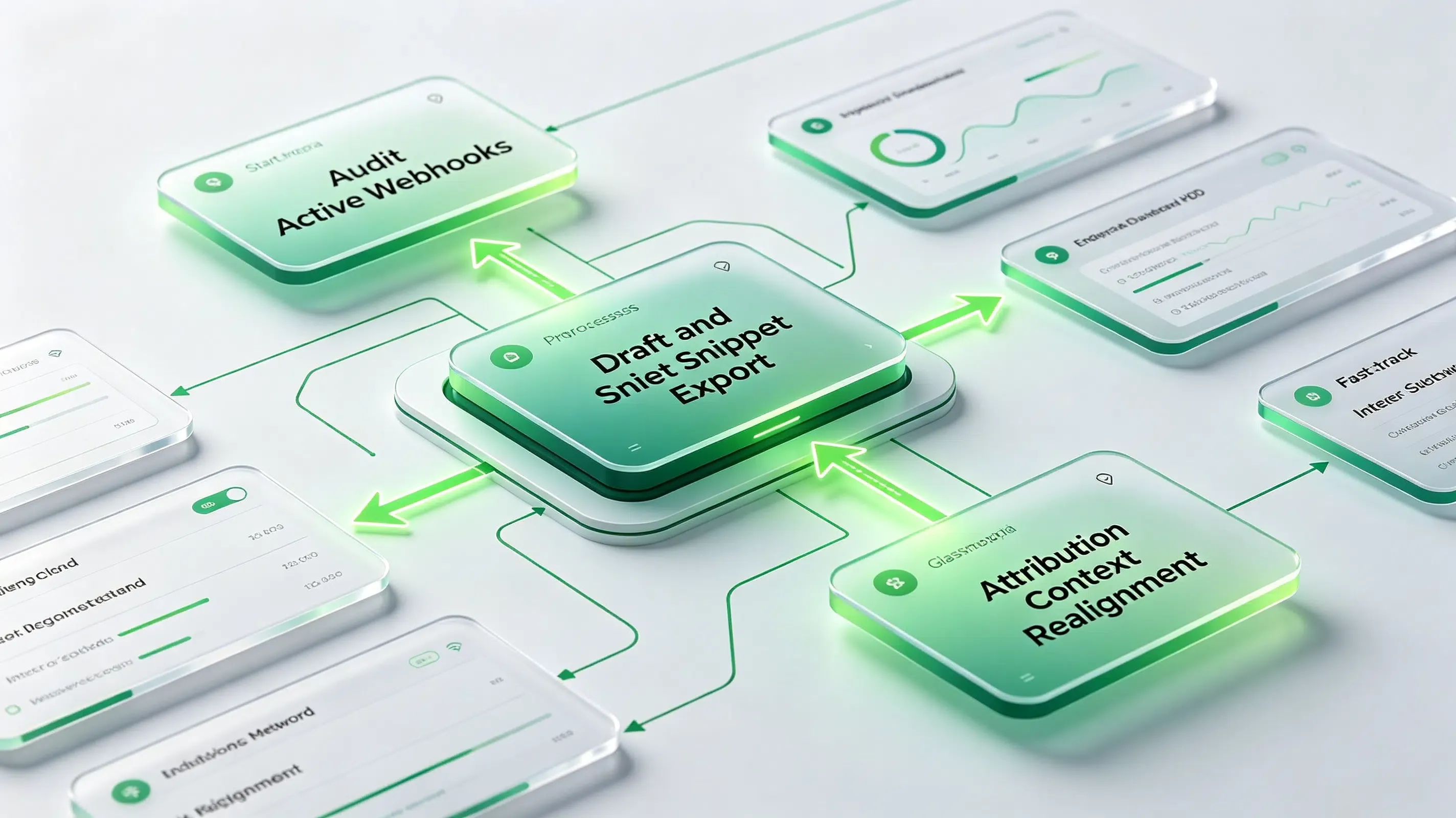
- Audit Active Webhooks: Identify all synced Notion database templates receiving external mail payloads and map them to alternative API endpoints.
- Draft and Snippet Export: According to Notion’s official migration guide, users must manually export all local email drafts, reusable snippets, and custom auto-label parameters before the September 21 deadline.
- Regulated Workspace Migration: The documentation states that teams relying on HIPAA coverage must plan complete client migration by the June 30, 2026, regulatory deadline to remain compliant.
- Attribution Context Realignment: Transition from client-side deep links to server-verified state-matching parameters to handle automated gatekeepers.
Frequently Asked Questions (FAQ)
Does Notion Mail affect Gmail?
What should I export before Notion Mail shuts down?
How can referral attribution survive when Notion Mail Shuts Down?
The retirement of the visual email client highlights a fundamental shift toward backend-driven communication protocols and AI-assisted workflows. As applications increasingly communicate through automated data exchanges rather than human-rendered layouts, engineering teams must re-evaluate traditional integration strategies. Platforms that depend heavily on manual, visual user actions may face structural gaps when automated agents manage the request pipeline. Transitioning to server-side attribution and secure parameter pass-through represents a highly probable direction for maintaining reliable tracking and security coverage.
This structural transition necessitates a realignment of tracking frameworks and integration protocols. Future measurement architectures will likely rely more heavily on server-side state matching, programmatic identity checks, and secure runtime synchronization. As more AI agents begin acting as the first consumer of digital communication, attribution architectures will increasingly depend on server-side identity, deferred state recovery, and protocol-level context preservation rather than browser sessions alone.
Share this article