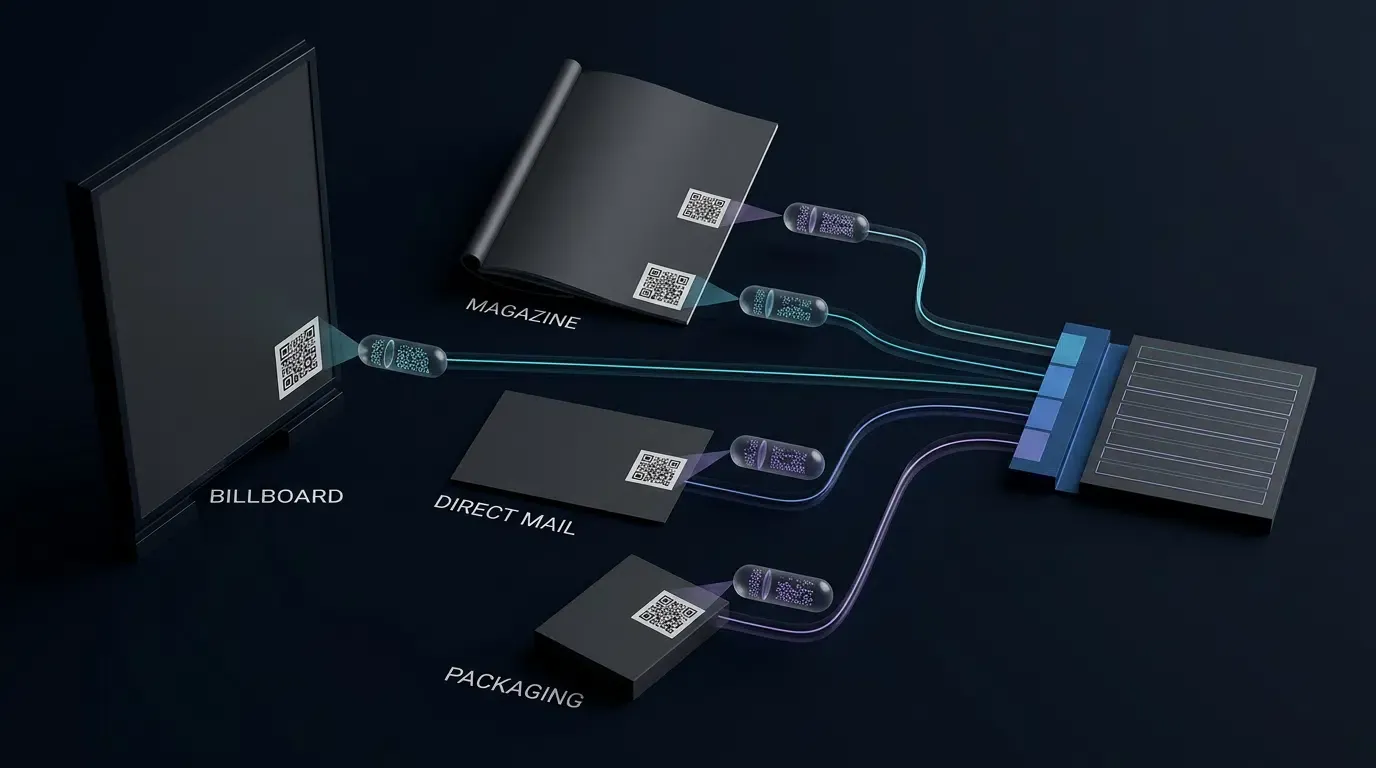
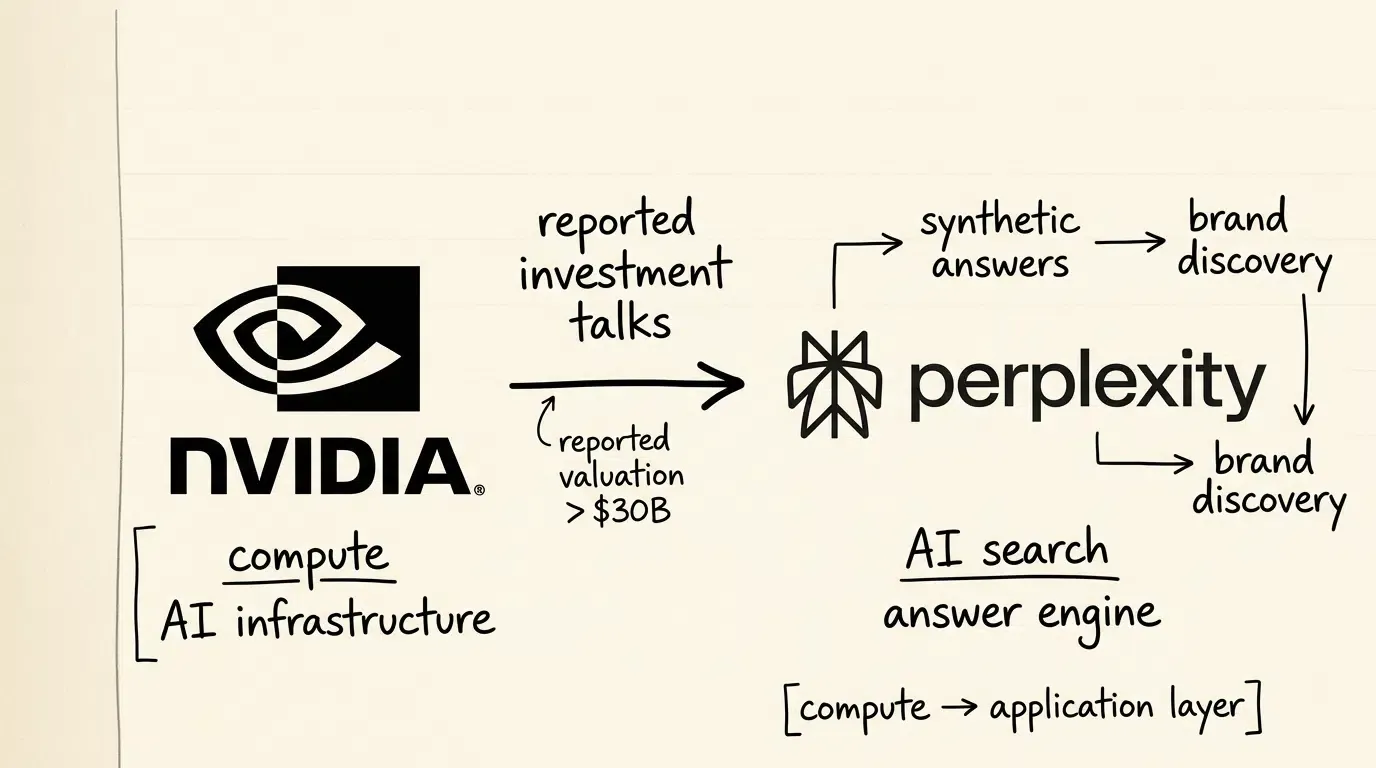
Is NVIDIA investing in Perplexity? NVIDIA is reportedly discussing an investment in the AI search company as part of an equity funding round that could value Perplexity at more than $30 billion, according to reports published on August 24, 2026. The talks highlight how AI infrastructure capital is moving deeper into conversational search and answer engines, where brand discovery can occur before—or without—a traditional referral click. For growth and attribution teams, the resulting challenge is not that every AI interaction can suddenly be tracked, but that conventional last-click measurement now observes a smaller portion of an increasingly fragmented discovery journey.
NVIDIA Investment Talks Could Value Perplexity Above $30 Billion
At a Glance
- Media reports indicate NVIDIA is discussing an investment in Perplexity as part of an equity funding round that could value the AI startup at more than $30 billion, while the broader round is reportedly worth billions of dollars.
- Perplexity’s annualized revenue climbed from under $250 million at the start of 2026 to more than $750 million, supported by the expansion of its Perplexity Computer workflow automation agent.
- The discussions fit an expanding pattern of infrastructure alignment, connecting hardware compute demand with downstream conversational search and software distribution platforms.
The commercial expansion of conversational search is reshaping the artificial intelligence value chain. For decades, search engine economics relied on indexing web pages and delivering ranked directory results, monetized through keyword auctions and pay-per-click advertising. That framework provided website operators with directly observable inbound referral channels. In contrast, conversational answer engines combine large language models with retrieval systems to deliver direct answers, surfacing source citations directly within synthesized answers rather than driving full page visits.
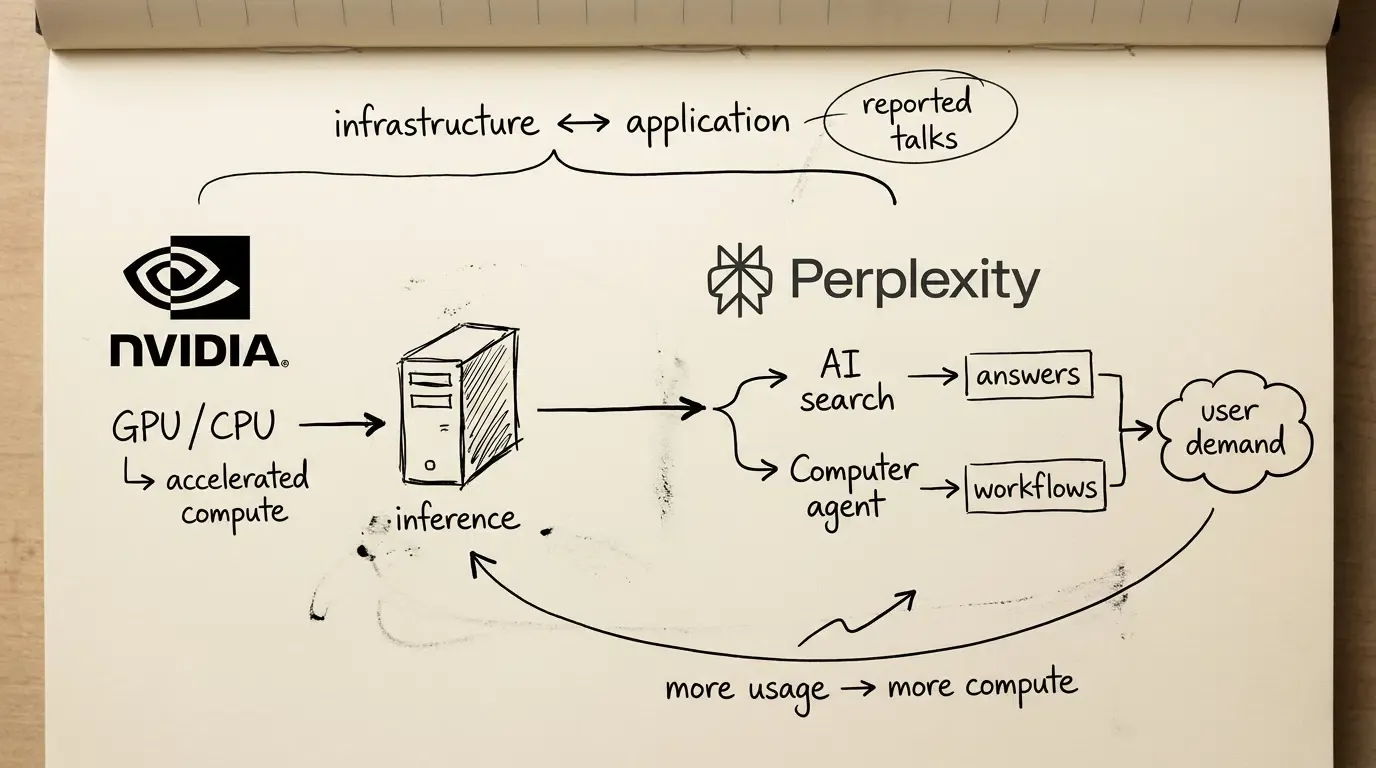
This fundamental shift in user behavior creates a distinct measurement challenge for digital publishers and acquisition marketers. When users receive synthesized answers directly within search or conversational interfaces, click-through rates to external publishers can decline, adding an unobservable discovery layer ahead of traditional web visits. Simultaneously, building and serving these conversational queries requires massive computing infrastructure. Operating real-time multi-model routing and agentic computer workflows requires substantial accelerated computing capacity, escalating operational inference expenses for search providers. These market dynamics are analyzed in recent Reuters reporting tracking the company’s growth trajectory.
The reported talks reflect a broader alignment between AI infrastructure providers and application-layer software companies. The reported funding round could value the startup at more than $30 billion, up from $20 billion in late 2025. Perplexity’s annualized revenue has surpassed $750 million, driven in part by its Perplexity Computer agent for workplace task automation. The discussions follow earlier negotiations where NVIDIA considered technology licensing and hiring arrangements before talks evolved toward an equity investment. Perplexity has separately stated plans to deploy NVIDIA’s Vera CPUs for agentic workloads and maintains an infrastructure agreement with CoreWeave involving NVIDIA Grace Blackwell systems. For NVIDIA, an equity relationship with fast-growing AI applications could deepen exposure to downstream compute demand while broadening its position beyond silicon sales.
Systemic Root Causes: From Direct Referrals to Zero-Click Discovery
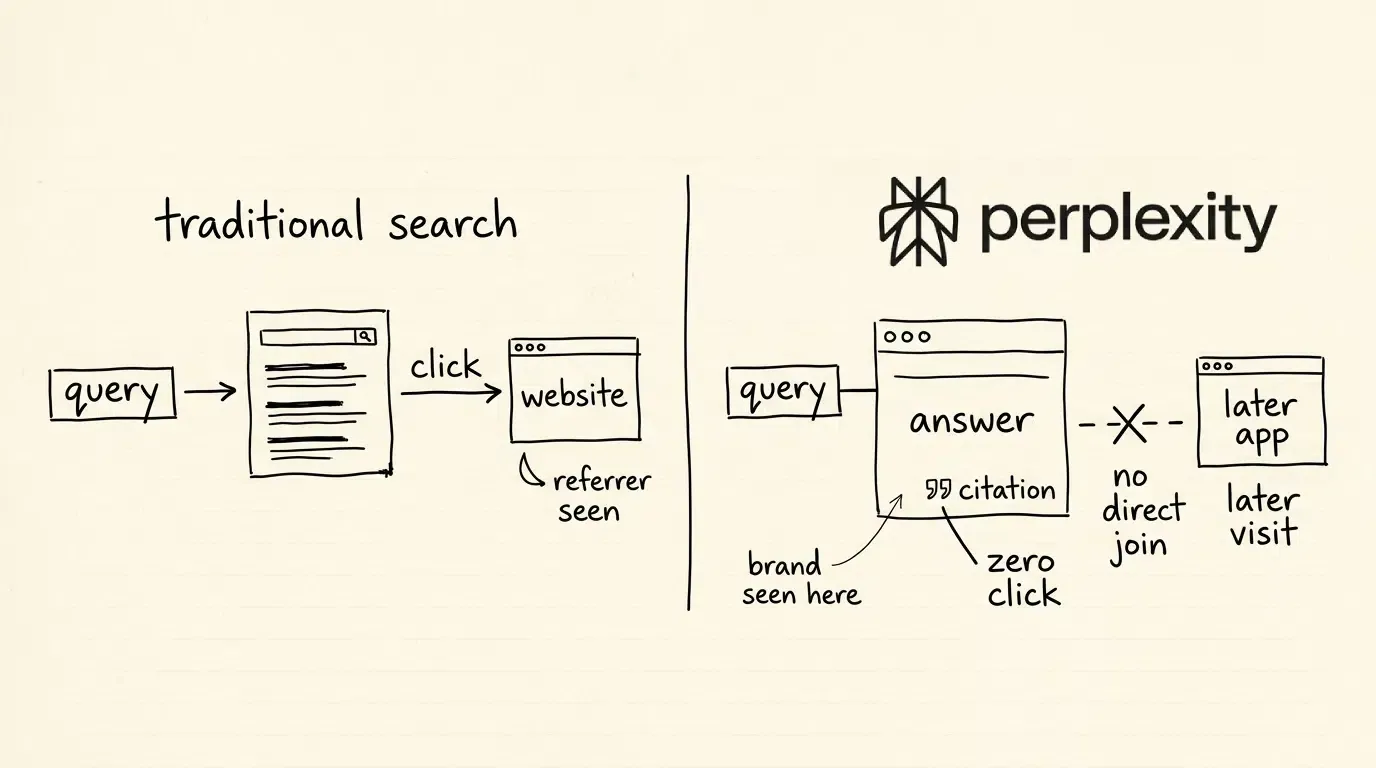
At the architectural level, conversational search platforms alter how digital traffic moves across the internet. In traditional web search, a user query is matched against a search index and ranked results are returned as hyperlinks. When a user clicks a tagged external link, the resulting web session may expose referrer information, campaign parameters, and existing first-party session identifiers, subject to browser and privacy controls.
Conversational answer engines introduce a different interaction flow. Rather than relying solely on live web scraping for every single prompt, modern retrieval architectures may combine search indexes, cached content copies, and live retrieval or external data sources before synthesizing an answer. In many of these interactions, the end user receives the required information without generating an immediate browser session on the cited publisher’s origin server.
Protocol Disconnection: Direct Click-Throughs vs. Synthetic Answer Citations
Many legacy digital measurement setups rely heavily on last-click attribution, assuming that each conversion originates from an identifiable web click. In an answer engine ecosystem, customer discovery occurs within conversational dialogues long before a user visits a website or installs an application.
The diagram below illustrates the protocol divergence between traditional search click funnels and conversational answer engine flows:
[Traditional Search Click Funnel]
  User Query ──> 10 Blue Links ──> Direct Click ──> Inbound Web Session (Referrer / Campaign Data Observable)

[Conversational Answer Engine Flow]
  User Query ──> Synthetic Answer ──> Brand Citation ──> Zero Click / Later Visit (No Direct Join Key)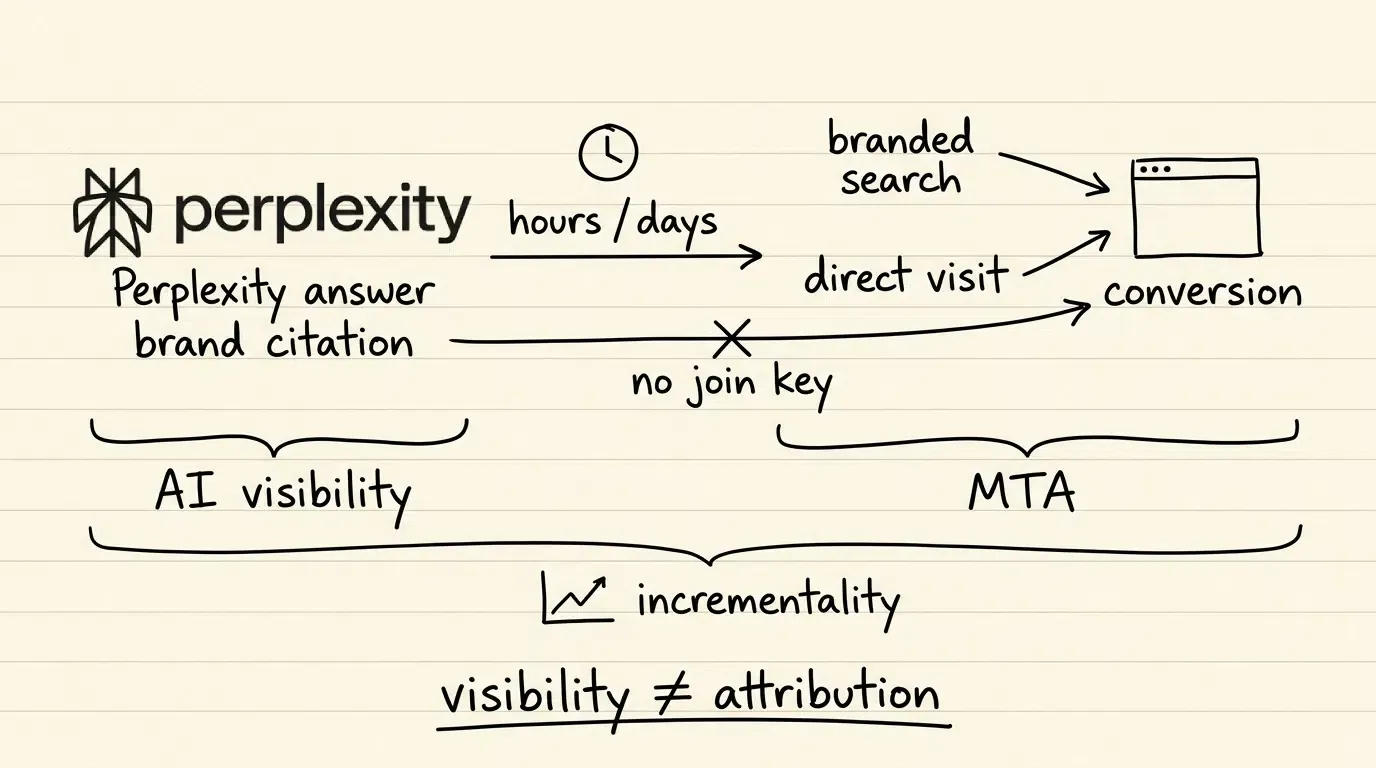
When an answer engine cites a brand, product, or software repository as a source, the user may read the summary, evaluate the recommendation, and independently open the target application on their mobile device hours or days later. Because no direct referral click occurred during the initial evaluation, standard single-touch attribution tools may record the later activation as direct, organic, or another observable downstream source while losing the original AI exposure. In broader digital marketing and application distribution, the erosion of traditional search referrers highlights the growing gap between upper-funnel brand visibility and deterministic conversion attribution. Growth teams require measurement frameworks that separate broad brand visibility from the multi-touch attribution of recorded user interactions.
Build vs. Buy: Managing Multi-Touch Attribution in the AI Search Era
As digital discovery increasingly takes place across conversational search interfaces, engineering and growth teams must re-evaluate how they track user acquisition. Measuring conversions in an AI-search-driven discovery environment requires data pipelines capable of reconciling multi-channel discovery signals with downstream application events. Organizations typically evaluate whether to construct custom in-house event-correlation databases or adopt standardized multi-touch attribution platforms.
Architectural Evaluation: In-House Data Pipelines vs. Standardized Platforms
Constructing an internal multi-touch attribution system requires establishing complex data warehouses to ingest server logs, API webhooks, and third-party platform signals. Engineering teams must design custom algorithmic attribution models, manage session timeouts, and continuously update data pipelines to account for changing browser privacy policies. Conversely, deploying a specialized attribution framework streamlines integration, providing unified reporting across recorded web and mobile touchpoints without ongoing maintenance overhead.
The table below compares standard technical approaches for managing multi-channel attribution and session state:
| Solution | Observable Touchpoints | Cross-Platform Continuity | Engineering Ownership | Best For |
|---|---|---|---|---|
| Single-Touch Web Logging | Direct Clicks Only | Low (Client Cookies Only) | Mostly Internal | Legacy web portals with simple direct conversion funnels |
| In-House MTA Database | Custom Recorded Signals | Variable (Custom Pipelines) | Fully Internal | Large enterprise teams with dedicated data engineering resources |
| Mobile Attribution & Context-Restoration Platform | Recorded Marketing Channels | High (With SDK Integration) | Shared/Vendor-Supported | Omnichannel marketing, mobile apps, and multi-campaign funnels |
Where a measurable interaction exists—such as a tagged referral link, campaign landing page, partner redirect, or other recorded touchpoint—platforms such as OpoInstall can preserve available campaign context across web-to-app journeys through attribution and deferred parameter routing. By preserving campaign parameters across web-to-app transitions through server-side state restoration, this approach supports more accurate conversion measurement across recorded multi-channel funnels. However, zero-click AI mentions remain a separate measurement problem because no user-level referral event exists to join directly to the eventual conversion.
Integration Checklists: Rebuilding Attribution for Answer Engines
To adapt to the rise of conversational search engines and automated discovery layers, technical and marketing teams should implement structured data collection and attribution workflows.
Developer Implementation Checklist
- Centralize Observable Events: Send measurable web, mobile, CRM, and partner events into a common server-side analytics pipeline to build a unified record of observable interactions.
- Integrate Deferred Deep Linking SDKs: Embed lightweight client SDKs within mobile applications to retrieve and match pre-install campaign parameters upon cold launch.
- Preserve Source Metadata: Maintain UTM parameters, referral IDs, landing-page context, and partner source metadata whenever an observable referral click occurs.
Product & Growth Strategy Checklist
- Transition to Multi-Touch Attribution (MTA): Evaluate multi-touch attribution models to allocate credit across all recorded interactions rather than relying solely on last-click data.
- Separate Visibility from Attribution: Report AI citations and conversational brand mentions as upper-funnel visibility metrics rather than forcing them into deterministic conversion attribution.
- Monitor Brand Citation Velocity: Track how frequently company documentation, products, and articles are referenced within conversational search results to evaluate broad market awareness.
Implementing these practices enables organizations to maintain clear visibility over recorded acquisition funnels while acknowledging the structural boundaries of zero-click discovery.
Frequently Asked Questions (FAQ)
Why is NVIDIA considering an investment in Perplexity?
How does conversational search disrupt traditional website click-through traffic?
How should teams measure attribution when AI search creates zero-click discovery?
Key Takeaways for Engineering Teams
The reported NVIDIA-Perplexity investment talks highlight a continuing shift in how digital information is indexed, retrieved, and monetized. As conversational answer engines and automated agents become increasingly important discovery layers, traditional web-based click funnels will capture only a portion of the overall customer journey.
To maintain growth in this evolving landscape, engineering and growth teams must modernize their attribution infrastructure. By combining multi-touch attribution, server-side context preservation, and deferred parameter pass-through for observable journeys, organizations can measure recorded customer journeys more accurately while using aggregate, visibility, and incrementality methods to evaluate AI discovery that lacks a direct joinable event.
Share this article