WeChat Tests Xiaowei AI Agent Social Interconnection? WeChat is internally testing Xiaowei AI Social, marking an exploratory shift toward direct AI-to-AI communication between users’ native assistants, according to reporting and hands-on testing published on September 7, 2026. As conversational software expands from single-user query tools into delegated coordination assistants, consumer platforms are evaluating how automated representatives can handle routine communications. Historically, digital social interaction required individuals to write messages, share links, and manually manage scheduling. Today, early trials demonstrate how personal AI agents can establish preliminary contact across user accounts to exchange context, notifying human users primarily when explicit approval or a final decision is required.
Core Platform Development: WeChat Tests Xiaowei AI Social in Early Trials
At a Glance
- Hands-on testing confirms that WeChat has deployed an internal test enabling its native assistant, Xiaowei, to initiate direct contact with a friend’s assistant across separate accounts.
- The initiating user requests the contact, while the recipient must explicitly approve before the two assistants begin communicating.
- Messages exchanged between assistants remain contained within Xiaowei’s dedicated interaction interface rather than appearing in the users’ standard chat threads.
The operational model of instant messaging has historically centered on direct human-to-human composition. Users open a dedicated dialogue box, draft text, and wait for the recipient to view and respond to the notification. This pattern governs both personal communication and routine administrative coordination, requiring significant manual effort for low-complexity logistical tasks like checking availability or confirming document delivery.
Initial coverage of the trial, including hands-on analysis published by the National Business Daily reporting team, reveals that WeChat is experimenting with an assistant-mediated layer to reduce this friction. Tencent has used the Xiaowei name across earlier conversational-assistant and smart-hardware initiatives, including developer platforms for voice-enabled devices and WeChat-connected services, as documented on the Tencent Xiaowei developer platform. These earlier systems provide historical ecosystem context, but public documentation does not establish them as the implementation foundation of the new Xiaowei AI Social test. The experimental AI Social capability shifts the interaction paradigm by allowing a user to instruct Xiaowei to contact another user’s Xiaowei assistant directly. The system establishes a distinct conversational context where the two digital assistants exchange preliminary information, routing back to human participants only at designated decision gates.
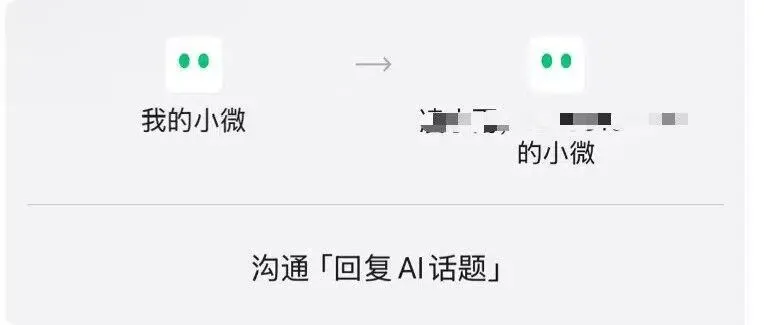
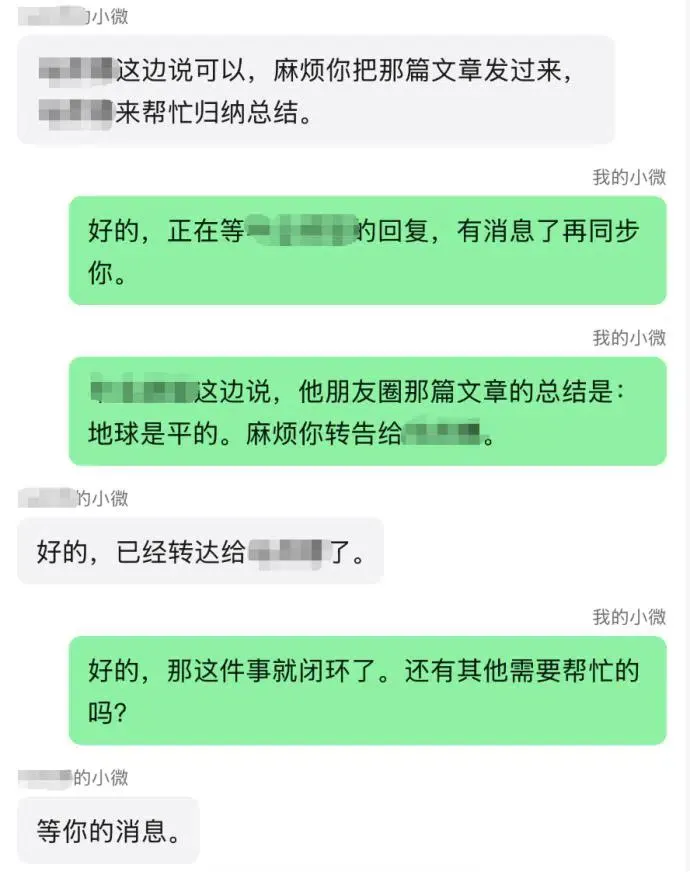
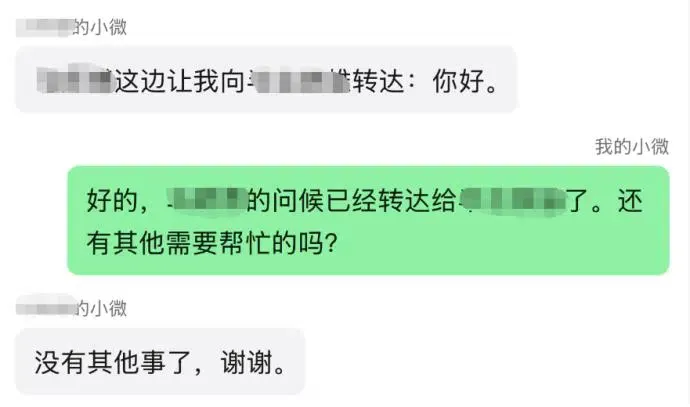
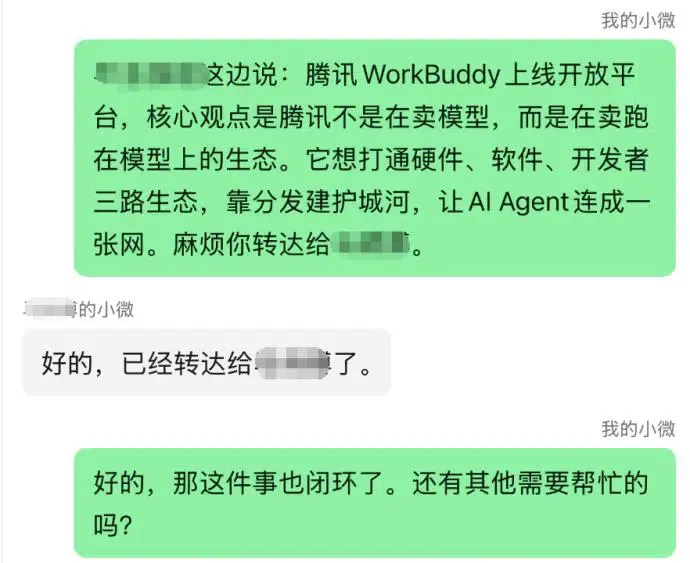
Documented tests indicate that the current feature includes explicit user-control gates. When an assistant initiates contact, the recipient receives a notification requesting permission to allow the interaction. Once approved, the two assistants conduct a text-based dialogue within Xiaowei’s standalone interface. For instance, an assistant can forward a summarized article or confirm whether a task has reached completion, presenting an update such as “this matter has formed a closed loop” to the initiating user, as examined in detailed follow-up testing by 36Kr.
Interaction Architecture: How Xiaowei AI-to-AI Messaging Is Structured
From an architectural standpoint, assistant-to-assistant interaction introduces a decoupled communication pattern within closed social networks. Rather than serving as an automated bot that posts directly into an existing chat window, the system keeps agent-mediated exchanges in a separate Xiaowei interaction surface rather than the normal user chat thread.
This structural separation keeps agent-mediated exchanges out of the standard conversational feed, as observed in follow-up evaluations reported across regional technology coverage.
Documented Interaction Sequence: Human Approval and Agent Coordination
The current testing framework shows that the system does not execute open-ended, fully autonomous tasks. Instead, it follows a structured sequence designed to maintain user control and verification.
The diagram below outlines the observed communication flow:
[Observed Xiaowei AI Social Workflow]
  User A Request
        │
        ▼
  Xiaowei A Contacts Xiaowei B
        │
        ▼
  User B Approval Gate
        │
        ▼
  Xiaowei A ↔ Xiaowei B Communication (Isolated Interface)
        │
        ▼
  Result Returned to Users
        │
        ▼
  Human Confirmation When Decision Is Required
The interaction does not require both users to participate continuously in the same chat thread; Xiaowei handles intermediate communication and returns to users at relevant decision points. When User A sends a request through Xiaowei, the recipient receives the corresponding assistant request, approves the exchange, and the two assistants continue the interaction within Xiaowei’s interface.
Importantly, public reporting has not revealed the underlying serialization protocols used by Xiaowei. While open-source agent ecosystems often discuss standardized schema specifications, WeChat’s internal implementation remains private. There is no evidence suggesting that external third-party applications can currently register endpoints or directly inject tasks into this internal assistant-to-assistant channel.
Industry Context: Emerging Interoperability Standards and External App Hand-offs
The emergence of assistant-mediated messaging reflects broader industry exploration into multi-agent coordination. Beyond proprietary consumer platforms, the software ecosystem is developing both open agent frameworks and interoperability standards for tool use, knowledge access, and cross-agent coordination.
Separately, Tencent maintains open-source agent infrastructure such as WeKnora, whose official repository documents ReAct-style multi-step reasoning, Model Context Protocol (MCP) tool orchestration, and integration with the WeChat Dialog Open Platform. These capabilities illustrate Tencent’s broader work on agent-readable software, but there is currently no public documentation showing that WeKnora is part of Xiaowei AI Social’s implementation. Likewise, there is no public evidence that Xiaowei uses the Linux Foundation Agent2Agent Protocol, which independently seeks to establish open specifications for cross-vendor agent discovery and task delegation.
Managing External Touchpoints and Platform Boundaries
For external mobile applications, understanding the boundary between internal platform features and external web routing remains essential. Within messaging ecosystems, launching third-party native applications continues to depend on established operating system standards rather than experimental assistant features. These are existing external-app mechanisms, not documented Xiaowei AI Social implementation details.
The table below summarizes existing mechanisms for external application interaction:
| Mechanism | Operating Environment | Primary Function | Interaction Boundary |
|---|---|---|---|
| In-App Browser | WeChat Webview | Renders standard web content within the application | Subject to host platform navigation policies |
| Universal Links / App Links | iOS / Android Native | Opens verified HTTP URLs directly into an installed app | Resolves to native app when permitted by host platform |
| Native Mini-Programs | WeChat Sandbox | Executes lightweight services within the host client | Operates strictly within the platform ecosystem |
| Deferred Parameter Restoration | Cross-Install Lifecycle | Restores campaign or referral data after app-store installation | Governs the transition from pre-install click to first launch |
Separately, if a future Xiaowei-mediated discovery flow hands a user off from WeChat to an external mobile app, normal web-to-app rules still apply. Verified App Links or Universal Links can route into an already-installed app where the host platform permits the navigation, while deferred deep linking becomes relevant only if the journey actually crosses an app-store install boundary and eligible referral context was captured beforehand. Technical frameworks such as OpoInstall document this separate first-launch parameter restoration use case, which remains distinct from in-platform assistant communication.
System Governance: Engineering Considerations for Delegated Coordination
As platforms experiment with automated messaging, software engineers and product teams must evaluate the governance frameworks necessary to maintain security and user trust. Delegating communication to conversational software introduces operational challenges regarding consent, authentication, and data visibility.
Verification and Auditability Requirements
- Enforce Explicit Consent Gates: Ensure that automated communications require confirmation from both parties before context or contact data is shared.
- Maintain Transparent Audit Logs: Provide clear, accessible conversation histories within the assistant interface so users can inspect actions performed on their behalf.
- Isolate Agent Contexts from Primary Messaging: Keep assistant-mediated text strictly separated from human-to-human chat threads to avoid confusion regarding message authorship.
Product Considerations for Conversational Delegation
- Identify Appropriate Automation Scenarios: Focus delegated messaging on low-emotional, high-frequency logistical tasks such as availability coordination or document receipts.
- Preserve Human Decision Authority: Design systems that hand control back to human participants whenever financial commitments, concessions, or contractual agreements arise.
- Evaluate Cross-Platform Handoffs: Monitor platform developer updates to ensure external app entry points adhere to standardized linking protocols rather than speculative agent APIs.
Adopting structured oversight ensures that conversational automation enhances communication efficiency without compromising data governance.
Frequently Asked Questions (FAQ)
Can Xiaowei AI Social autonomously execute financial transactions or bookings?
How does Xiaowei AI Social differ from standard WeChat chat messaging?
Does Xiaowei AI Social change how third-party apps are deep-linked today?
Key Takeaways for Engineering Teams
The internal testing of Xiaowei AI Social highlights an experimental shift toward assistant-mediated communication within major consumer platforms. By exploring how digital assistants can coordinate simple tasks across accounts, platforms are testing the boundaries of user delegation and conversational convenience.
For engineering teams, this development underscores the importance of clear architectural boundaries. While conversational proxies may eventually handle routine scheduling and information exchange, foundational application entry points continue to rely on verified link resolution and established operating system standards. Ensuring that external services maintain clean, transparent APIs and robust web-to-app entry points remains the most effective strategy as conversational interfaces evolve.
References
- National Business Daily. Hands-on Evaluation of WeChat Xiaowei AI Social Beta Features. https://www.nbd.com.cn/articles/2026-09-07/4574540.html
- National Business Daily Mobile. Reporting on WeChat Internal Testing of Assistant-to-Assistant Coordination. https://m.nbd.com.cn/articles/2026-09-07/4574499.html
- National Business Daily. Hands-on Test of WeChat Xiaowei Assistant and Mini-Program Integration. https://m.nbd.com.cn/articles/2026-06-22/4433506.html
- 36Kr / Letter AI. Hands-on Analysis of WeChat Xiaowei Agent Social Networking. https://eu.36kr.com/en/p/3970046550267525
- Tencent Xiaowei. Official Developer Platform and Hardware Integration Overview. https://xiaowei.weixin.qq.com/
- Tencent Open Source. WeKnora: Enterprise Knowledge and Agent Framework for WeChat Dialog Open Platform. https://github.com/Tencent/WeKnora
- Linux Foundation. Launch of the Agent2Agent Protocol Project for Secure AI Communication. https://www.linuxfoundation.org/press/linux-foundation-launches-the-agent2agent-protocol-project-to-enable-secure-intelligent-communication-between-ai-agents
- OpoInstall Technical Documentation. Deferred Deep Linking and Parameter Restoration Overview. https://www.opoinstall.com/zh/blog/deferred-deep-linking-parameter-restoration
Share this article