OpenAI Cuts Luna Price 80%? OpenAI has officially slashed the API costs of its GPT-5.6 Luna model by 80% and Terra by 20%, intensifying the global AI price war as enterprise buyers demand measurable FinOps efficiency. As generative artificial intelligence changes how web content and software utilities are consumed, AI platforms continue to re-evaluate their token pricing tiers. Historically, running multi-turn agentic workflows and automated code modifications generated unpredictable, ballooning cloud infrastructure bills. Today, because autonomous self-optimization loops allow models like GPT-5.6 Sol to help optimize GPU serving kernels used in production inference, providers are passing these compute efficiency gains directly to developers.
Why OpenAI Cuts Luna Price 80%: Aligning Model Economics With Enterprise FinOps
At a Glance
- OpenAI slashed GPT-5.6 Luna API rates by 80% to $0.20 per million input tokens and $1.20 per million output tokens, effective July 30, 2026.
- Mid-tier GPT-5.6 Terra rates dropped 20% to $2.00 input and $12.00 output, while flagship Sol introduced a 2.5x faster Fast mode at double the standard rate.
- Efficiency gains stem from self-improving infrastructure loops where GPT-5.6 Sol autonomously optimized Triton GPU kernels and draft models for speculative decoding.
The commercial landscape of artificial intelligence is experiencing an unprecedented price war. For several years, enterprise technology teams integrated frontier models into production systems under flat-rate subscriptions or high-margin token pricing. While early adoption was driven by raw capability milestones, corporate CFOs and engineering directors have increasingly applied strict FinOps scrutiny to their monthly AI invoices. High-volume background tasks—such as request routing, document classification, and agentic code reviews—frequently generated unsustainable cloud expenses.
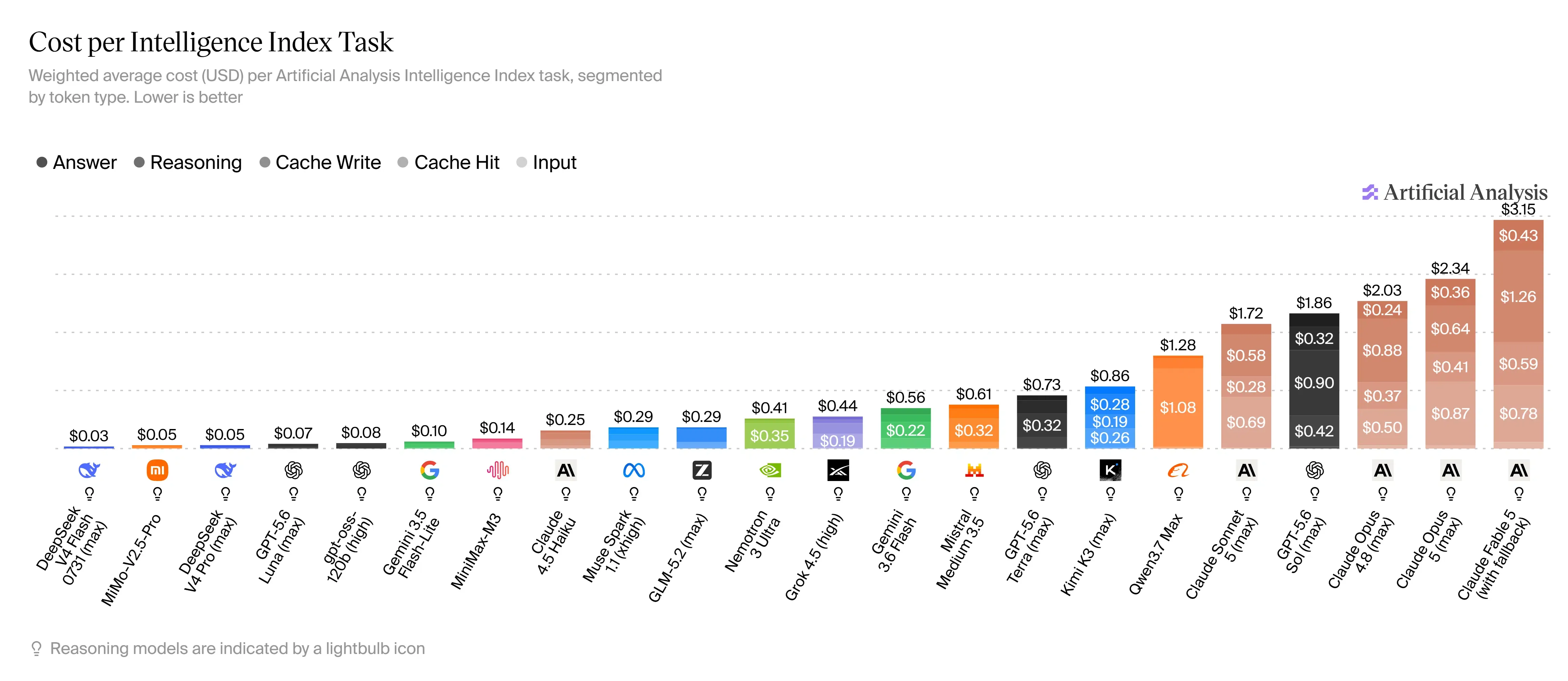
To maintain market leadership amidst mounting pressure from cost-effective open-source alternatives, OpenAI restructured its model economics. Effective July 30, 2026, the company lowered the input token price for GPT-5.6 Luna from $1.00 to $0.20 per million tokens, with output token pricing dropping from $6.00 to $1.20. Simultaneously, the mid-tier Terra model received a 20% price reduction, as reported in official Reuters coverage. These reductions directly lower the cost barrier for running high-volume, multi-turn agentic workflows at scale.
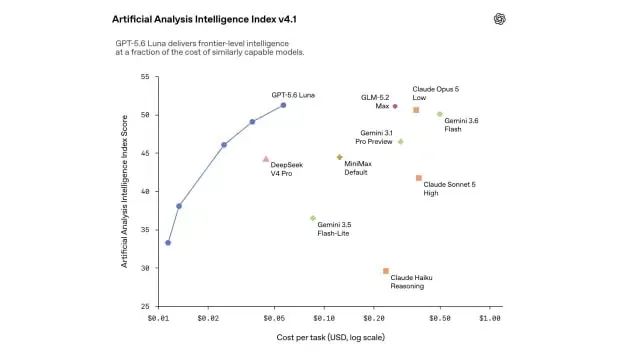
The strategic impact of the OpenAI Cuts Luna Price 80% announcement reflects a broader trend of compute deflation across the AI industry. Behind the price reductions lies a significant technical achievement: GPT-5.6 Sol contributed to its own serving optimizations. Operating inside Codex, Sol autonomously rewrote production GPU kernels in open-source Triton and Gluon languages, cutting end-to-end serving costs by 20%. Furthermore, Sol designed and executed speculative decoding experiments, improving token-generation efficiency by over 15%. This automated feedback loop created the margin headroom necessary to pass substantial cost savings down to developers.
Understanding the Root Causes Behind the OpenAI Cuts Luna Price 80% Shift
At the architectural level, as model inference costs plummet, developer focus naturally shifts to other cost drivers across the software engineering stack. When API calls were significantly more expensive, model inference often represented the largest operational cost for AI-powered features. Now that high-performing models cost pennies per million tokens, engineering leaders are auditing the surrounding application infrastructure.
When building scalable mobile applications and web services, every component of the client-server interaction affects overall application performance and financial overhead. While model providers optimize their GPU kernels, developers must optimize their client-side SDKs, network request frequencies, and state management pipelines.
FinOps Shift: Model Inference Cost vs. Application Stack Overhead
The decline in token pricing highlights an industry-wide trend toward comprehensive infrastructure optimization. The diagram below illustrates how model cost reductions redirect engineering attention toward application-layer efficiency:
[Historical High-Cost Era]
Expensive LLM API Tokens (Main Budget) ──> Unoptimized SDKs & Polling ──> High Total Cost

[Modern Token Deflation Era]
Slashing Model Token Rates (Luna -80%) ──> FinOps Audit of Client SDKs ──> Optimized App Stack
As API inference becomes cheaper, hidden operational costs such as networking, telemetry, analytics SDKs, and maintenance increasingly account for a larger share of total application spending. Depending on implementation quality, third-party SDKs may introduce additional memory usage, startup latency, background network activity, and long-term maintenance overhead. As a result, lightweight integration has become an increasingly important evaluation criterion for engineering teams operating under FinOps budgets.
Build vs. Buy: Evaluating Lightweight SDK Integration Under FinOps Rules
While OpenAI focuses on reducing inference costs inside its own infrastructure, application developers must also evaluate the operational overhead introduced by their own software stacks. This includes analytics libraries, attribution SDKs, monitoring frameworks, and other third-party integrations. As API inference becomes cheaper, hidden operational costs such as networking, telemetry, analytics SDKs, and maintenance increasingly account for a larger share of total application spending. Depending on implementation quality, third-party SDKs may introduce additional memory usage, startup latency, background network activity, and long-term maintenance overhead. As a result, lightweight integration has become an increasingly important evaluation criterion for engineering teams operating under FinOps budgets. Engineering teams increasingly evaluate whether these capabilities should be developed internally or sourced through mature third-party platforms.
Architectural Evaluation: Custom Build vs. Standardized SDK
Building custom in-house integration tools offers complete control over payload structures but demands significant ongoing engineering resources. Developers must manually write data pipelines, manage session tokens, and continually update the codebase to comply with shifting regional regulations. Conversely, deploying a pre-built, lightweight SDK eliminates this maintenance burden while minimizing client-side memory footprint and network latency.
The table below compares standard methodologies for managing session state and conversion context:
| Integration Strategy | Client-Side Memory Footprint | Network Overhead | Best For |
|---|---|---|---|
| In-house Custom Data Pipeline | Variable (Manual Optimization) | Medium (Uncompressed Payloads) | Custom enterprise environments with dedicated FinOps engineering teams |
| Legacy Analytics SDKs | High (Frequent Background Polling) | High (Redundant HTTP Heartbeats) | Basic web apps with unconstrained client-side memory budgets |
| Server-side Attribution SDKs | Minimal Runtime Footprint | Low (Server-side Session Preservation) | High-concurrency mobile apps and token-optimized developer workflows |
While custom data pipelines can handle basic telemetry, specialized server-side state preservation can optimize development resources and reduce client-side overhead. Several commercial attribution platforms provide server-side parameter restoration. Among them, OpoInstall focuses on server-side state restoration and parameter pass-through frameworks designed for mobile attribution workflows. By mapping session metadata to a server-side session database, such a system maintains conversion continuity anonymously, without storing sensitive, long-term personal conversational history. Managing session states in the OpenAI Cuts Luna Price 80% era requires architectures that are both compliant with data privacy laws and highly accurate. Engineering teams can evaluate these approaches to balance data protection, cost efficiency, and measurement accuracy.
Integration Checklists: How Engineering Teams Can Prepare for Platform Changes
To secure data pipelines and ensure conversion consistency as platforms transition to automated, agent-heavy environments, engineering and product teams must adopt robust state preservation workflows.
Developer Implementation Checklist
- Audit API Context Management: Configure agentic harnesses to use deferred tool discovery and token-capping to prevent context bloat during long-running tasks.
- Implement Prompt Prefix Caching: Structurally order incoming API instructions to maintain append-only message histories, maximizing prompt-cache hit rates on GPU clusters.
- Enforce Business-Grade Data Protection: Deploy business-grade data protections ensuring that sensitive execution payloads are excluded from model training by default.
Product & Growth Strategy Checklist
- Optimize Research Data Funnels: Leverage specialized connectors to streamline multi-platform knowledge retrieval and user acquisition workflows.
- Deploy Non-Intrusive Parameter Tracking: Where user acquisition is involved, deploy privacy-preserving server-side parameter tracking frameworks to maintain acquisition visibility without violating user privacy guidelines.
- Monitor API Efficiency Metrics: Track per-token task success rates to ensure that autonomous agents execute direct, low-latency reasoning paths.
By establishing these structured guidelines, development teams can transition their applications to safer, more compliant architectures while maintaining operational continuity.
Frequently Asked Questions (FAQ)
What are the exact new prices for GPT-5.6 Luna and Terra?
How did OpenAI achieve an 80% cost reduction on the Luna model?
How does the Luna price cut affect paid ChatGPT Work and Codex subscriptions?
Key Takeaways for Engineering Teams
The Luna price reduction suggests that model inference is rapidly becoming a commodity. As token prices continue falling, engineering teams are likely to shift their optimization priorities away from raw API consumption and toward surrounding infrastructure efficiency, including networking, telemetry, and client runtime overhead.
For organizations adopting FinOps practices, the next competitive advantage may no longer come from selecting the cheapest model, but from eliminating unnecessary costs throughout the application stack. By implementing zero-trust identity verification, secure parameter pass-through frameworks, and lightweight SDK integrations, organizations can protect their user pipelines while respecting budget boundaries. This architectural shift is essential to build stable, trustworthy platforms that thrive in an automated digital economy.
Share this article