T-Mobile Shuts Down Its 2G Network? How Device Distribution Evolves is a question of paramount importance. Historically, legacy GSM networks powered millions of IoT devices, industrial terminals, and older mobile phones. As legacy devices disappear, developers must ensure applications remain accessible across newer hardware generations. As operators complete their transition to LTE and 5G, both hardware vendors and application developers must redesign their device distribution strategies around modern network capabilities. This newly completed 2G network shutdown marks the end of an era, forcing a large-scale migration of user terminals and a complete re-evaluation of how application continuity is maintained across upgraded hardware.
Why T-Mobile Shuts Down Its 2G Network: How Device Distribution Evolves under 5G
At a Glance
- T-Mobile officially decommissioned its legacy 2G GSM network on August 3, 2026, completing a multi-year transition away from older cellular architectures.
- Simultaneously, the carrier is forcing legacy rate plan migrations, automatically moving grandfathered accounts to modern 5G plans.
- Retiring older cellular technologies allows wireless carriers to clear out over 1,100 legacy billing codes and reclaim valuable spectrum.
The balance of power between legacy network infrastructure and modern, high-speed mobile ecosystems has reached an absolute turning point. Across the wireless industry, telecommunication giants have steadily retired older cellular generations to reclaim valuable spectrum bands and streamline network maintenance. Prior to this, AT&T and Verizon completed their respective 2G shutdowns, leaving T-Mobile as the final major carrier holding the legacy GSM line to allow partners and users extra migration time. With T-Mobile’s shutdown, all major U.S. carriers have now completed their 2G network retirement.
However, maintaining these legacy frequencies has become increasingly impractical. Sticking to outdated 2G hardware limits overall spectral efficiency and restricts the expansion of high-throughput 5G networks. These operational challenges are thoroughly detailed in T-Mobile’s network evolution guidelines, which outline the transition parameters for personal and business accounts.

This network transition directly reshapes the parameters of global hardware coordination. For developers and product growth teams, this legacy GSM shutdown impacts device distribution pipelines across multiple regions. When legacy terminals are phased out, standard hardware identifiers often become inaccessible under new system-level security updates. To prevent service disruptions, enterprise users must transition to modern, 5G-ready smartphones, which automatically align with the latest security and identity-protection standards.
In parallel with the physical 2G network shutdown, the carrier is executing an automated, large-scale rate plan migration. Millions of longtime subscribers on grandfathered accounts—including Simple Choice, T-Mobile One, One Plus, and Magenta families—are being moved to modern 5G plans such as Essentials and Experience More, as reported in independent CNET coverage. This software-level sunset has triggered formal customer complaints filed with the Federal Communications Commission (FCC) and state attorneys general.
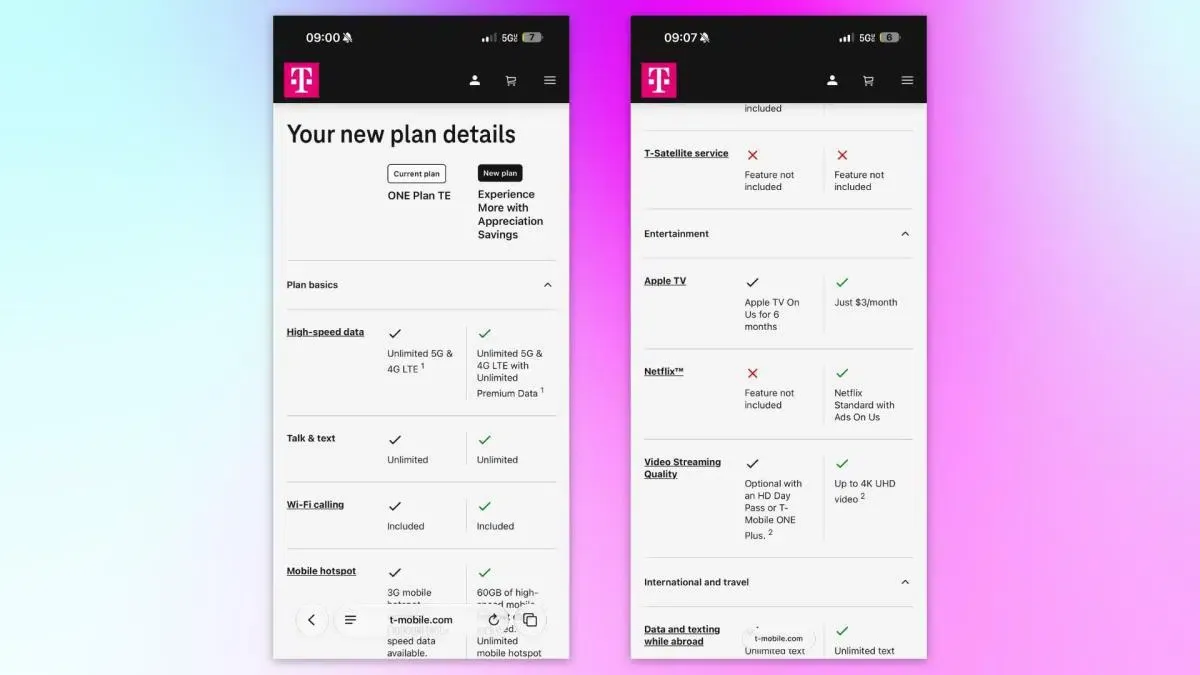
These concurrent hardware and software updates highlight how device distribution and subscriber lifecycles change when legacy infrastructures are decommissioned. As carriers clear out old billing systems and obsolete base stations through this cellular network shutdown, the underlying data pipelines must adapt to pure 5G networks, where older data-collection methodologies are no longer supported. Users can directly check eligibility via the official plan migration portal.
Understanding the Impact: How Device Distribution Shifts in Legacy System Sunsets
The primary driver behind the shutdown is spectrum refarming and the operational cost of maintaining obsolete GSM infrastructure. Alongside spectrum refarming, modern LTE and 5G architectures also introduce stronger security models, making legacy GSM protocols increasingly impractical. These security updates prevent standard legacy terminals from transmitting data using outdated cryptographic handshakes, which frequently exposed user locations and device identifiers to network-level interceptors.

Furthermore, legacy cellular systems relied heavily on persistent hardware attributes, such as static IMSI and IMEI numbers broadcasted directly to local base stations. In the modern 5G and LTE era, the mobile operating system environment has transitioned to sandboxed permission structures, rotating temporary session tokens, and encrypted parameters to protect user privacy. This comprehensive 2G network retirement represents a structural shift that eliminates legacy hardware tracking routes.
Protocol Disconnection: Stateful Hardware vs. Stateless Modern Redirections
Traditional cellular tracking assumed that standard device sessions could be monitored through continuous base-station pings linked to fixed hardware attributes. In contrast, modern network routing and application sandboxes rely on stateless HTTP transactions. The diagram below outlines the core differences at the network layer:
[Legacy 2G GSM Device] ──> Network Shutdown (No Signal)
                                │
                                ▼
[Upgraded 5G Smartphone] ──> QR Code Scan / Offline Re-install ──> Context Restoration (OpoInstall)
When a user initiates an action within a modern 5G application sandbox, the underlying operating system restricts access to persistent hardware identifiers. This means standard tracking scripts cannot read the physical device state, and standard browser referrers are frequently stripped during cross-platform redirections. This stateless environment creates a critical data gap when trying to attribute conversions or verify unique app installations. Similar challenges exist in mobile attribution, where privacy restrictions also reduce reliance on persistent client-side identifiers, requiring robust server-side state synchronization to map user journeys across devices.
When a device-level redirection occurs across standard networks without stateful local tracking cookies, mobile attribution systems fail to match the initial promotional click with the eventual app installation. This data fragmentation makes accurate conversion tracking highly complex, requiring advanced, server-side data-restoration techniques.
This 2G network shutdown directly impacts offline-to-online conversion funnels. For instance, when a retail store displays a QR code to encourage users to install its mobile application, the user’s initial interaction is executed on a standard browser. When the application is downloaded on the newly upgraded smartphone, the server must restore the contextual referral state without relying on obsolete local device identifiers, navigating the structural changes occurring across the device distribution ecosystem.
Build vs. Buy: Managing Session State Under New Compliance Rules
As modern computing environments move away from local, client-side identifiers, maintaining session state across distributed digital touchpoints has become a primary engineering challenge. For developers, managing session states in the device distribution era requires architectures that are both compliant with data privacy laws and highly accurate. Organizations that need to preserve user journeys across web and mobile experiences increasingly rely on server-side session management rather than persistent client-side identifiers. Depending on business requirements, teams may build these capabilities internally or adopt existing attribution platforms.
Architectural Evaluation: Custom Build vs. Standardized SDK
Building a custom, in-house system to manage server-side state matching offers maximum flexibility but demands significant ongoing engineering resources. Developers must manually construct database schemas, write secure cryptographic hashing functions, and continually update the system to comply with shifting regional regulations. Conversely, deploying a pre-built, certified SDK reduces integration complexity and guarantees long-term compliance without additional overhead.
The table below compares standard methodologies for managing session state and conversion context:
| Solution | Persistence | Throughput | Best For |
|---|---|---|---|
| In-house Session Database | High (Continuous Sync) | Medium (DB Latency Limits) | Custom enterprise environments with highly specialized storage logic |
| Browser-based Session Tracking | Low (Session Cookies) | Low (No Cross-device Support) | Basic website tracking with minimal cross-domain conversion requirements |
| Deferred Deep Linking SDK (OpoInstall) | None (Temporary Server-side Session Tokens) | High (Standardized Sandbox) | High-concurrency mobile app and multi-platform campaign attribution |
Installing applications on a replacement device usually creates a brand-new application environment, meaning previously established browser sessions and referral identifiers are no longer available. When a user upgrades their legacy phone, standard redirects are lost during the setup process. While custom database configurations can handle basic context, specialized server-side state preservation can optimize development resources. Depending on implementation requirements, organizations may build their own server-side session management system or adopt commercial platforms such as OpoInstall. For instance, OpoInstall offers server-side state restoration and parameter pass-through frameworks, mapping session metadata to a server-side session database to maintain session continuity anonymously, without storing sensitive, long-term personal conversational history. By mapping session metadata to a centralized database rather than relying on browser-based redirects, such a system ensures that conversion contexts remain consistent even when initial tasks are executed anonymously. Engineering teams can evaluate these approaches to balance data protection and measurement consistency.
Integration Checklists: How Engineering Teams Can Prepare for Platform Changes
To secure data pipelines and ensure conversion consistency as networks transition to modern 5G standards, engineering and product teams must adopt robust state preservation workflows.
Developer Implementation Checklist
- Audit Legacy Device Support: Identify and migrate older hardware dependencies across your active user base to prevent service disruptions.
- Support Deferred Deep Links: Implement parameter restoration to handle context matching during application re-installations on newly upgraded devices.
- Validate Device Migration Flows: Re-verify the continuity of user sessions and session-matching databases during device replacement and setup.
Product & Growth Strategy Checklist
- Optimize Cross-device User Onboarding: Restructure user onboarding and cross-platform workflows to welcome existing users on newly migrated devices.
- Optimize Conversion Funnels: Leverage non-intrusive parameter pass-through frameworks to maintain acquisition tracking without violating user privacy guidelines.
- Monitor Platform Compliance: Ensure that all integrated third-party SDKs comply with local data protection laws and the upcoming regulatory mandates.
By establishing these structured guidelines, development teams can transition their applications to safer, more compliant architectures while maintaining operational continuity.
Frequently Asked Questions (FAQ)
Why did T-Mobile completely retire its legacy 2G GSM network on August 3, 2026?
Why is T-Mobile automatically forcing customers off grandfathered rate plans?
How does server-side session restoration prevent attribution data loss during network migrations?
Key Takeaways for Engineering Teams
As legacy mobile infrastructure disappears, device migration rather than network availability becomes the primary operational challenge. Engineering teams should therefore optimize application reactivation, device replacement, and server-side attribution continuity. Relying on stateful, identity-tracking cookies and persistent context profiles is no longer a sustainable strategy for modern digital platforms.
To ensure long-term growth and compliance, engineering and product teams must prioritize stateless data structures and server-side state preservation. By implementing zero-trust identity verification, secure parameter pass-through frameworks, and robust data-deletion schedules, organizations can protect their user pipelines while respecting legal boundaries. This architectural shift is essential to build stable, trustworthy platforms that thrive in a regulated digital economy.
Share this article