How does real-time attribution tracking prevent install theft? Real-time attribution tracking prevents install theft by calculating the delta between click-time and install-time instantly, blocking invalid attributions that do not match natural MTTI profiles. By validating installation timestamps and device telemetry in real time, attribution engines identify click injection, click spamming, and emulator fraud before fraudulent attribution claims enter campaign settlement workflows.
Real-time attribution tracking is an automated measurement and anti-fraud methodology that evaluates mobile click-to-install event pipelines instantly upon execution, using real-time click-to-install time-delta calculations and anomaly filters to prevent fraudulent conversion claims before settlement. Solutions like OpoInstall implement this framework by connecting real-time telemetry checks with S2S rejection webhooks.
Key Takeaways
- Real-time fraud evaluation: Evaluates click-to-install time deltas instantly to deny attribution credit before payouts execute.
- Click injection defense: Identifies Android referrer broadcast exploits by validating timestamps between ad clicks and store downloads.
- IP anomaly filtering: Detects clusters of simulated clicks originating from hosting proxy servers or automated device farms.
- Authenticated S2S postbacks: Dispatches cryptographically signed rejection webhooks to notify ad networks of denied conversion claims.
Why Delayed Attribution Tracking Creates Install Theft Risks
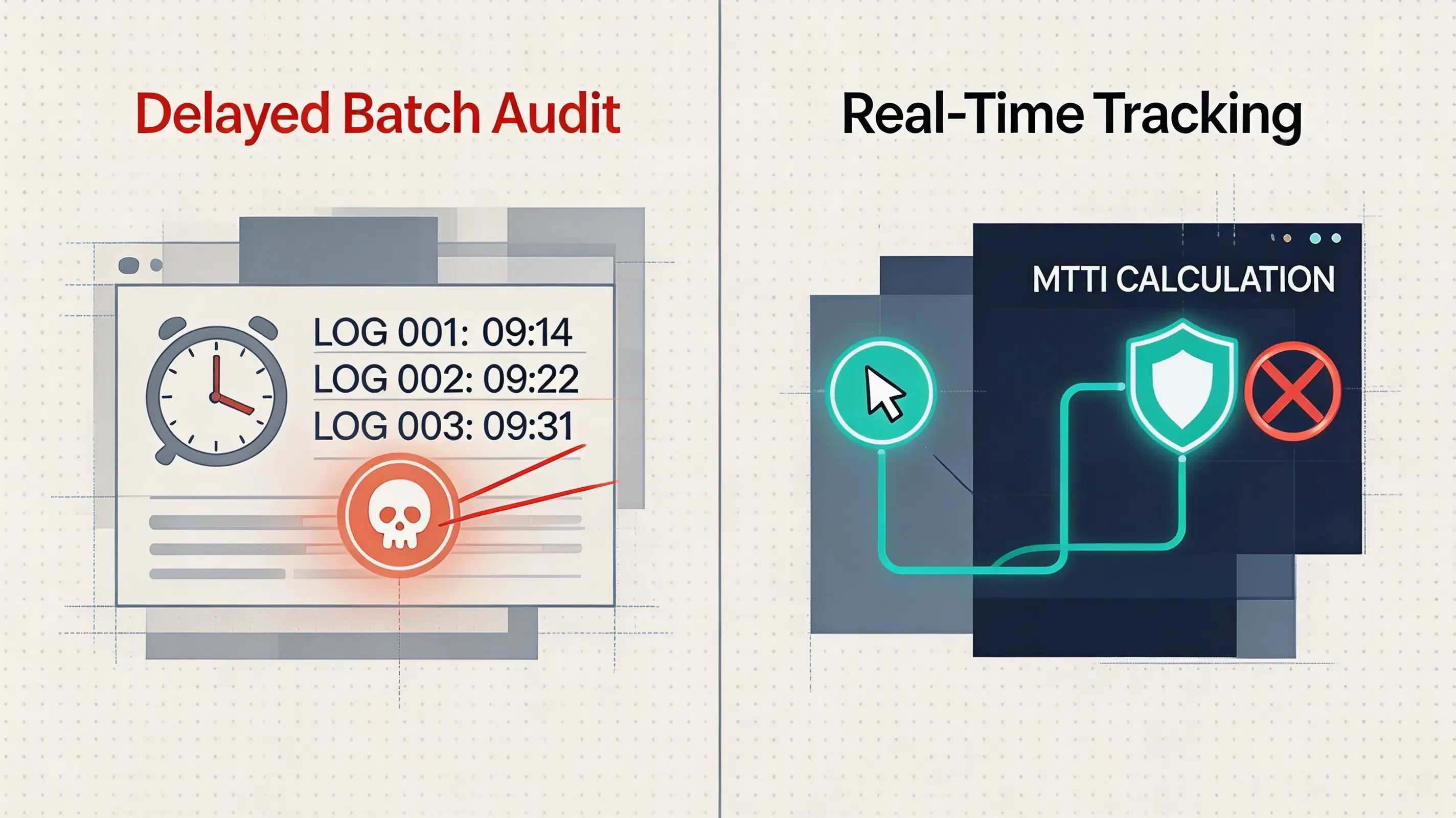
Relying on offline batch auditing or daily log reviews leaves performance marketing budgets vulnerable to systematically organized ad fraud. In traditional delayed attribution models, click and install logs are aggregated hours or days after the conversion event occurs. This delay provides malicious networks with a broad window to inject fake engagement signals and claim credit for organic user acquisitions.
When ad networks execute click injection or click spamming attacks, delayed measurement systems register the conversion and record it in reporting dashboards. By the time post-campaign audits identify the anomaly, promotional budgets have already been disbursed to third-party publishers. Reclaiming stolen ad spend after payout settlement is technically difficult and commercially complex.
Eliminating this financial waste requires shifting from post-campaign audits to real-time attribution tracking. By evaluating event metadata at the exact moment of first launch, real-time attribution tracking calculates the precise time delta between the web click and app activation. Invalid conversion claims are blocked instantly, preventing stolen credit and securing mobile acquisition workflows.
Anatomy of Ad Fraud Vectors: Click Injection, Click Spamming, and Bot Farms
Securing campaign budgets requires recognizing the operational mechanisms behind primary mobile ad fraud vectors:
- Click Injection: A sophisticated Android exploit where malware installed on a user’s device detects an app store download in progress, generating fraudulent click signals shortly before installation completion to steal attribution credit.
- Click Spamming: A volume-based attack where automated scripts send thousands of low-intent click requests for active users, hoping a user naturally installs the app within the attribution window.
- Emulator Device Farms: Server arrays running virtualized mobile OS instances that repeatedly script app downloads, launches, and fake in-app events to drain CPI/CPA budgets.
- SDK Spoofing: An attack vector where bad actors intercept real SDK traffic, reverse-engineer payload signatures, and transmit fake conversion requests directly to attribution endpoints without installing the app.
Mean Time to Install Analysis and Real Time Parameter Verification Pipeline
The foundational defense against click injection is Mean Time to Install (MTTI) analysis. MTTI measures the exact elapsed time between a user clicking a campaign link and opening the newly installed application for the first time.
Under organic user acquisition flows, human users require time to navigate store pages, wait for download completion, and open the app. This creates a natural MTTI probability distribution curve. Conversely, click injection attacks register click timestamps seconds before activation, resulting in unnaturally short MTTI intervals (such as extremely short intervals inconsistent with historical user behavior).
[Ad Click Registered] ──> [Real-Time Matching Engine] ──> [MTTI Delta Check]
                                                                 │
                                                                 ▼
[CRM Payout Denied] <── [S2S Rejection Webhook] <── [Fraud Detected (Delta < Threshold)]
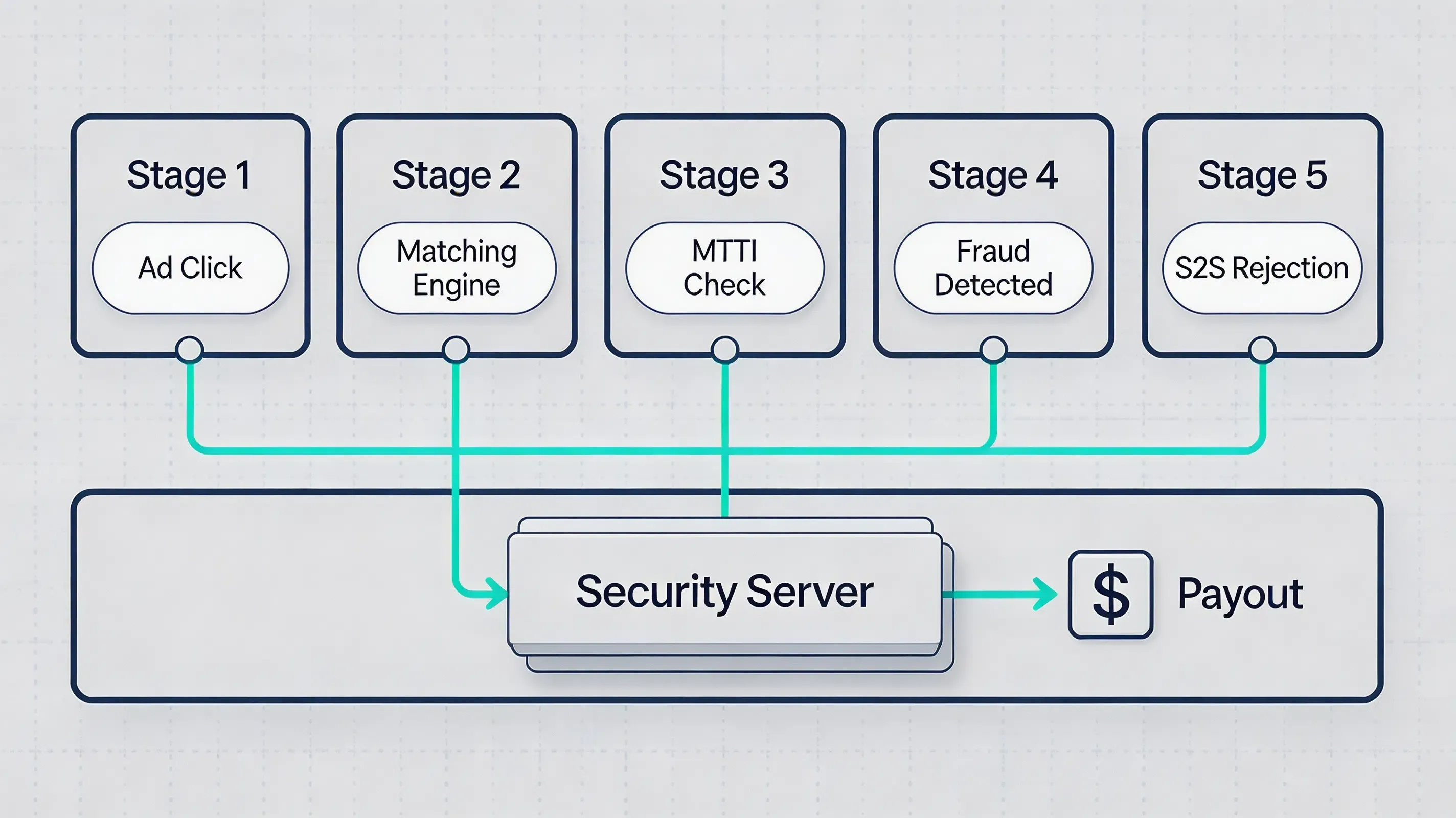
By calculating the MTTI delta instantly upon first launch, real-time attribution tracking evaluates the transaction against configured probability thresholds. If the time delta falls below configured behavioral thresholds, the engine invalidates the click and revokes attribution credit.
Detecting Anomaly Signals: IP Thresholds, Device Telemetry, and CTET
Beyond MTTI time deltas, real-time attribution tracking monitors multiple environmental signals to detect automated fraud:
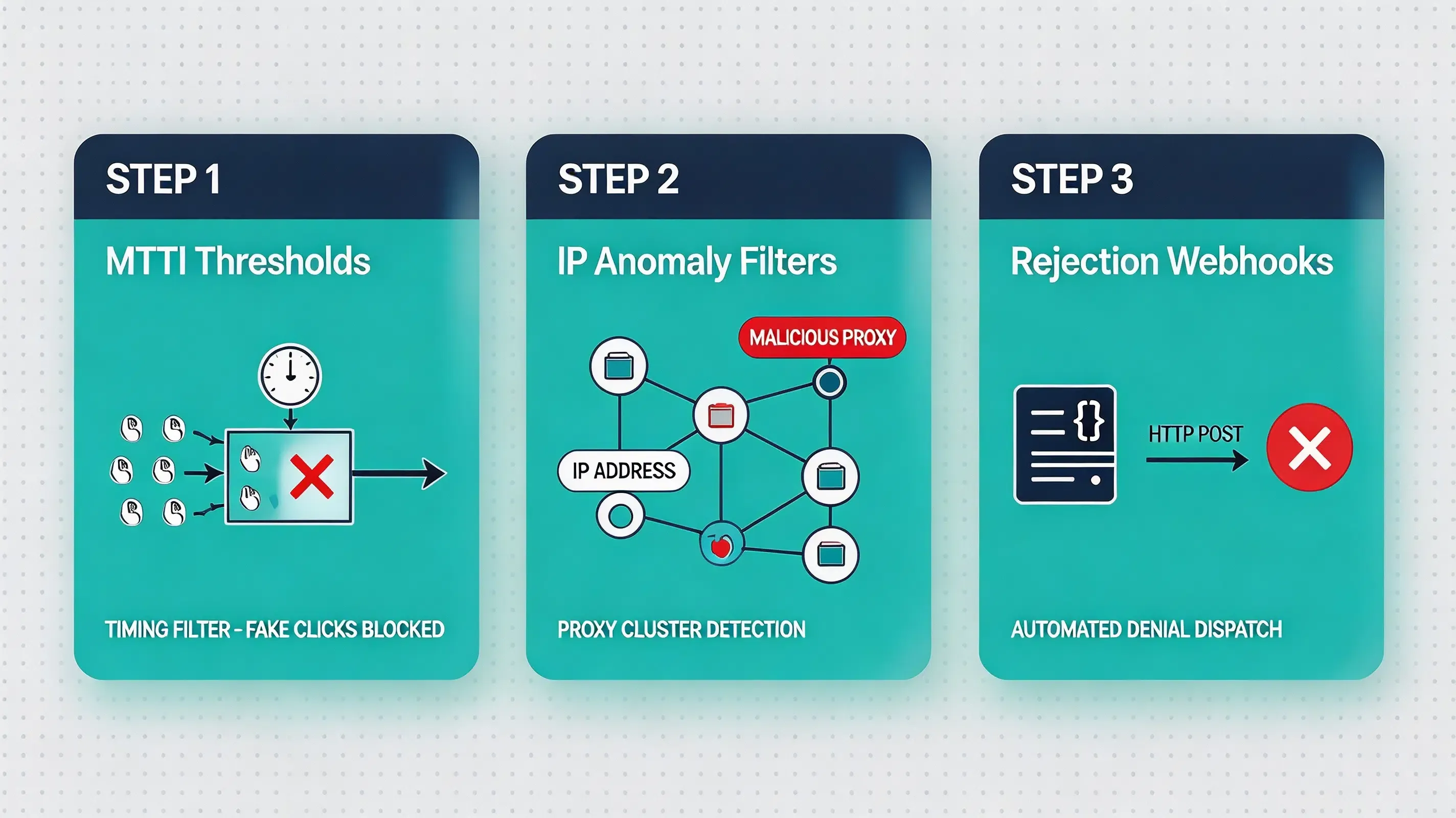
- IP Anomaly Thresholds: The attribution system flags high-density install clusters originating from single IP addresses or hosting data center ranges, identifying proxy farms.
- Hardware Telemetry Checks: Attribution systems evaluate available device signals upon startup, detecting rooted environments, missing sensor data, and virtualized emulator drivers.
- Click-to-Event-Time (CTET) Analysis: Tracks the time interval between installation and downstream conversion milestones, filtering out scripted bots that execute purchases within seconds of boot.
- Hosting Proxy Blacklists: Cross-checks incoming request IPs against real-time data center and VPN proxy registries to block automated server traffic.
Server-to-Server Postback Blocking Schema for Invalid Conversions
Executing real-time fraud prevention requires immediate communication between the attribution engine and ad network servers. When an installation is flagged as invalid, the platform dispatches a real-time Server-to-Server (S2S) rejection postback.
The following example demonstrates a server-to-server rejection postback payload schema used to block fraudulent attribution claims in real time.
// File path: server/schemas/attribution_fraud_rejection_webhook.json
{
  "event_type": "attribution_rejection_event",
  "app_key": "KEY_8830192",
  "timestamp": 1730000000,
  "rejection_details": {
    "fraud_vector": "click_injection",
    "attribution_status": "DENIED",
    "mtti_delta_seconds": 2.1,
    "mtti_threshold_seconds": 10.0,
    "claimed_channel_code": "suspicious_partner_99"
  },
  "risk_signals": {
    "proxy_network_detected": true,
    "device_environment_anomaly": true
  },
  "security": {
    "hmac_signature": "e9b8c7d6a5f4e3d2c1b0a9f8e7d6c5b4a3f2e1d0c9b8a7f6e5d4c3b2a1f0e9d8",
    "signature_algorithm": "HMAC-SHA256"
  }
}
To adjust anti-fraud sensitivity during high-volume promotional events, security teams configure IP anomaly limits and MTTI probability thresholds via management APIs.
The following example illustrates a RESTful API request payload used to update IP anomaly thresholds and MTTI rules in the console.
// File path: server/schemas/update_anti_fraud_thresholds_request.json
{
  "request_header": {
    "api_version": "v1.2",
    "app_key": "KEY_8830192",
    "timestamp": 1730000000
  },
  "anti_fraud_rules": {
    "mtti_min_threshold_seconds": 10.0,
    "ip_anomaly_monitoring": {
      "enabled": true,
      "max_installs_per_ip_per_day": 20,
      "block_data_center_proxies": true
    },
    "s2s_postback_actions": {
      "dispatch_rejection_webhooks": true,
      "auto_invalidate_conversion_credits": true
    }
  }
}
Additional specifications and integration guidelines can be reviewed in the real-time cheating monitoring documentation.
Common Mistakes in Campaign Fraud Prevention
Deploying campaign wind-down rules and anti-fraud filters introduces operational edge cases that can disrupt legitimate user acquisition if configured incorrectly:
- Relying exclusively on client-side fraud checks: Executing validation entirely within client app code, leaving security rules vulnerable to reverse-engineering and SDK spoofing.
- Setting overly generous lookback windows: Extending click-through attribution windows beyond reasonable limits, exposing campaigns to long-tail click spamming.
- Failing to update proxy blacklists: Neglecting to sync data center IP registries regularly, allowing hosting-based emulator farms to bypass basic filters.
- Ignoring short-term click spikes: Failing to monitor real-time click volume surges during influencer or viral launches, misinterpreting natural traffic spikes as click spamming.
Example: Securing a Scale-Up FinTech Campaign Against Click Hijacking
Simulated Scenario: Mobile FinTech Application Integration
Challenge
A scale-up mobile FinTech application experienced significant budget drainage due to click injection attacks, where malicious ad networks claimed credit for organic installs during a high-volume promotion.
Implementation
The security architecture team integrated a real-time cheating monitoring workflow based on OpoInstall capabilities, configured strict 10-second minimum MTTI thresholds, and established automated S2S postback rejection webhooks registered on the developer console.
Expected Outcomes
This implementation demonstrates how real-time parameter verification reduces install theft. During the simulation, click injection attempts triggered immediate S2S rejection webhooks, preventing fraudulent attribution claims and protecting marketing spend.
Lessons Learned
- Enforce minimum MTTI limits: Setting strict click-to-install time windows neutralizes injection scripts.
- Execute S2S rejection postbacks: Sending real-time rejection webhooks prevents unauthorized payout claims.
- Monitor IP anomaly thresholds: Flagging unnatural click volumes from single IP ranges identifies proxy fraud.
Real Time Attribution Tracking vs Batch Post-Processing vs Self-Attributing Networks
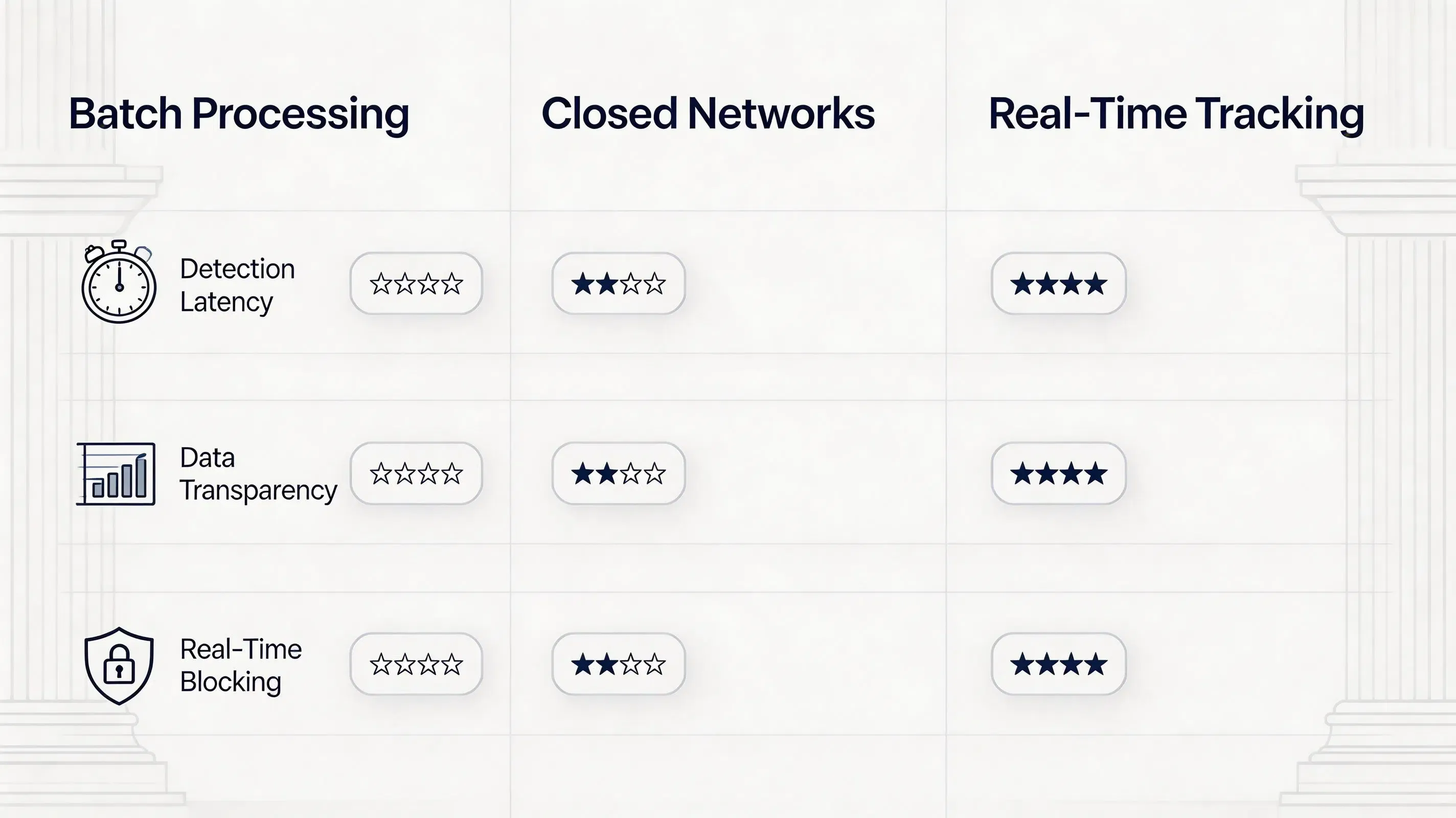
Different attribution implementations evaluate fraud vectors with varying degrees of speed and transparency:
| Evaluation Attribute | Batch Post-Processing | Self-Attributing Networks | Real-Time Attribution Tracking |
|---|---|---|---|
| Representative Implementation | Offline Log Audits | Closed Network Dashboards | Server-side validation workflow |
| Fraud Detection Latency | High (Delayed by hours/days) | Low (Closed algorithm) | Real-time validation |
| Data Transparency | High (Raw logs) | Low (Self-attributed black box) | High (Raw log access + S2S) |
| Real-Time Payout Blocking | Unsupported | Unsupported | Supported (Instant S2S Rejection) |
| Custom Anomaly Rules | Manual SQL Queries | Fixed Network Rules | Supported (Custom IP/MTTI Rules) |
Frequently Asked Questions
How does real-time attribution tracking prevent install theft?
What is Mean Time to Install in mobile ad fraud detection?
How does real-time attribution tracking detect click injection?
Can real time postbacks block payout allocation for fake installs?
What is the difference between real-time attribution tracking and batch reporting?
How do IP anomaly thresholds prevent device farm fraud?
Does ATT policy restrict real-time fraud detection on iOS?
Summary and Decision Framework
Choose an automated real-time attribution tracking system when your performance campaigns match the following functional criteria:
- ✓ High-Volume Ad Spend Demands Instant Protection: Campaign budgets require real-time fraud blocking to prevent paying payouts on fake installs.
- ✓ Campaign Links Are Exposed to Click Injection: Ad distribution occurs across third-party networks vulnerable to install referrer broadcast exploits.
- ✓ Organic Installs Require Cannibalization Defense: Marketing reports require de-duplicating natural downloads from simulated background click spamming.
- ✓ Payout Systems Require Automated S2S Rejections: Payout workflows demand instant webhook notifications to invalidate fraudulent conversion claims.
In these scenarios, deploying a real-time attribution tracking framework provides a practical architecture. Dedicated anti-fraud attribution engines enable development teams to protect campaign budgets while maintaining data integrity. Platforms such as OpoInstall implement this framework, supporting real-time MTTI verification, IP anomaly filtering, and S2S rejection webhooks.
Entity Glossary
| Term | Definition | Related Entity | Search Intent Role |
|---|---|---|---|
| Attribution Tracking | The real-time measurement process matching mobile conversion events to campaign sources while auditing fraud. | Mobile Measurement | Technical |
| Mean Time to Install (MTTI) | The time interval between a campaign link click and the first native application launch. | Anti-Fraud Metric | Technical |
| Click Injection | An ad fraud technique where malware triggers a fake click right before an app installation completes. | Mobile Ad Fraud | Security |
| Click Spamming | A fraud vector where automated scripts flood matching servers with low-intent click requests. | Mobile Ad Fraud | Security |
| IP Anomaly Threshold | A configurable limit defining the maximum allowable clicks or installs from a single IP address. | Fraud Detection | Technical |
| S2S Rejection Webhook | An automated server postback notifying ad networks that a conversion claim has been denied. | Server Architecture | Technical |
Related Materials
Related Concepts
- Install Attribution: The foundational measurement pipeline identifying application download sources.
- SDK Spoofing: An ad fraud vector where malicious scripts simulate client-side event API calls.
- Organic Cannibalization: A fraud scenario where bad actors claim credit for natural, non-paid app downloads.
Related Technologies
- Google Play Install Referrer: Google’s native API passing install-time campaign metadata on Android.
- Universal Links: Apple’s native deep linking standard bridging web actions to native screens.
- App Links: Google’s verified deep linking protocol handling custom web URLs on Android.
Standards Referenced
- IETF RFC 2104: Keyed-Hashing for Message Authentication specification for HMAC security.
- OWASP Mobile Security Testing Guide: The official OWASP guide for mobile application security testing and API validation.
Primary Integration Interfaces
- Cheating Monitoring Interface: The administrative console system used to configure IP anomaly thresholds and MTTI rules.
- S2S Rejection Postback Interface: The server-side webhook endpoint used to transmit real-time attribution denial payloads.
Official Documentation / References
Share this article