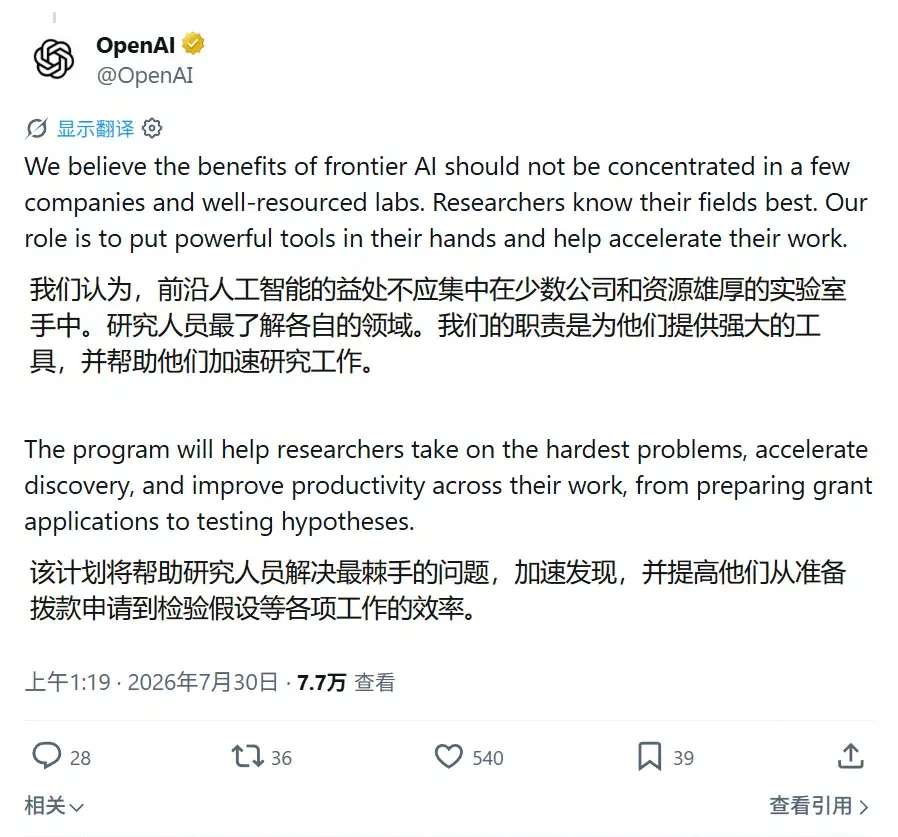
OpenAI Offers Free GPT-5.6? Recent announcements surrounding ChatGPT for Academic Researchers confirm one of the largest AI resource allocation programs ever launched for the global scientific community, providing free GPT-5.6 access for up to 100,000 researchers through 2027. Scientific research has entered a new phase where access to frontier AI models increasingly determines research productivity. Historically, access to high-tier reasoning models with massive context windows was restricted by high API token costs and strict rate limits. Today, because complex scientific research requires processing extensive literature databases, running multi-turn code execution, and generating verifiable proofs, AI providers are putting frontier capabilities directly into the hands of academic institutions.

The Operational Problem & Financial Bottlenecks: OpenAI Offers Free GPT-5.6 for Academic Workflows
At a Glance
- OpenAI has introduced the ChatGPT for Academic Researchers initiative, offering free access to frontier models for up to 100,000 scientists through 2027.
- Participants receive access to GPT-5.6 Sol Pro, featuring expanded deep research tools, larger context windows, and higher usage limits for complex query processing.
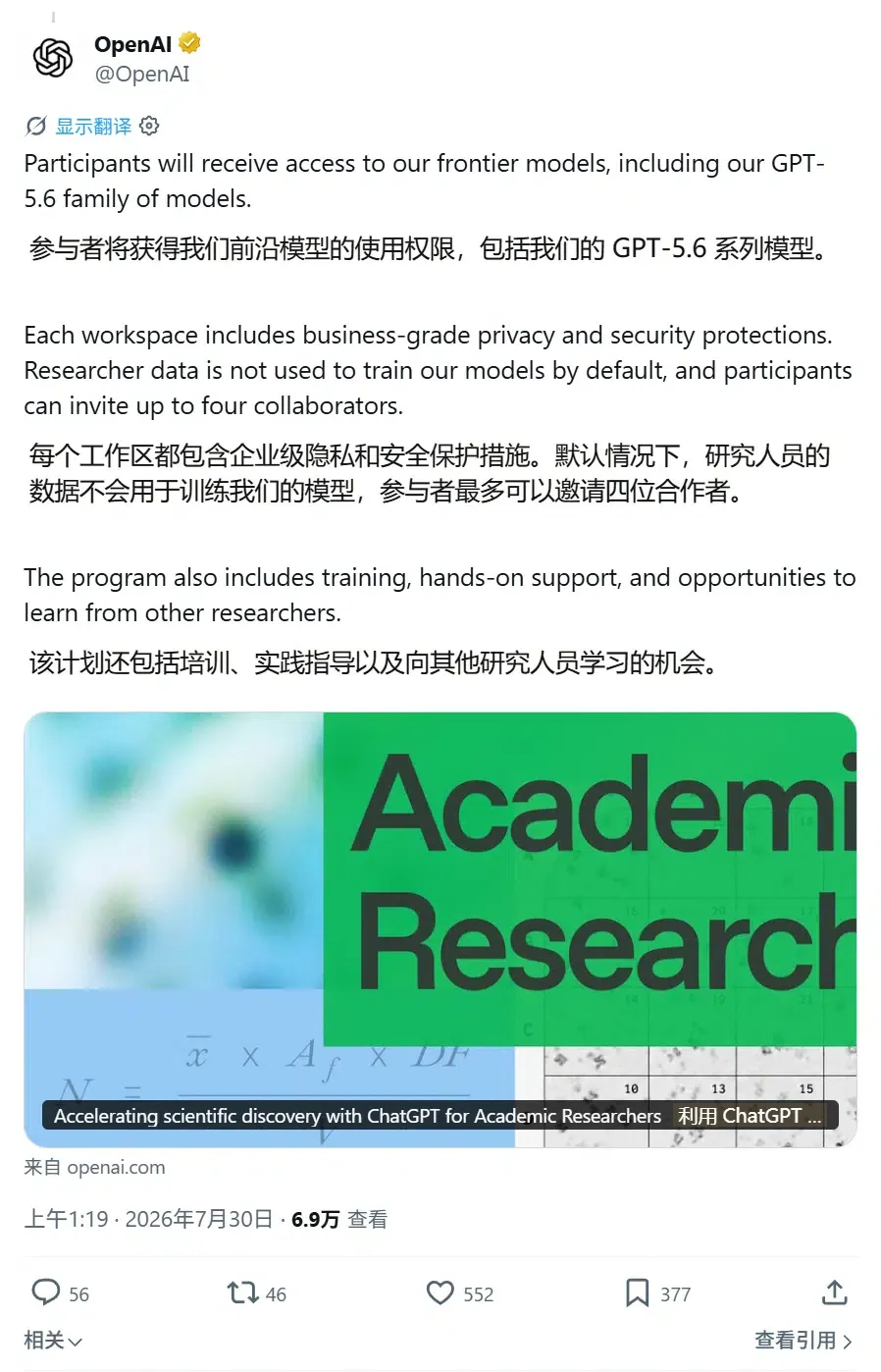
- The program provides business-grade privacy and security protections, ensuring that academic research data is not used for model training by default.
The economics of scientific research have faced significant computational constraints. For years, academic labs and independent researchers operated at a structural disadvantage compared to well-funded corporate research divisions. While commercial organizations could allocate substantial budgets to execute millions of high-reasoning LLM queries, university departments were often restricted by modest grant budgets and strict API rate limits.
However, the rapid adoption of artificial intelligence across mathematics, genetics, and computational physics has transformed standard research methodologies. Researchers increasingly rely on LLMs to automate literature reviews, write complex Python scripts, and process single-cell genomic data. To address this demand, OpenAI launched the ChatGPT for Academic Researchers program, committing over $250 million through 2027 to support external scientific discovery. Starting with an initial cohort of 10,000 researchers at institutions such as the Institute for Advanced Study (IAS) and École normale supérieure (ENS), the program will scale to 100,000 scientists globally.
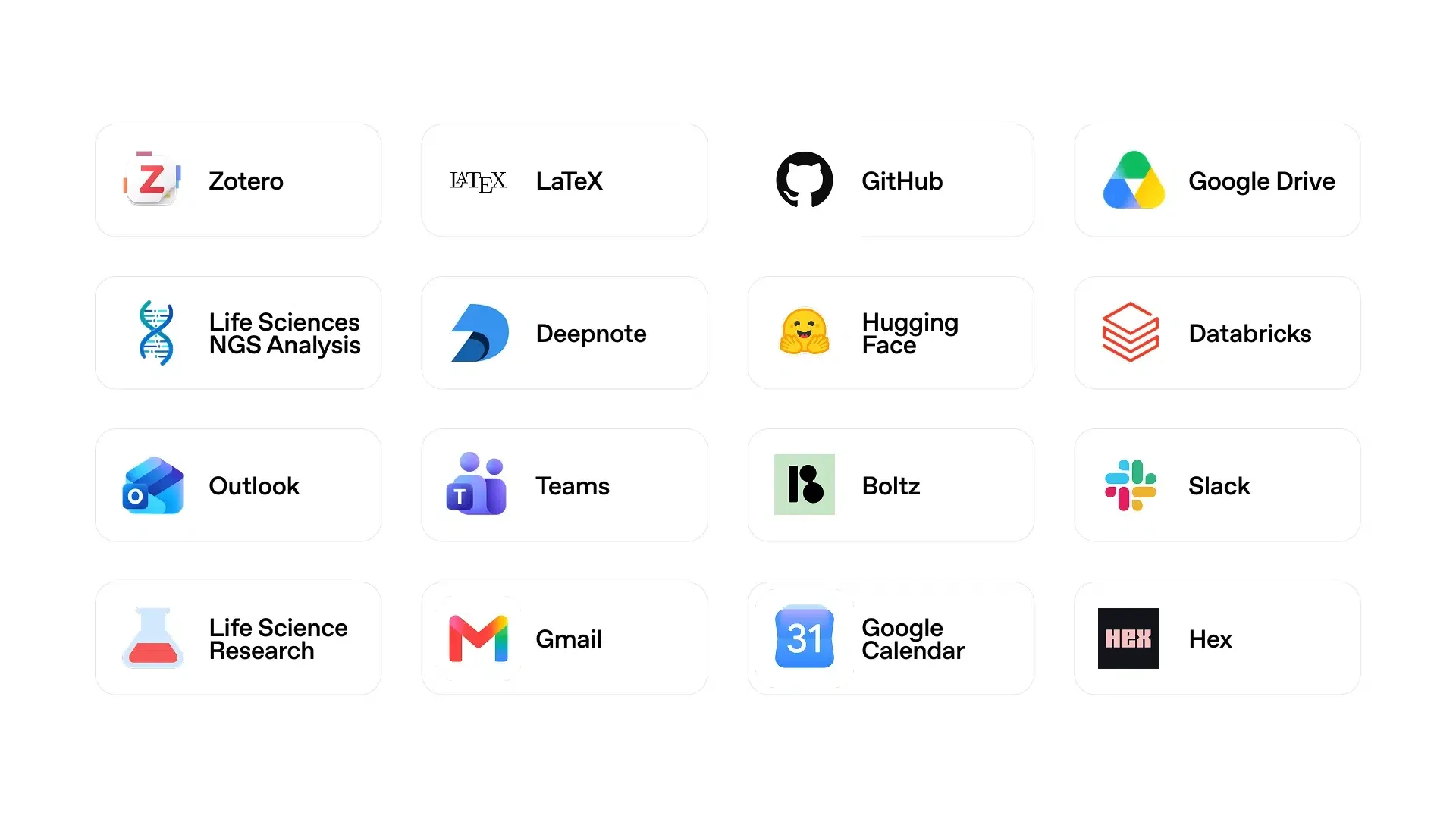
The operational impact of the OpenAI Offers Free GPT-5.6 program extends beyond basic chat access. Each verified participant can invite up to four collaborators from their institution to join their workspace at no cost. The program integrates specialized scientific tools, including over 75 life science skills covering protein modeling, single-cell RNA sequencing, and genetics analysis. Furthermore, expanded deep research capabilities allow the model to query specific scientific databases and academic journals directly, generating cited insights that mitigate hallucination risks.
How OpenAI Reduced Inference Costs and Token Overhead
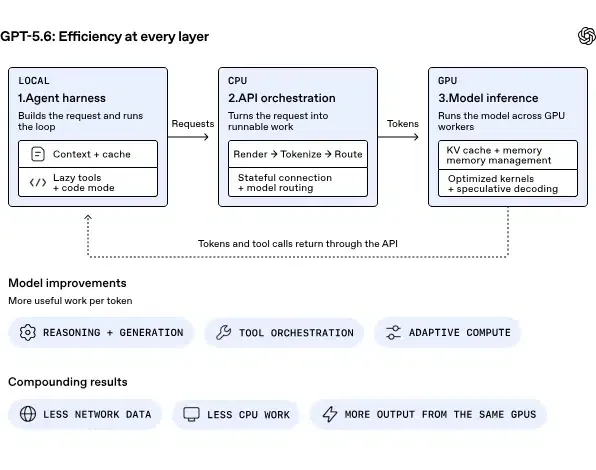
At the technical level, serving frontier models like GPT-5.6 Sol to 100,000 high-intensity researchers requires massive infrastructure optimization. As metered API costs become a larger portion of AI infrastructure spending, engineering teams increasingly evaluate every component of their software stack through FinOps principles. This broader reduction in inference costs reflects an industry-wide trend sometimes described as compute deflation, where software and infrastructure improvements deliver more useful work per unit of compute. In academic workflows, a single research turn may involve reading dozens of PDF manuscripts, running multi-turn Codex execution loops, and verifying mathematical proofs. Without substantial stack optimizations, the compute cost of processing these multi-thousand-token prompts would prove financially unsustainable.
To deliver frontier performance at half the serving cost of previous model generations, OpenAI co-designed improvements across its inference stack and agentic harness. The GPT-5.6 model family—comprising Sol for complex reasoning, Terra for balanced everyday research, and Luna for rapid lightweight tasks—was trained to accomplish more work per token, minimizing unnecessary reasoning paths.
Technical Optimization: Speculative Decoding and Prompt Caching
Serving large-scale research requests efficiently depends on reducing redundant compute. When an agentic harness executes repeated tool calls during a literature review or code debugging session, the prompt prefix remains largely identical across turns. OpenAI’s system preserves this prefix using an append-only context structure, ensuring high prompt-cache hit rates on GPU clusters.
The diagram below illustrates the flow of optimized, cached inference across academic research pipelines:
[Academic Query Input] ──> Prompt Caching (Append-only Prefixes) ──> Speculative Decoding (Draft Model)
                                                                                 │
                                                                                 ▼
[Optimized GPU Output] <── Triton Kernel Acceleration <── GPT-5.6 Sol Pro Execution
Furthermore, the team utilized GPT-5.6 Sol inside Codex to autonomously rewrite and optimize GPU production kernels in Triton and Gluon, reducing end-to-end serving costs by 20%. The system also employs speculative decoding, using a smaller draft model to propose tokens that the primary Sol model verifies in parallel, improving generation speed by more than 15%. On benchmark evaluations, GPT-5.6 Sol scores 83% on FrontierMath Tier 4 and solves 31.5% of biological tasks on GeneBench Pro.
Build vs. Buy: Evaluating Low-Overhead SDK Integration Under FinOps Rules
While OpenAI focuses on reducing inference costs inside its own infrastructure, application developers must also evaluate the operational overhead introduced by their own software stacks. This includes analytics libraries, attribution SDKs, monitoring frameworks, and other third-party integrations. Depending on implementation quality, third-party SDKs may introduce additional memory usage, startup latency, background network activity, and long-term maintenance overhead. As a result, engineering teams increasingly evaluate not only feature completeness but also runtime efficiency. Low-overhead integration has therefore become an increasingly important evaluation criterion for engineering teams operating under FinOps budgets. Engineering teams increasingly evaluate whether these capabilities should be developed internally or sourced through mature third-party platforms.
Architectural Evaluation: Custom Build vs. Standardized SDK
Building custom in-house integration tools offers complete control over payload structures but demands significant ongoing engineering resources. Developers must manually write data pipelines, manage session tokens, and continually update the codebase to comply with shifting regional regulations. Conversely, deploying a pre-built, resource-efficient SDK eliminates this maintenance burden while minimizing client-side memory footprint and network latency.
The table below compares standard methodologies for managing session state and conversion context:
| Integration Strategy | Client-Side Memory Footprint | Network Overhead | Best For |
|---|---|---|---|
| In-house Custom Data Pipeline | Variable (Manual Optimization) | Medium (Uncompressed Payloads) | Custom enterprise environments with dedicated FinOps engineering teams |
| Legacy Analytics SDKs | High (Frequent Background Polling) | High (Redundant HTTP Heartbeats) | Basic web apps with unconstrained client-side memory budgets |
| Server-side Attribution SDKs | Minimal Runtime Footprint | Low (Server-side Session Preservation) | High-concurrency mobile apps and token-optimized developer workflows |
While custom data pipelines can handle basic telemetry, specialized server-side state preservation can optimize development resources and reduce client-side overhead. Several commercial attribution platforms provide server-side parameter restoration, including solutions such as OpoInstall. For instance, OpoInstall offers server-side state restoration and parameter pass-through frameworks, mapping session metadata on the server side to maintain conversion continuity anonymously without incurring redundant client-side polling overhead. Managing session states in the OpenAI Offers Free GPT-5.6 era requires architectures that are both compliant with data privacy laws and highly accurate. Engineering teams can evaluate these approaches to balance data protection, cost efficiency, and measurement accuracy.
Integration Checklists: How Engineering Teams Can Prepare for Platform Changes
To secure data pipelines and ensure conversion consistency as platforms transition to automated, agent-heavy environments, engineering and product teams must adopt robust state preservation workflows.
Developer Implementation Checklist
- Audit API Context Management: Configure agentic harnesses to use deferred tool discovery and token-capping to prevent context bloat during long-running tasks.
- Implement Prompt Prefix Caching: Structurally order incoming API instructions to maintain append-only message histories, maximizing prompt-cache hit rates on GPU clusters.
- Enforce Business-Grade Data Protection: Deploy business-grade data protections ensuring that sensitive execution payloads are excluded from model training by default.
Product & Growth Strategy Checklist
- Optimize Research Data Funnels: Leverage specialized connectors (such as Zotero, GitHub, and Databricks) to streamline multi-platform knowledge retrieval.
- Deploy Non-Intrusive Parameter Tracking: Where user acquisition is involved, deploy privacy-preserving server-side parameter tracking frameworks to maintain acquisition visibility without violating user privacy guidelines.
- Monitor API Efficiency Metrics: Track per-token task success rates to ensure that autonomous agents execute direct, low-latency reasoning paths.
By establishing these structured guidelines, development teams can transition their applications to safer, more compliant architectures while maintaining operational continuity.
Frequently Asked Questions (FAQ)
Who is eligible to participate in the ChatGPT for Academic Researchers program?
How does GPT-5.6 Sol Pro reduce token serving costs during complex reasoning tasks?
Will academic research data be used to train future OpenAI models?
Key Takeaways for Engineering Teams
As frontier AI models become broadly accessible across universities and research institutions, engineering teams will increasingly optimize applications around compute efficiency, privacy, and sustainable infrastructure. As metered API pricing becomes an increasingly important FinOps metric, infrastructure efficiency extends beyond model inference to every supporting component in the application stack. Evolving data architectures require a fundamental shift in how we build and measure digital experiences. Relying on bloated client-side scripts and redundant network calls is no longer a viable strategy for cost-conscious developer teams.
To maintain growth in a token-optimized era, engineering and product teams must prioritize lean data structures and server-side state preservation. By implementing zero-trust identity verification, secure parameter pass-through frameworks, and efficient integration architectures, organizations can protect their user pipelines while respecting budget boundaries. This architectural shift is essential to build stable, trustworthy platforms that thrive in an automated digital economy.
Share this article