OpenAI restricts in-chat ads? According to reporting from The Information on September 9, 2026, OpenAI has privately notified commercial partners that it will no longer accept paid advertising campaigns for competing image- and audio-generation products within ChatGPT. For software architects, growth strategists, and digital marketing leaders, the reported reality that OpenAI Restricts In-Chat Ads highlights the accelerating formation of conversational walled gardens. While generative AI platforms initially focused primarily on conversational assistance rather than advertising monetization, platform operators face increasing commercial pressure to protect proprietary feature suites like ChatGPT Images 2.5 and GPT-Live. When conversational interfaces adjust ad eligibility and narrow external referral citations without formal public documentation, software publishers face heightened platform dependency risks, demonstrating why digital businesses must prioritize owned, diversified distribution channels.
Reported Policy Shift and the Public Documentation Gap
The reported decision by OpenAI to restrict competitor advertising within ChatGPT represents a notable shift in how frontier artificial intelligence platforms manage commercial access. According to details published by The Information, the operational restriction applies specifically to third-party tools that compete directly with ChatGPT’s native creative capabilities, focusing on standalone image generators and voice synthesis engines.
At a Glance
- Reported Commercial Notifications: Enterprise partners, including Adobe, reported receiving notices that ChatGPT will no longer approve paid campaigns for direct image- and audio-generating competitors.
- Unpublished Policy Gap: As of early September 2026, OpenAI’s official public advertising policies document has not been updated to codify this specific category ban, and company representatives declined to comment on the record.
- Asymmetric Category Enforcement: Initial partner communications indicate an asymmetric policy scope where image and audio tools are barred from paid placement, while video-generation advertisements remain eligible for now.
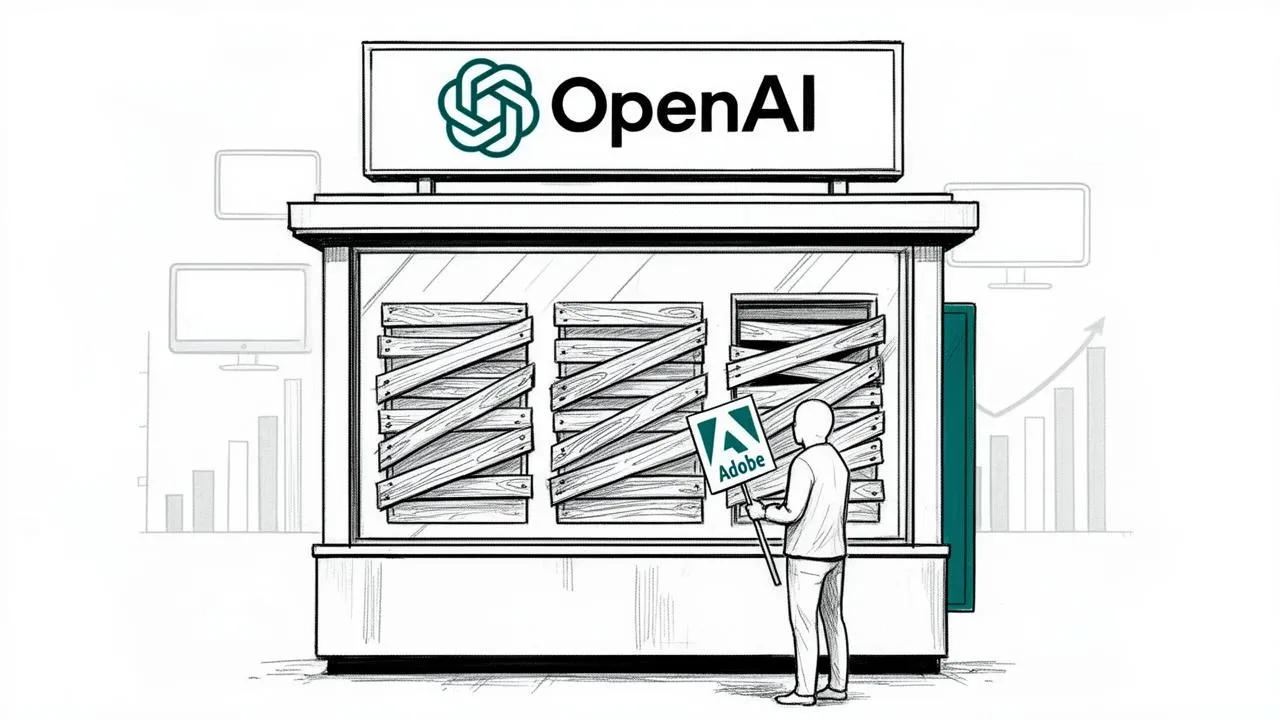
The impact of this policy shift was publicly confirmed by Doug Wyatt, Adobe’s senior director of Americas media. Adobe had participated in OpenAI’s advertising pilot program earlier in 2026, running promotional placements for tools including Acrobat Studio and Adobe Firefly, its proprietary image-generation suite. Wyatt confirmed that OpenAI notified partners of the restriction, stating that paid ad channels for image and audio tools had been halted while video product placements remained available.
Significantly, this operational change exists alongside an uncodified public policy baseline. OpenAI’s published Advertising Policies, which were last officially revised on August 31, 2026, define general commercial standards around brand safety, adult content, regulated goods, and deceptive practices. The published documentation explicitly reserves the right to reject advertisements or website links at OpenAI’s discretion, but it does not formally articulate a categorical ban against competing generative AI software. In fact, official documentation states that initial ad testing focuses on limited categories such as lifestyle, household goods, local services, travel, and digital products or education. The absence of public documentation surrounding private partner enforcement creates operational uncertainty for enterprise brands planning long-term media allocations.
+-------------------------------------------------------------------------+
|                REPORTED CHATGPT ADVERTISING STATUS MATRIX               |
+---------------------------------------+--------------------+------------+
| Product Category                      | In-Chat Paid Ads   | Docs Status|
+---------------------------------------+--------------------+------------+
| AI Image Generators                   | Reportedly Blocked | Uncodified |
| AI Audio / Voice Tools                | Reportedly Blocked | Uncodified |
| AI Video Generators                   | Reportedly Open    | Standard   |
| Eligible Digital Products / Education | Evaluated by Policy| Published  |
+---------------------------------------+--------------------+------------+
Industry analysts note that while restricting direct competitors is standard practice across mature media and retail networks—such as streaming providers rejecting rival platform ads—implementing category restrictions via informal partner notices illustrates how conversational interfaces can exercise unilateral control over software discovery.
Timeline Concurrence and Competitive Dynamics
The timing of the reported advertising restrictions coincides closely with major product releases across OpenAI’s first-party generative toolchain. On September 8, 2026, OpenAI announced the official release of ChatGPT Images 2.5, introducing lower latency and localized sketch-editing capabilities directly within the conversational interface. This follows the rollout of GPT-Live, the specialized model architecture powering low-latency, hands-free conversational audio within the ChatGPT Voice experience.
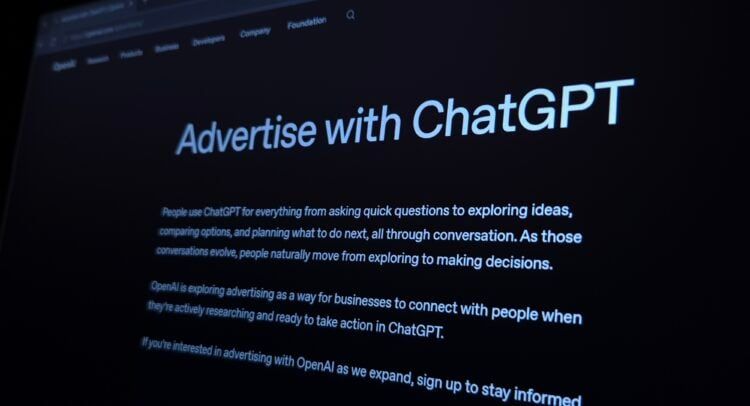
While marketing strategists and industry observers view the ad restrictions as a protective measure to insulate native image and voice features from well-capitalized creative suites, OpenAI has not publicly cited these product launches as the formal rationale for the change. In commercial media environments, protecting user engagement around newly deployed native features frequently creates incentives to deprioritize rival offerings that might divert user attention outside the core application.
In addition to paid advertising restrictions, reports from The Information described narrower external linking behaviors for certain action-oriented image prompts, such as requests targeting online image editors. While ChatGPT continues to provide citations and external web search links across broad informational queries, reduced outbound linking on specific tool-oriented tasks compounds the challenge for third-party creative vendors.
+-------------------------------------------------------------------------+
|            TRADITIONAL OPEN SEARCH VS. CONVERSATIONAL SYNTHESIS         |
+-------------------------------------------------------------------------+
|                                                                         |
|  [ Traditional Search Engine Paradigm: Open Link Distribution ]         |
|          |                                                              |
|          |-- User Queries: "Online Image Editing Software"              |
|          v                                                              |
|  [ Search Engine Results Page (SERP) ]                                  |
|          |                                                              |
|          +----------------------------------+                           |
|          |                                  |                           |
|          v                                  v                           |
|  [ Ranked Web Hyperlinks ]          [ Sponsored Search Text Ads ]       |
|          |                                  |                           |
|          +-----------------+----------------+                           |
|                            |                                            |
|                            v                                            |
|          [ Outbound Traffic Directed to Third-Party Domains ]           |
|                                                                         |
+-------------------------------------------------------------------------+
|                                                                         |
|  [ Conversational Platform Paradigm: Answer-First Synthesis ]           |
|          |                                                              |
|          |-- User Prompts: "Generate an image for a presentation"       |
|          v                                                              |
|  [ Conversational Model Runtime ]                                       |
|          |                                                              |
|          |-- Direct In-Chat Task Execution (e.g., Native Images 2.5)    |
|          |-- Competitor Sponsored Placements Reportedly Restricted      |
|          |-- External Tool Referrals Evaluated In-Context               |
|          v                                                              |
|  [ Direct Synthesized Output Delivered Within Chat Interface ]          |
|                                                                         |
+-------------------------------------------------------------------------+
This shift highlights a fundamental architectural divergence between traditional search engines and conversational AI platforms. Standard search engines function primarily as directory indexers, traditionally emphasizing outbound links to indexed external pages where user queries generate referral traffic to content creators and application developers. In contrast, conversational platforms function as answer engines that synthesize results within the conversational viewport. When conversational platforms simultaneously constrain competitor advertising and emphasize native task execution, external tool developers experience a dual channel squeeze.
Commercial Monetization and Walled Garden Dynamics
The reported advertising restrictions unfold against a backdrop of rapid commercial expansion for OpenAI’s monetization business. On August 31, 2026, OpenAI officially announced that its advertising business reached a $1 billion annualized revenue run rate in under seven months following its initial United States pilot, expanding commercial placements across more than 40 international markets.
According to reporting from The Information regarding internal corporate projections, OpenAI has explored aggressive monetization targets, including an internal 2026 advertising revenue goal of about $2.4 billion. While OpenAI has stated that ChatGPT engages more than 1 billion weekly active users worldwide, a substantial portion of this global audience utilizes free or lower-tier offerings. Advertising provides an additional monetization channel alongside subscriptions, enterprise offerings, and usage-based APIs, helping OpenAI monetize its large nonpaying audience.
| Channel Dimension | Open Web Search | Conversational AI Platforms | Owned Web & Direct Channels |
|---|---|---|---|
| Primary Interaction Model | Outbound links from indexed SERP | In-chat answer synthesis and task execution | Direct brand engagement on first-party domains |
| Referral Transparency | Observable outbound links and mature paid-search ad systems | Contextual prompt insertion; selective citations | Higher first-party control over user sessions and analytics |
| Policy Predictability | Standardized, public auction guidelines | Platform-specific rules; emerging ad formats may rely on partner-level notices | Higher enterprise control over messaging |
| Platform Dependency Risk | Moderate (Algorithm shifts, SERP layout changes) | Potentially high where discovery, ads, or referrals depend heavily on platform-controlled rules | Lower relative dependency (First-party infrastructure) |
Industry analysts frequently apply the “walled garden” concept to describe platforms that restrict external commercial outflows to maximize user engagement within their own software ecosystem. By limiting rival visibility across high-volume creative prompts, platform operators can encourage deeper adoption of their first-party multimedia tools.
However, this commercial posture carries strategic trade-offs. Banning deep-pocketed enterprise software advertisers—such as creative cloud providers and specialty productivity suites—restricts the addressable advertiser pool. If competitive category exclusions expand as conversational platforms introduce additional native features in productivity, coding, or commerce, ad platforms risk narrowing the enterprise demand necessary to achieve multi-billion-dollar monetization targets.
Mitigating Platform Risk in Software Distribution
The reported restrictions inside ChatGPT provide an important architectural and commercial case study for software enterprises navigating AI-driven discovery channels. Relying on emerging AI platforms as primary customer acquisition funnels introduces substantial platform dependency risk.
Software engineering teams, growth architects, and marketing leaders can adopt several defensive strategies to insulate their user acquisition pipelines from conversational platform shifts:
- First-Party Web Infrastructure: Prioritize direct web landing pages and web applications that exist independently of third-party platform gatekeepers, ensuring brand visibility remains resilient against prompt-level policy changes.
- Diversified Top-of-Funnel Acquisition: Distribute marketing investments across multiple distinct channels—including open web search, content syndication, direct digital marketing, and independent developer communities—rather than over-relying on sponsored prompt placements.
- Direct-to-Consumer Engagement: Emphasize direct customer relationships through email, verified developer accounts, and desktop or mobile software suites that establish permanent user retention outside third-party chat windows.
- Transparent Attribution Auditing: Implement multi-touch attribution models that evaluate channel-specific customer acquisition costs without relying on unverified referral promises from conversational interfaces.
By treating conversational AI frontends as supplementary distribution surfaces rather than foundational customer acquisition channels, software businesses ensure that their commercial growth remains durable and decoupled from unilateral platform policy adjustments.
Frequently Asked Questions (FAQ)
Which advertising categories does the reported OpenAI policy restriction affect?
What do reports indicate regarding organic external links in ChatGPT?
How does conversational platform enclosure differ from traditional search engine advertising?
Key Takeaways for Growth and Engineering Teams
The reported restriction of rival AI advertisements on ChatGPT underscores an essential operational reality: as conversational computing platforms expand, their commercial incentives increasingly resemble traditional walled gardens. Frontier AI providers may face growing commercial incentives to prioritize the adoption, retention, and monetization of their first-party feature suites over unrestricted downstream traffic distribution.
For technology executives, software architects, and growth engineers, this development reinforces the danger of building business models that depend on conversational discovery channels. Enterprise software businesses must treat conversational AI frontends with the same strategic caution applied to legacy walled gardens. Maintaining first-party digital properties, investing in open web standards, and diversifying acquisition pipelines across independent channels remains the most dependable strategy for long-term customer growth in an AI-dominated software landscape.
References
-
The Information. (2026). OpenAI Restricts Adobe and Other Competitors From Advertising in ChatGPT. https://www.theinformation.com/articles/openai-cuts-adobe-others-advertising-competing-ai-products-chatgpt
-
OpenAI. (2026). Advertising Policies on ChatGPT. OpenAI Policy Center. https://openai.com/policies/ad-policies/
-
OpenAI. (2026). Introducing ChatGPT Images 2.5. OpenAI Index. https://openai.com/index/introducing-chatgpt-images-2-5/
-
OpenAI. (2026). Introducing GPT-Live. OpenAI Index. https://openai.com/index/introducing-gpt-live/
-
OpenAI. (2026). A milestone in expanding access to AI. OpenAI Index. https://openai.com/index/expanding-access-to-ai-with-chatgpt-ads/
-
IT Home. (2026). OpenAI quietly tightens ChatGPT ad policy, barring rival AI image and audio ads. https://www.ithome.com/1/000/568.htm
Share this article