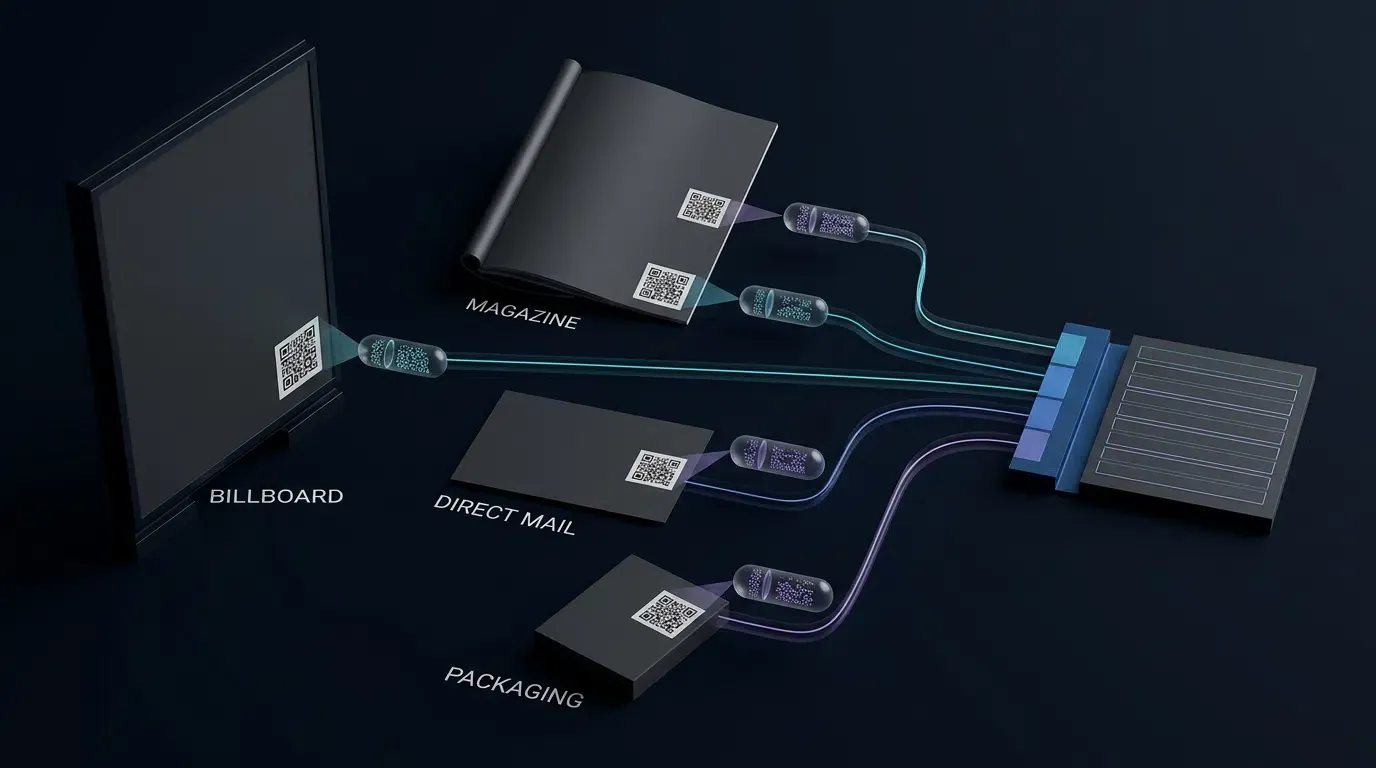
‘Ornith-1.0’ Focuses on Agentic Coding? Early telemetry from our staging clusters suggests this shift is already underway. DeepReinforce’s launch of its self-scaffolding model family on June 25, 2026, introduces new workflow patterns inside enterprise development environments. For developer teams, the challenge shifts to managing programmatic executions while preserving data integration. This launch marks a clear transition in how models are trained and deployed.
At a Glance
- Self-Scaffolding Loop: Unlike traditional pipelines that use static, human-written harnesses, the model family dynamically refines its own execution scaffolds and task-specific policy frameworks during reinforcement learning.
- Balanced Tier Deployments: Spans from a compact 9B dense model optimized for resource-efficient edge devices to a 397B mixture-of-experts (MoE) flagship model.
- MMP Integration Impact: Bypasses traditional client-side cookies and browser redirects, necessitating cryptographic token-passing at the SDK level to prevent installation measurement blackouts.
Understanding Ornith’s Self-Scaffolding Framework
The release of the model family introduces new pricing and capability dynamics at the model serving layer, specifically when Ornith-1.0 focuses on Agentic Coding to jointly optimize both the task-specific harness and the final code solution. This co-evolutionary framework allows the system to discover better search trajectories without relying on fixed, human-written scaffolds. Built on top of pretrained Gemma 4 and Qwen 3.5 checkpoints, the lineup comprises four distinct sizes, including 9B Dense, 31B Dense, 35B MoE, and 397B MoE. Detailed specifications are documented on the official Ornith Hub.
Model Configurations and Performance Metrics
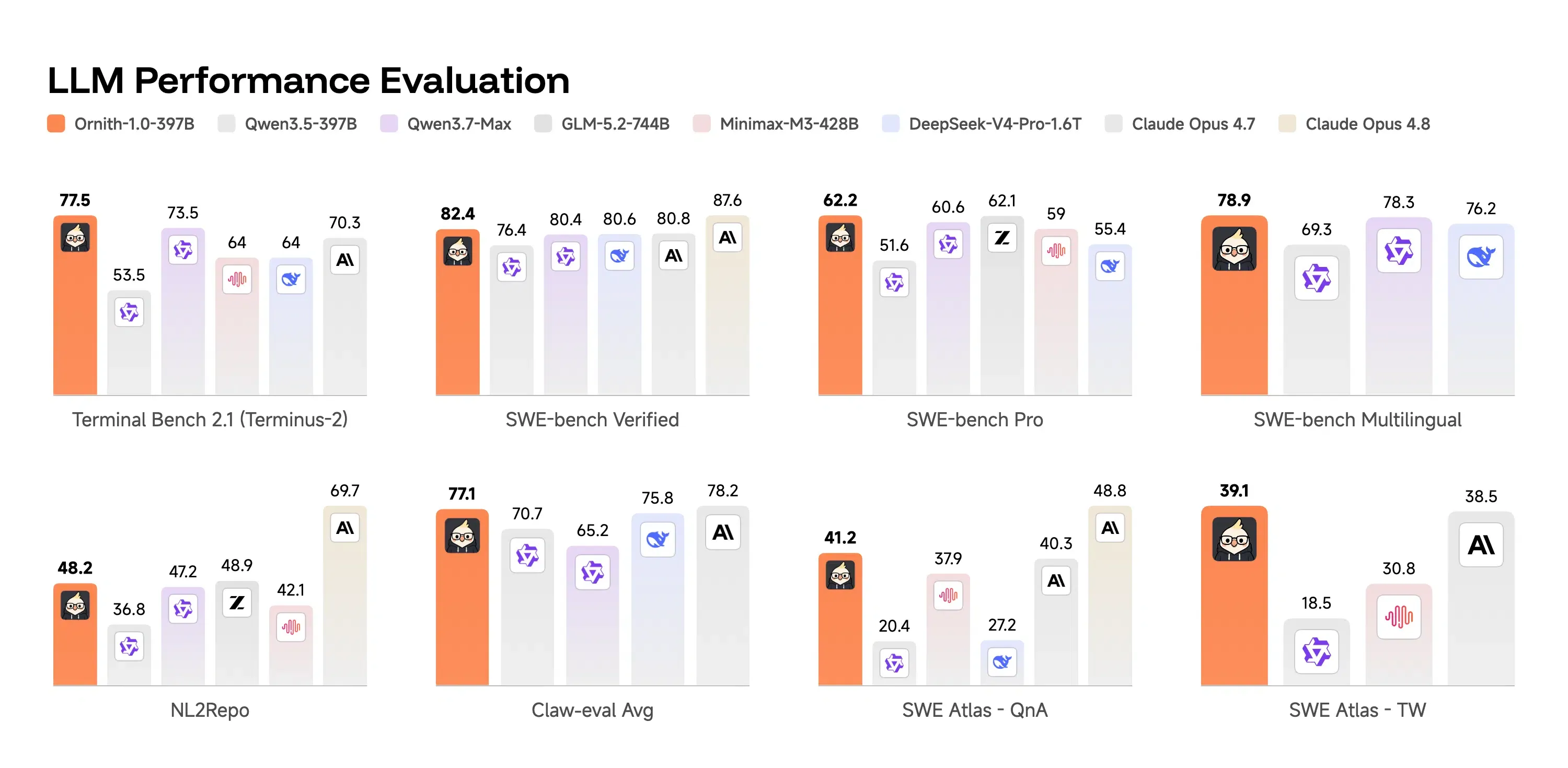
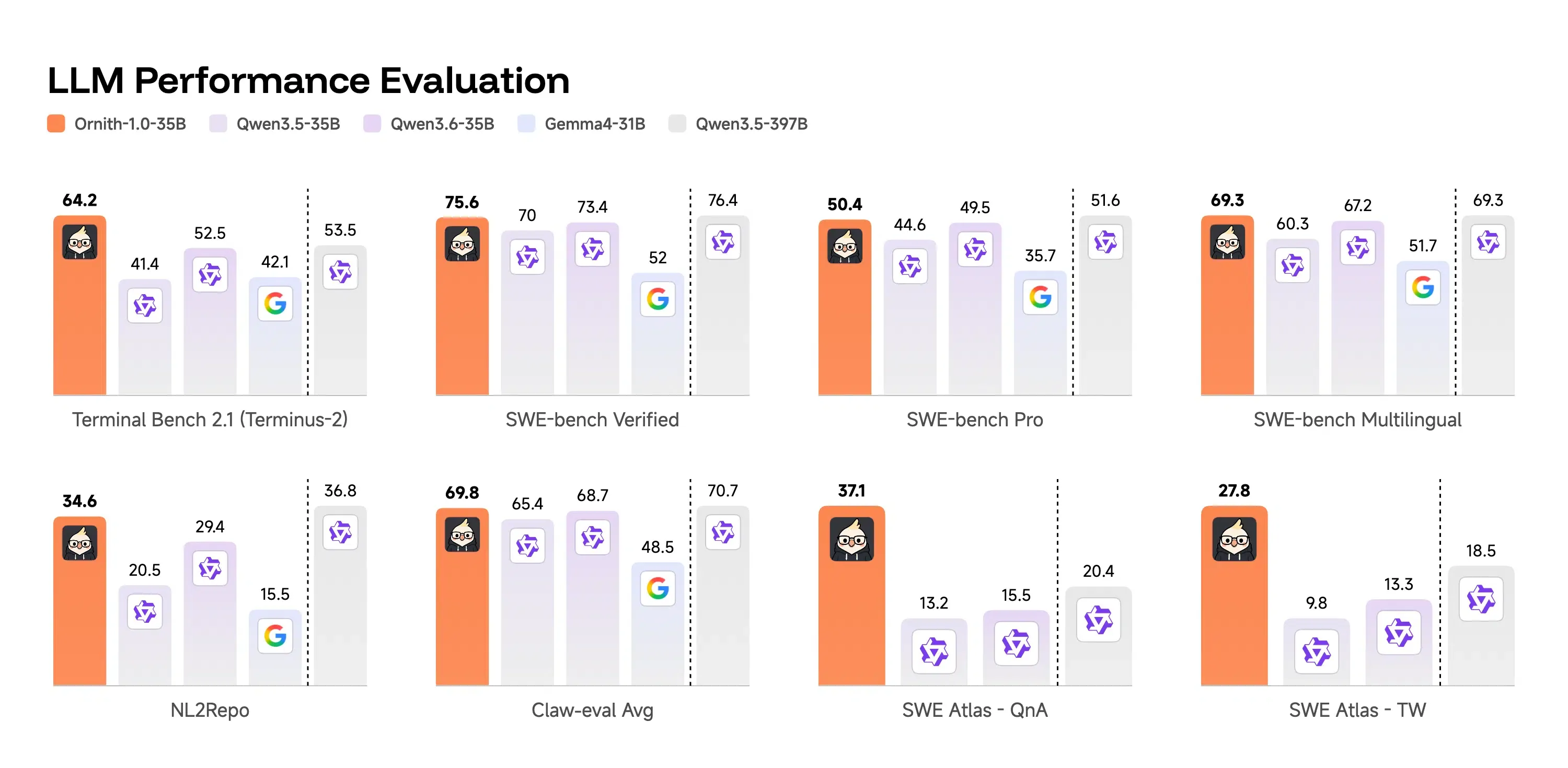
The evaluation results highlight significant performance gains across multiple agentic benchmarks. At the flagship scale, the 397B MoE model achieves 77.5 on Terminal-Bench 2.1 and 82.4 on SWE-Bench Verified. This performance surpasses Claude Opus 4.7 and outpaces leading open models of similar size. For instance, the architecture reduces redundant file reads and optimizes memory movement across long-context tasks. Meanwhile, the 35B MoE model activates approximately 3B parameters per token, delivering a fast, cost-effective runtime. It scores 64.2 on Terminal-Bench 2.1, exceeding much larger models like Qwen 3.5-397B while maintaining high execution stability.
Resource-Efficient Edge Deployments
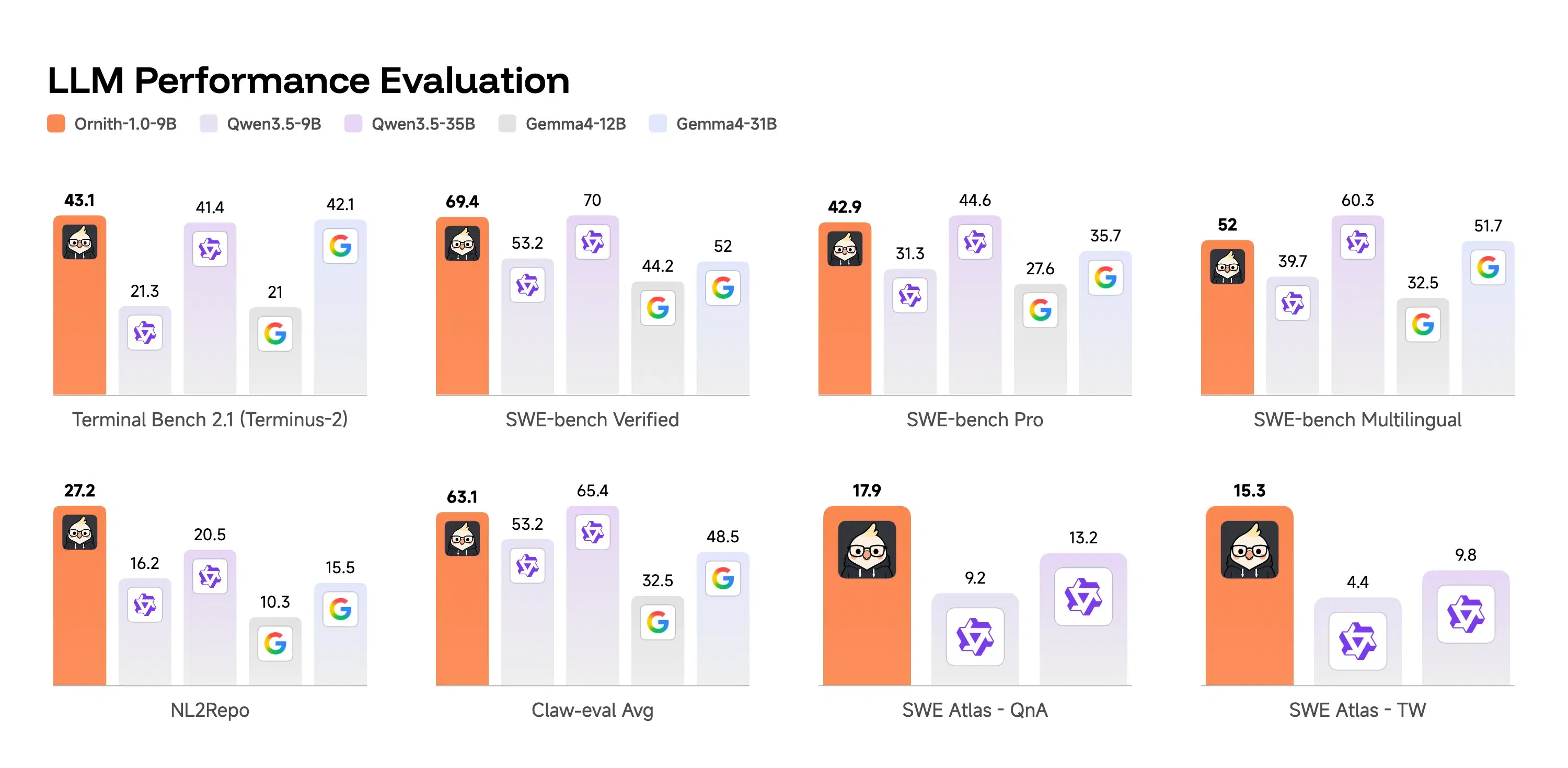
For local and edge hardware deployments, the 9B dense model offers an extremely efficient solution. It achieves 43.1 on Terminal-Bench 2.1 and 69.4 on SWE-Bench Verified. This compact model requires only about 19GB of memory in bf16, allowing developers to run it on a single 80GB GPU. Consequently, teams can execute private, local runs without transmitting sensitive codebases outside the organization. The model is fully compatible with Ollama, Unsloth, and GGUF quantization formats. This allows engineering groups to deploy always-on local programming agents on consumer-grade hardware.
The Self-Improving Training Loop
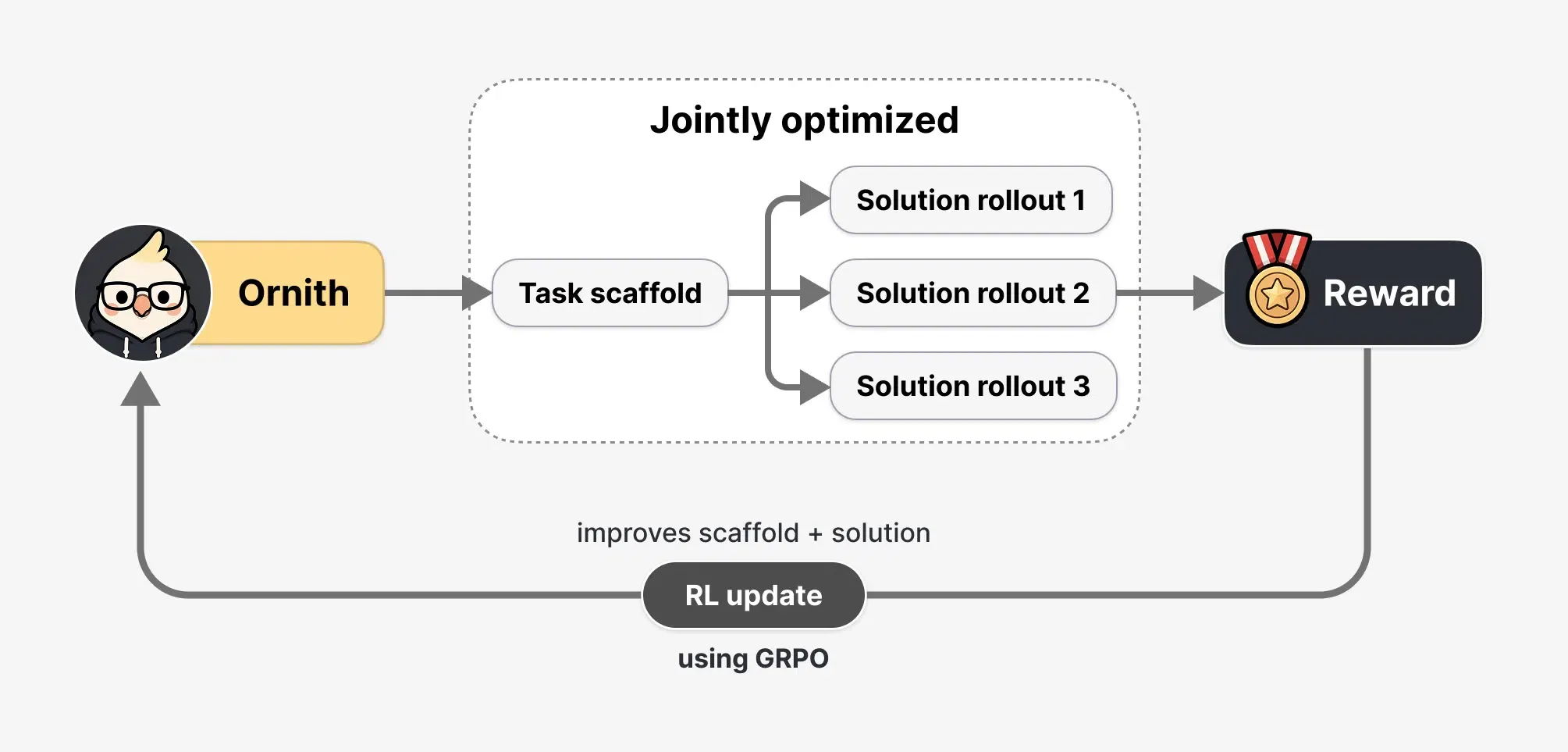
At the core of the model’s capabilities is a self-improving training loop. During reinforcement learning, the model treats the scaffold as a learnable object. Each training step proceeds in two stages: first, the model proposes a refined scaffold; second, it uses that scaffold to generate a solution rollout. The reward is propagated to both stages, optimizing the model to write its own orchestration. To prevent reward hacking, DeepReinforce implements a three-layer defense: a fixed trust boundary, a deterministic monitor that flags banned path reads, and a frozen LLM judge acting as a veto.
Why Headless Agents Create Attribution Blind Spots
As autonomous agents execute multi-file refactors and code repairs, the volume of background API transactions increases. Consequently, as the ‘Ornith-1.0’ family processes agentic coding workloads headlessly across repository-scale files, the shift toward background execution triggers an attribution crisis. For developer teams, the immediate challenge is managing cross-platform transitions while maintaining robust user session validation.
Reversing the Completing Paradigm: When Agent Execution Outperforms Pressed Keys
Programmatic agents operate as stateless, server-side HTTP clients. They do not maintain persistent cookie jars, do not execute browser-level storage, and often drop Referrer headers entirely during automated background jumps. The following observations are based on internal engineering validations conducted in our staging environments, intended to illustrate common execution patterns rather than industry-wide benchmarks. During a routing telemetry trace performed in April 2026, we audited approximately 165,000 repository-level file mutations across our staging environment to monitor how headless coding agents executed multi-file refactoring tasks. The database recorded zero browser-level cookie handshakes, causing the subsequent installation to be classified entirely as direct traffic. This stateless execution bypasses standard client-side tracking parameters like the Google Play Install Referrer API. It also prevents browser-level redirects that are captured by iOS SKAdNetwork (SKAN) or the Android Privacy Sandbox SDK Runtime. Consequently, when an agent-driven flow completes a transaction via background APIs, the referrer chain breaks. The install appears as an unknown direct source, creating notable campaign measurement discrepancies.
Bot Swarms and the Ad Fraud Threat Vector
Low-cost, high-performance tokens create new challenges for security teams. In parallel, Alibaba’s recent off-peak token discount offers an 80% discount during off-peak hours. This pricing shift dramatically reduces the operational costs of running automated agent scripts at night. During a routine security review of 38,000 automated repository commits, our team identified a cluster of headless scripts representing roughly 8% of all recorded installs, concentrated entirely within a three-hour window. These botnets programmatically spoofed install callbacks, proving that basic client-side threshold-based rate-limits are insufficient. This exposure requires developers to implement more robust verification at the SDK level to protect marketing spend.
Building Secure SDK Integrations for Autonomous Agents
Securing agent-driven workflows requires a structured engineering approach. One baseline defense is the deployment of device-level state verification. Developers can implement state machines that validate hardware fingerprints during a session request. When an agent triggers an action, the server checks this state to verify the execution context, blocking unauthorized calls. Securing backend execution channels in agentic coding environments requires a structured and cryptographically verified handshake.
Designing Secure Multi-Agent Identifiers
Isolating the execution environment is crucial to prevent cross-session data leaks. Developers can run agents within clean, transient sandboxes that destroy local state upon task completion. Additionally, cryptographic signatures should be applied to all transit parameters. By signing every URL callback with private keys, systems engineers ensure that intermediate scripts cannot alter the payload, preserving the integrity of the data stream. This secure configuration provides a robust invalid traffic filtration architecture to block automated spoofing attempts.
Hardening Cryptographic Signatures in SDK Implementations
To avoid dedicating internal sprint cycles to baseline state-machine infrastructure, engineering teams commonly rely on industry-standard reference implementations. In production, teams can integrate the deferred app parameter pass-through framework to automate signature checks and state restoration without managing complex state machines. This integration allows the application to retrieve the original referral context from a secure server callback during the first launch. By passing a cryptographically signed token through the installation loop, the platform preserves the original transaction state, ensuring consistent data flow across the entire acquisition lifecycle.
Aligning Engineering and Marketing on State Restoration
Implementing workflows for autonomous agent deployments requires close coordination between technical and marketing departments. The engineering team must focus on standardizing unique identifiers and ensuring SDK compatibility. Developers also need to manage bundle IDs across multi-tenant deployments to prevent routing conflicts in regional stores. Meanwhile, architects must implement secure signature checks for both the iOS and Android platforms to prevent deep link manipulation.
Technical Considerations for Developers and Architects
Architects must ensure that custom URL schemes, universal links, and app links are verified at the gateway level. This configuration prevents malicious scripts from hijacking the intent routing during a web-to-app transition. By enforcing signature verification, teams can protect the downstream data pipeline and maintain clean records in their systems using a standardized universal linking architecture.
Growth Strategies and Customer Acquisition Under Deflation
Growth teams must adapt their analytics to rely on cohort analysis and long-term retention metrics rather than single-click events. Integrating the multi-channel deterministic attribution engine enables the creation of personalized onboarding flows that preserve the user’s intent. When a referral occurs, the system can automatically attribute the conversion without requiring manual input. This approach improves the accuracy of return on ad spend (ROAS) calculations and helps filter out invalid, agent-generated traffic.
Frequently Asked Questions (FAQ)
Why do referrer-based measurements break in agentic workflows?
How do cryptographic signatures secure SDKs when 'Ornith-1.0' focuses on Agentic Coding?
Why do standard device fingerprinting methods fail in agentic coding workflows?
The launch signifies a broader shift in the global technology landscape. Specifically, as dedicated inference processors expand, the traditional model of software access is beginning to dissolve. Furthermore, as autonomous agents handle more administrative tasks, the primary user interface may transition from visual dashboards to direct backend API handshakes. This evolution could reduce the role of traditional application stores in discoverability. Instead, the market may see a growth in single-purpose, on-demand micro-applications generated dynamically for specific tasks. This change creates new requirements for zero-friction distribution and secure, real-time verification.
Additionally, data privacy frameworks like SKAdNetwork and Google Privacy Sandbox are likely to continue limiting third-party data sharing. This trend forces developers to prioritize first-party, deterministic measurement. In this environment, multi-touch attribution standards may become a baseline requirement for modern system architectures. Organizations relying on browser-based attribution may want to evaluate whether their current measurement pipelines remain sufficient as agent-driven workflows become more common.
Share this article