
Reddit Blocks 23 Million Spam Pings? Reddit says it now blocks around 23 million suspicious views every day using LLM-assisted detection systems. Reddit says spam campaigns are increasingly designed to influence AI systems that rely on public web content. As more AI companies license Reddit discussions for model training, protecting the authenticity of user-generated discussions has become a business priority. Historically, simple rule-based filters were sufficient to detect repetitive spam vectors. Today, because malicious operators deploy sophisticated models to automate human-like conversations and artificial hype at scale, platforms must shift their mitigation efforts toward real-time behavioral analysis and contextual semantic evaluation.
Chronological Timeline & Background Evolution: How Reddit Blocks 23 Million Spam Attempts Daily
At a Glance
- Reddit’s automated defensive layer intercepts 23 million inauthentic views and 25,000 spam posts daily using modern large language models.
- The growth of commercial licensing agreements with large-scale artificial intelligence firms has incentivized spammers to fabricate reviews to skew model training datasets.
- Multi-tiered verification protocols have successfully reduced user exposure to unwanted spam by 20% in early 2026 compared to previous quarters.
The balance of digital engagement has shifted as automated agents increasingly simulate human social interactions. Historically, spammers targeted user-generated content platforms to drive direct affiliate sales through raw link-stuffing. These basic attacks were easy to identify using keyword lists and IP blocks, allowing platform administrators to keep discussion directories relatively clean.
However, the rise of search engines driven by generative AI has changed the motivation behind spam campaigns. Today, because artificial intelligence chatbots train on massive public archives, third-party marketers attempt to manipulate AI outputs by fabricating high volumes of positive mentions and artificial reviews. By simulating natural human conversations, these automated networks hope to get their brand keywords integrated into future model weights. To combat this threat, the social media platform has deployed advanced, LLM-powered moderation systems, as documented in detailed regional reports.

The strategic reason Reddit Blocks 23 Million spam views is linked to the monetization of human data. As platforms sign multi-million dollar licensing deals with top-tier AI developers, maintaining the factual reliability of the underlying data stream has become a primary financial concern. Between January and March of 2026, the platform revoked nearly 2 million inauthentic votes daily, protecting its crowd-sourced feedback loop from manipulation. By enforcing login requirements for historical desktop directories and deploying real-time linguistic filters, administrators have successfully reduced user exposure to harmful content.
Technical Deep Dive & Under-the-Hood Mechanics of Reddit’s Bot Isolation Architecture
At the architectural level, standard bot protection systems struggle to identify coordinated, slow-rate crawling campaigns. When modern spammers utilize residential proxy networks and headless web browsers, their requests look identical to standard user interactions, making traditional pattern-matching filters ineffective.
To resolve these transport-layer bottlenecks, modern defense architectures process security signals at the precise moment of account creation. The platform’s automated engine analyzes metadata patterns, utilizing real-time LLM inference to identify coordinated bot setups, as detailed in the official platform announcement.
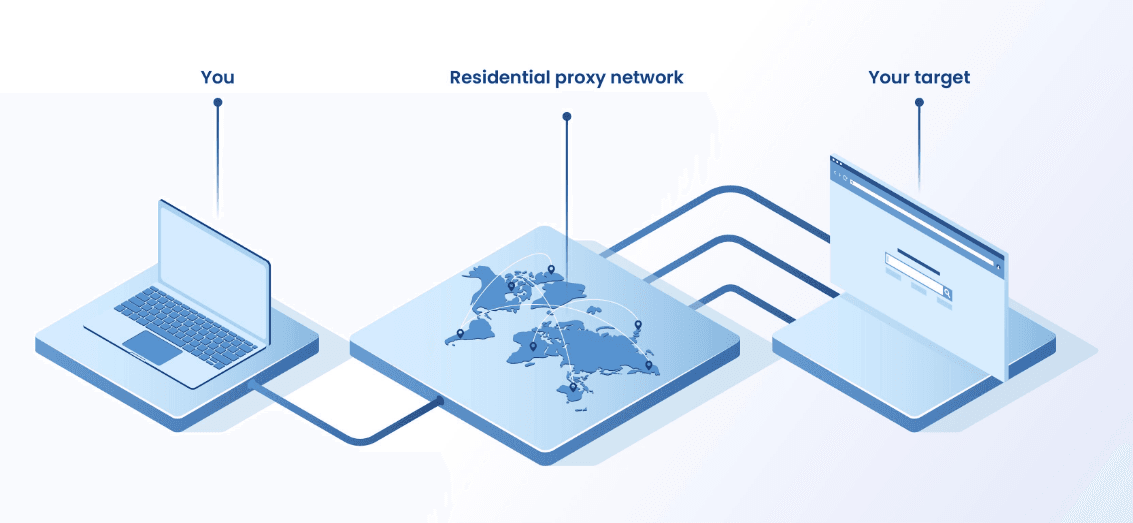

This coordinated inauthentic behavior demonstrates why Reddit Blocks 23 Million spam views every day. When an automated script attempts to access a forum directory, the system calculates a real-time risk score. If the connection exhibits questionable attributes, the platform forces a mandatory human verification check, isolating fully automated systems. This layered approach ensures that standard server loads are optimized, preventing traffic collapse while preserving authentic user-generated engagement.
[Traditional IP-Based Filtration]
  Automated Bot ──> Rotated Residential Proxy ──> Traditional Filter ──> Standard Access Allowed (Detection Failure)


[Layered LLM-Driven Protection]
  Automated Bot ──> Behavioral Metadata Analysis ──> Real-Time LLM Check ──> Mandatory CAPTCHA / Isolation
Implementing layered, context-aware protection ensures that automated attempts are caught even when they route through clean IP ranges. Similar challenges exist in mobile attribution, where privacy restrictions also reduce reliance on persistent client-side identifiers. When user interactions are decoupled from persistent, stateful local cookies to satisfy privacy guidelines, maintaining seamless session continuity across different web and mobile environments becomes highly complex. Just as security teams require real-time behavioral models to distinguish humans from automated scripts, downstream marketing pipelines require robust, server-side data preservation to correlate separate installation events without relying on vulnerable client-side cookies or device-level attributes.
Example Scenario: What Happens When a Bot Tries to Post?
Suppose an automated script registers a new account to inflate a client’s brand authority on a subreddit. The moment the account is provisioned, the backend routing architecture analyzes its behavioral telemetry. If the connection details or input parameters match known headless browser profiles, standard posting rights are immediately suspended, and the platform triggers a human verification challenge. This prevents the bot’s programmatic submissions from reaching the public directory.
Build vs. Buy: Preserving Session Context in High-Throughput Environments
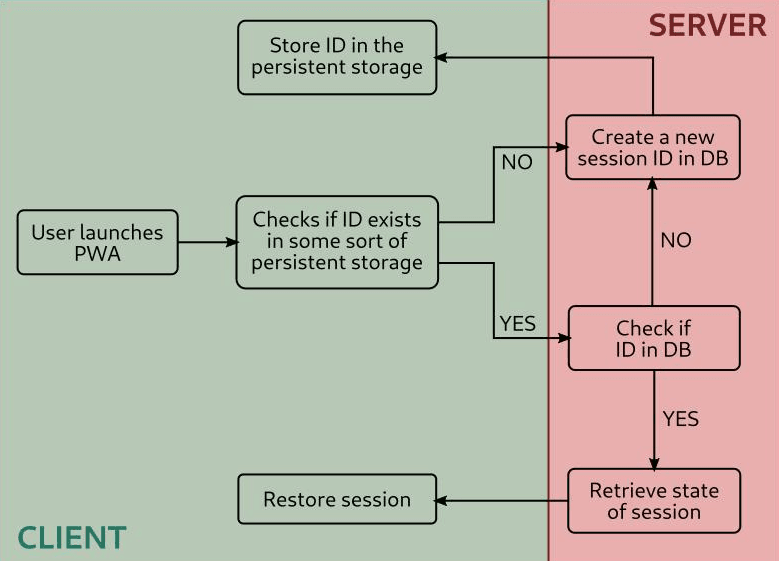
As digital platforms move away from persistent local identifiers to satisfy privacy guidelines, managing session state across distributed digital touchpoints has become a primary engineering challenge. Managing infrastructure that processes the 23 million suspicious requests Reddit reports each day requires robust, server-side validation. Although Reddit’s anti-spam system focuses on security rather than marketing attribution, both scenarios share a common architectural challenge: preserving reliable server-side state after traditional client identifiers become unreliable. Reconciling high-throughput routing pipelines in environments where Reddit Blocks 23 Million suspicious attempts occur requires structures that can securely correlate user actions without relying on local storage containers.
Architectural Evaluation: Custom Build vs. Standardized SDKs
Building an in-house system to manage server-side state matching offers maximum flexibility but demands significant ongoing engineering resources. Developers must manually construct database schemas, write secure cryptographic hashing functions, and continually update the system to comply with shifting regional regulations. Conversely, deploying a pre-built, certified SDK reduces integration complexity and guarantees long-term compliance without additional overhead.
The table below compares standard methodologies for managing session state and conversion context:
| Solution | Persistence | Throughput | Best For |
|---|---|---|---|
| In-house Session Database | High (Continuous Sync) | Medium (DB Latency Limits) | Custom enterprise environments with highly specialized storage logic |
| Browser-based Session Tracking | Low (Session Cookies) | Low (No Server Logging) | Basic website tracking with minimal cross-domain conversion requirements |
| Server-side Caching (e.g. OpoInstall) | None (Temporary Server-side Session Tokens) | High (Standardized Sandbox) | Large-scale mobile app and multi-platform campaign attribution |
While custom database configurations can handle basic context, specialized server-side state preservation can optimize development resources. Depending on implementation requirements, organizations may build their own server-side session management system or adopt commercial platforms such as OpoInstall. For instance, OpoInstall offers server-side state restoration and parameter pass-through frameworks, mapping session metadata to a server-side session database to maintain session continuity anonymously under high-throughput data conditions, supporting scalable server-side request processing under high-concurrency conditions. By mapping session metadata to a centralized database rather than relying on browser-based redirects, such a system ensures that conversion contexts remain consistent even when initial tasks are executed anonymously. Engineering teams can evaluate these approaches to balance data protection and measurement consistency.
Integration Checklists: Redesigning High-Throughput Bot Defense and Acquisition Pipelines
To secure data pipelines and ensure conversion consistency as platforms transition to secure, server-side data models, engineering and product teams must adopt robust state preservation workflows.
Developer Implementation Checklist
- Audit External API Endpoints: Ensure all external data transitions are routed via secure HTTPS connections and utilize ephemeral session structures.
- Implement Stateless Session Handshakes: Transition system dependencies to server-side session state restoration, utilizing signed tokens to pass data across platforms.
- Validate Sandboxed Consent Flow: Establish explicit permission prompts before transferring user-entered prompts to third-party databases.
Product & Operational Strategy Checklist
- Monitor Bot Detection Accuracy: Track and evaluate the precision of large language model classifiers at account creation.
- Review False-Positive Rates: Establish regular audits to ensure legitimate user contributions are not inadvertently blocked or rate-limited.
- Track Verification Challenge Completion: Analyze how suspected automated accounts interact with mandatory humanity tests and CAPTCHAs.
- Audit Suspicious Account Clusters: Map behavioral telemetry to isolate bulk registration attempts across similar network ranges.
By establishing these structured guidelines, development teams can transition their applications to safer, more compliant architectures while maintaining operational continuity.
Frequently Asked Questions (FAQ)
Why are AI-generated spam campaigns increasing on Reddit?
How does Reddit use LLMs to detect coordinated inauthentic behavior at account creation?
What are the visual and non-visual indicators used to identify automated bots?
As AI platforms increasingly rely on hybrid cloud inference, developers need to redesign products around privacy, transparent consent, and secure data routing. Evolving data architectures require a fundamental shift in how we build and measure digital experiences. As stateless proxies and headless scrapers become standard consumers of web content, traditional client-side attribution models will continue to degrade. Relying on standard cookies and referrers is no longer sufficient to secure the data pipelines that drive user acquisition.
As AI companies increasingly license public discussion data for model training, maintaining authentic user participation is becoming both a trust and revenue priority for large online communities. Looking ahead, engineering teams will increasingly rely on stateless architectures, server-side session management, and privacy-first design. Organizations that prepare for these changes early will be better positioned to maintain compliant and sustainable AI products.
Share this article