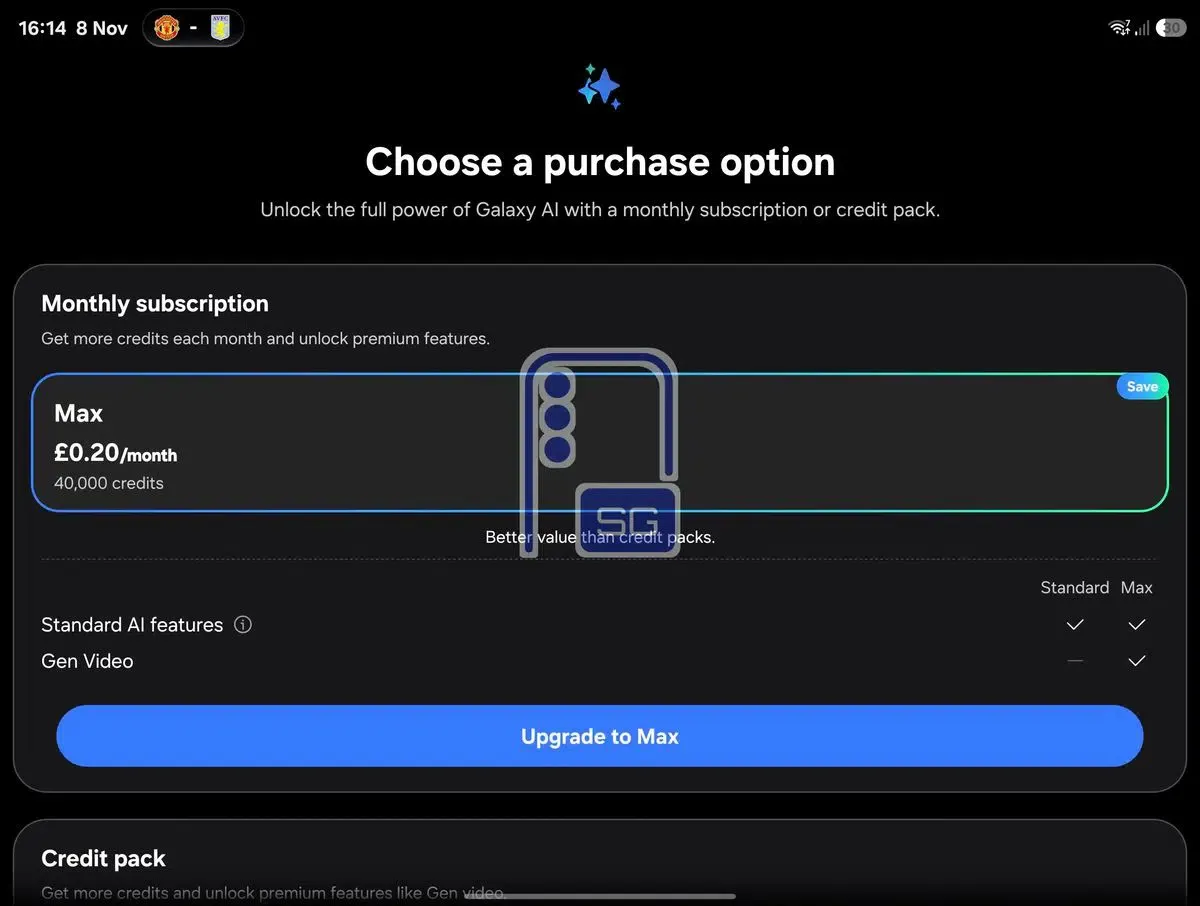
Samsung Galaxy AI Subscription? Firmware strings discovered in One UI 9.5 test builds indicate that Samsung is experimenting with a paid subscription model for advanced Galaxy AI features, with code strings proposing a $4.99 monthly or $47.99 annual tier alongside placeholder figures in test screenshots. Disclosed by SammyGuru and reported across tech media, the early-access experiment references test purchases that are designated to be refunded when the trial concludes. Samsung has not officially announced a commercial rollout or confirmed future pricing, and its current official policy maintains that basic Galaxy AI capabilities remain free on supported devices Samsung US. For applications considering usage-based AI pricing, product teams must coordinate in-app purchases, server-side entitlements, and acquisition context.
The Operational Problem & Financial Bottlenecks: Monetizing System-Level Mobile AI Features
At a Glance
- Unreleased test strings in One UI 9.5 reference an optional “Galaxy AI Premium” or “Max” tier with proposed candidate pricing of $4.99 per month.
- Testing documentation notes that participant charges during the early-access trial are slated for refunds, indicating that commercial terms and screenshot price values remain non-finalized placeholders.
- Samsung’s current official policy states that core Galaxy AI features remain free on supported devices, though terms may differ for future advanced or third-party features.
The early deployment of generative mobile software relied heavily on promotional subsidization. Smartphone manufacturers integrated cloud-assisted models directly into pre-installed applications, absorbing backend inference expenses to drive hardware upgrade cycles. Consumers grew accustomed to instantaneous image editing, contextual translation, and text summarization without encountering payment walls or usage counters.
However, running large multimodal models at scale incurs continuous operational costs. Server infrastructure, memory bandwidth, and high-concurrency API hosting create ongoing expenses as feature utilization rises. While promotional terms on earlier Galaxy devices stated that features would remain complimentary through the end of 2025, Samsung’s official Galaxy AI overview clarifies that basic capabilities remain free on supported devices, while leaving open the possibility that future enhancements or third-party capabilities could carry distinct terms.
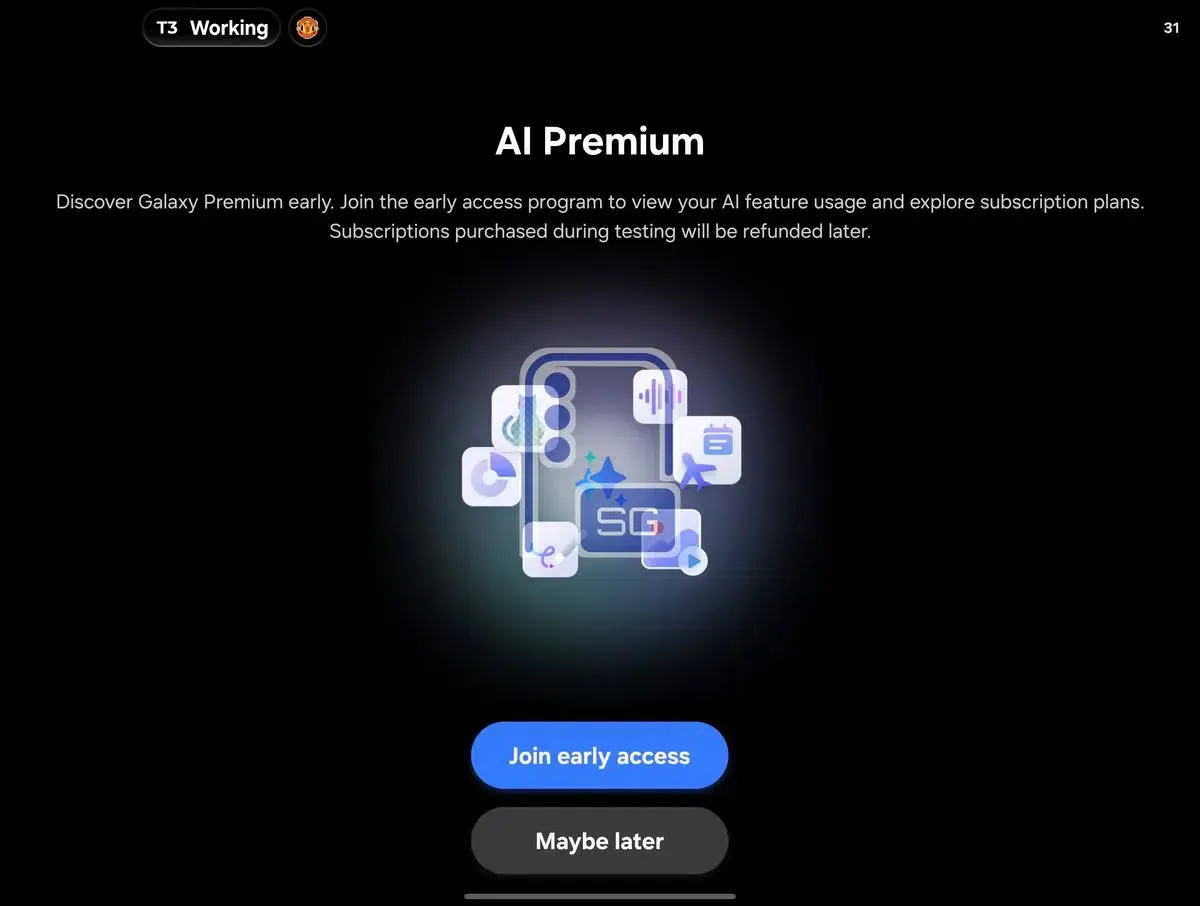
The leaked One UI 9.5 strings suggest that Samsung is exploring how to structure tiered access. According to reports from Android Central, the unreleased software references a free “Standard” experience with baseline allowances, alongside a paid “Max” plan designed for heavier workloads. The interface strings indicate that core features—such as Photo Assist, Browsing Assist, and Samsung Keyboard tools—would remain accessible, while paid tiers would unlock new tools such as Gen Video, Daily Briefing, and Bixby Action automation.
Importantly, these findings originate from firmware teardowns and early-access test programs where participants are informed that trial charges will be refunded upon project conclusion. The proposed dollar strings and interface test figures represent candidate prices and placeholder interface values rather than finalized commercial agreements. Nonetheless, the trial illustrates the operational challenge consumer platforms face when balancing free baseline tools with high-compute generative tasks.
Technical Context: Reference Architecture for Mobile AI Quotas and Cloud Inference
To understand why platforms explore subscription tiers, engineering teams must evaluate the technical realities of running artificial intelligence on mobile devices. Execution location depends on the feature, model, device, and implementation. The leaked material does not establish how Bixby Action or Gen Video divides work between the device and cloud. Samsung distinguishes on-device and cloud-dependent features; available functions vary by device, software version, and processing settings. According to Samsung’s support documentation on advanced intelligence settings, disabling online processing turns off features that rely on cloud servers, rather than routing all complex tasks to local execution.
On-device execution via mobile Neural Processing Units (NPUs) avoids remote inference request costs and operates without an internet connection, but remains constrained by device memory, thermal limits, and battery impact. In contrast, cloud-assisted features require streaming data to server infrastructure, running larger models across GPU clusters, and returning structured responses.
General Reference Design: Quota Management for Tiered Mobile AI Services
For independent mobile applications offering generative features, implementing a metered subscription requires robust server-side quota management. The diagram below illustrates a general reference design for handling tiered allowances, credit reservations, and paywall gates in an application backend:
[Client Application / UI Request]
  │
  ├── Local On-Device Task ──> Client NPU / Local Model ──> Local Result (No Remote Inference Request)
  │
  └── High-Compute Cloud Task
        │
        ▼
      [Application Backend API Gateway]
        │
        ├── 1. Validate User Identity & Subscription Status
        ├── 2. Reserve Quota / Credits (Atomic Reservation Key)
        │        │
        │        ├── Quota Exhausted ──> Return Application Paywall Offer (e.g., HTTP 402 Example)
        │        │
        │        └── Quota Available ──> Dispatch Job to Inference Workers
        │                                  │
        │                                  ├── Task Confirmed Succeeded ──> Settle Credits & Stream Payload
        │                                  ├── Task Confirmed Failed    ──> Release Reserved Quota & Log Error
        │                                  └── Timeout / Disconnected   ──> Reconcile Job Status Authoritatively
In a production environment, authorization and credit deductions must be enforced by the application backend rather than trusting client-side logic. The backend reserves quota before dispatch and settles it according to the documented charging policy and authoritative job status. Confirmed failures may release the reservation; timeouts and disconnected clients require status reconciliation rather than automatic release.
Although hardware manufacturer trials and independent application growth belong to separate operational scopes, both encounter the challenge of managing paid user lifecycles. When an application monetizes generative features through recurring subscriptions or credit top-ups, development teams must track not only backend token consumption, but also the acquisition channels that generate paying subscribers.
Connecting Acquisition Context to Verified Subscription Events
As mobile applications introduce paywalls for advanced features, evaluating marketing performance requires connecting early acquisition channels with downstream billing events. In-app subscription conversions cannot be measured solely by top-of-funnel download numbers. Growth teams need to understand whether marketing expenditure drives long-term paying subscribers or merely acquires users who exhaust free allocations and churn.
To accomplish this, mobile architectures coordinate distinct technical components, keeping payment validation separate from acquisition context delivery.

Complementary Architectural Responsibilities
The table below outlines the division of responsibility between platform billing infrastructure, parameter delivery frameworks, and the application’s internal backend:
| Component | Primary Responsibility | Explicit Boundaries |
|---|---|---|
| Store Billing APIs & Webhooks (e.g., Google Play RTDN, Samsung IAP) | Store APIs provide purchase and subscription status; notifications signal changes that the backend must authenticate and reconcile | Does not automatically preserve pre-install web marketing context |
| Installation Parameter Delivery (e.g., OpoInstall) | Recovers custom acquisition parameters (campaign tags, referral codes) during supported first-launch flows | Does not verify financial transactions or grant subscription entitlements |
| Application Backend Correlation Layer | Links authenticated user accounts, verified store receipts, and preserved acquisition parameters | Must not trust unverified client-side transaction claims |
In this architecture, store billing systems process purchases; developer notifications and server APIs help the application backend verify and reconcile subscription state. Platform tools such as Google Play Real-Time Developer Notifications (RTDN) alert the developer’s server when a subscription state changes. The application backend queries the official developer API (such as the Google Play Developer API or Samsung IAP Server APIs) to verify purchase validity, confirm subscription tier, and track renewals or cancellations.
However, app store billing notifications do not carry custom promotional parameters from the pre-install web journey. For mobile applications running external acquisition campaigns, specialized tools such as OpoInstall provide an installation parameter pass-through framework. By retrieving previously captured campaign identifiers upon first app launch, the application preserves acquisition context across the installation boundary.
Once the user creates an account and completes a subscription purchase, the application backend associates the verified transaction with the stored acquisition context. By reconciling official receipt validation with preserved campaign data—and accounting for refunds, cancellations, and duplicate webhook notifications—growth teams can evaluate realized cohort revenue against advertising costs without confusing parameter delivery with billing infrastructure.
Integration Checklists: How Mobile Teams Can Prepare for AI Subscription Paywalls
Mobile engineering and product teams building subscription-backed generative applications should audit their architecture to ensure sustainable billing and attribution.
Developer Implementation Checklist
- Enforce Server-Side Entitlement Checks: Authorize cloud inference tasks exclusively through backend endpoints that verify subscription state against store developer APIs.
- Implement Resilient Quota Settlement: Use idempotency keys, atomic quota reservations, and job-status reconciliation to prevent duplicate charges and resolve interrupted requests.
- Process Asynchronous Store Webhooks: Set up listeners for real-time developer notifications to handle renewals, trial expirations, cancellations, and grace-period changes.
- Preserve Pre-Install Parameters at First Launch: Retrieve incoming campaign tags upon initial application start, caching the pending context securely until account creation and billing events occur.
Product & Growth Strategy Checklist
- Model Task Cost Ranges: Estimate realistic cost ranges per successful task—factoring in retries, user errors, and idle infrastructure—to establish sustainable pricing tiers.
- Align Paywalls with Demonstrated Intent: Present subscription prompts at moments where users actively seek advanced utility, rather than interrupting baseline onboarding.
- Measure Cohort-Level Realized Revenue: Evaluate acquisition channels using verified purchase receipts over defined observation windows to assess genuine return on ad spend.
Following these practices allows application teams to build scalable, subscription-supported features that cover computational costs while maintaining transparent user conversion paths.
Frequently Asked Questions (FAQ)
Will existing Galaxy AI features remain free on Samsung phones?
What new features are referenced in the leaked Galaxy AI Premium test?
How do usage caps and credit packs function in tiered mobile AI architectures?
Key Takeaways for Engineering Teams
The discovery of subscription strings in One UI 9.5 test builds reflects an ongoing economic reality across mobile computing: cloud-assisted AI creates recurring operating costs that product teams must account for when designing free allowances and paid tiers. The leak does not establish Samsung’s cost structure or commercial rationale, but the broader software landscape is steadily exploring tiered access models.
For independent application developers and growth teams, this shift highlights the importance of engineering discipline. Monetizing computational features requires building reliable server-side entitlement checks, managing usage reservations carefully, and maintaining clean separation between payment verification and marketing context. By connecting verified store transactions with preserved acquisition data, mobile organizations can build sustainable, subscription-supported applications.
References
-
SammyGuru. Exclusive: Samsung Testing a $4.99/Month Galaxy AI Premium Subscription Plan. Technical Firmware Teardown.
-
9to5Google. Samsung’s Paid Galaxy AI Plan Leaks for $5/Month, but Will You Pay?. Industry News Report.
-
Android Central. Samsung May Charge for Galaxy AI, but Its Features Have a Value Problem. Ecosystem Commentary.
-
Samsung. Galaxy AI Overview and Supported Feature Terms. Official Product Portal.
-
Samsung Support. Use Advanced Intelligence Settings on Your Galaxy Device. Official Support Documentation.
-
Android Developers. Real-Time Developer Notifications (RTDN) Reference. Google Play Billing Documentation.
-
Samsung Developers. In-App Purchase (IAP) Server API Overview. Technical Integration Guide.
-
OpoInstall. OpoInstall Documentation – Deferred Deep Linking and Parameter Delivery. Developer Integration Documentation.
Share this article