Samsung Unveils 50g Galaxy Glasses? Samsung introduced its first intelligent eyewear, a 50-gram display-free smart glass line powered by Google Gemini and Qualcomm’s Snapdragon AR1 Gen 1 chip, at its London Unpacked event in July 2026. The release marks a major hardware shift from traditional smartphone touchscreens toward wearable, audio-first AI interfaces. By integrating multimodal camera inputs, real-time voice translation, and Android XR OS, the glasses allow users to interact with ambient software through natural speech, touch gestures, and paired Galaxy Watch controls without looking at a screen.
What Samsung Unveiled: 50-Gram Display-Free Smart Eyewear
At a Glance
- Samsung unveiled 50-gram display-free smart glasses developed with Google, Gentle Monster, and Warby Parker.
- The device runs Android XR on Qualcomm’s Snapdragon AR1 Gen 1 processor, delivering up to nine hours of battery life on a single charge.
- Multimodal Gemini AI processes real-time camera feeds to summarize text, translate languages, and auto-save notes into Samsung Notes.
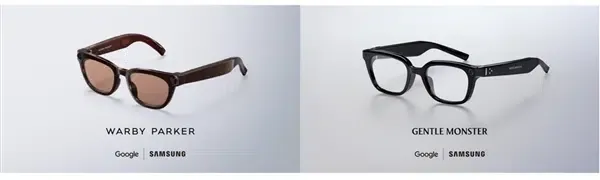
The consumer technology market is witnessing a fundamental shift in hardware form factors. At its London Unpacked event, Samsung officially entered the smart glasses market with the release of its Intelligent Eyewear lineup. Designed in partnership with eyewear fashion brands Gentle Monster and Warby Parker, the glasses weigh approximately 50 grams, matching the form factor and aesthetic of traditional optical frames.
Unlike bulkier mixed-reality headsets, Samsung chose a display-free, audio-first design. The frames feature two distinct styles: a sleek, minimal black frame from Gentle Monster and a warm brown upswept frame from Warby Parker. The device relies on open-ear directional speakers, a front-facing camera, and dual privacy LEDs that illuminate when video recording is active, as detailed in Samsung’s official announcement.

How Gemini Powers Display-Free Smart Glasses: Intent and Multimodal Workflows
Under the hood, the eyewear runs on Google’s Android XR platform and is powered by Qualcomm’s Snapdragon AR1 Gen 1 chip, engineered specifically for lightweight AR devices. The internal battery supports up to nine hours of continuous operation on a single charge, with an included charging case providing seven additional full charges.
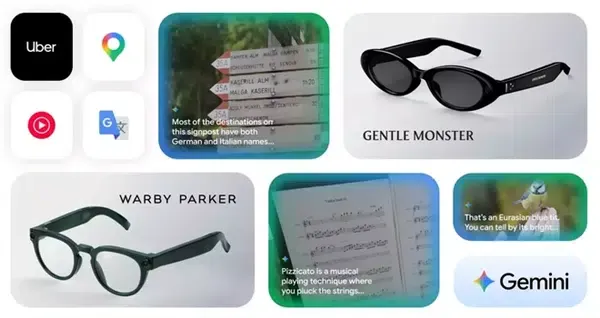
Google’s Gemini model serves as the primary intelligence layer, translating environmental visual signals and spoken prompts into actionable software intents. By analyzing real-time camera feeds, Gemini enables hands-free contextual assistance. Users can photograph a meeting whiteboard to automatically organize summary notes inside Samsung Notes, translate text on foreign menus in real time, or share live first-person video during calls.
To manage thermal output and battery efficiency, the Snapdragon AR1 chip handles on-device processing for privacy-sensitive tasks while offloading heavy AI reasoning to a paired Galaxy smartphone or cloud server. This architecture illustrates how ambient computing increasingly relies on distributed execution across local and cloud hardware.
[Wearable Input Node (50g Frames)]
  Camera Capture + Voice Input ──> On-Device Snapdragon AR1 Filter ──> Local Audio Response
                                                │
                                                ▼
[Intent Resolution & Deep Link Routing]
  Heavy Multimodal Inference ──> Bluetooth/Wi-Fi Proxy ──> Galaxy Smartphone / Cloud API
Cross-Terminal Application Distribution and Deep Linking Standards
Unlike smartphones, wearable devices rarely present a traditional application launcher. Instead, users begin interactions through voice commands, visual recognition, or contextual AI suggestions. Once an intent is recognized, the operating system must determine which application should handle the request and restore the correct destination inside that app.
When an AI agent on a wearable device identifies a user’s intent—such as making a restaurant reservation or placing an order—it must trigger downstream mobile application workflows without requiring manual on-screen navigation. This hardware transition underscores the necessity of standardizing these voice-and-camera App Intents across fragmented hardware platforms.
The table below compares user launch mechanics between traditional smartphones and ambient smart glasses:
| Dimension | Traditional Smartphone UI | Wearable Intelligent Eyewear (Android XR) |
|---|---|---|
| Launch Method | Screen Touch / Graphic UI | Voice Command / App Intent / Frame Touch |
| Navigation | Standard URL Scheme / Banner | Android App Intent / Universal Links |
| Context Continuity | Foreground Session Cookies | Intent Continuity & Cross-Device Handoff |
Some development teams adopt specialized deep-linking platforms to simplify intent routing and cross-device context restoration. Platforms such as OpoInstall help development teams preserve interaction context and handle deferred deep linking when transferring user sessions between smart glasses and paired mobile applications.
Developer Checklist for Wearable and Multimodal AI Integration
To prepare mobile software architectures for wearable AI devices and screenless interaction models, engineering leadership should follow a structured assessment schedule.
API Engineering
- Optimize Multimodal Payloads: Compress image and audio data captured by wearable sensors to minimize uplink latency over wireless connections.
- Implement App Intent Endpoints: Configure Android XR App Intents to allow external AI agents to execute deep-linked actions inside your mobile application.
- Enforce On-Device Privacy Filters: Sanitize sensitive sensor data locally before offloading telemetry streams to cloud processing nodes.
Product & Growth Strategy Checklist
- Design Audio-First Experiences: Build spoken feedback loops that deliver immediate confirmation for voice-driven user actions.
- Preserve Cross-Device Context: Ensure that user actions initiated on wearable glasses seamlessly sync to paired mobile and web dashboards.
- Audit Multi-Terminal Funnels: Track conversion pathways across wearable voice triggers, mobile app launches, and backend transactions.
Frequently Asked Questions (FAQ)
Do the Samsung Galaxy Glasses have a display?
Which AI engine powers Samsung's smart glasses?
How long is the battery life on Samsung Galaxy Glasses?
Key Takeaways for Engineering Teams
The launch of 50-gram intelligent eyewear marks a significant milestone in ambient computing. As AI models become capable of processing visual and voice contexts in real time, software interactions are shifting away from traditional smartphone screens. For developers, preparing for this ecosystem requires adopting modular App Intents, low-latency API routes, and seamless cross-device deep linking to deliver unified user experiences across emerging wearable hardware boundaries.
Share this article