FTC issues warning on malicious QR codes? On September 3, 2026, the Federal Trade Commission (FTC) published a consumer alert warning motorists that scammers are physically pasting fraudulent QR-code stickers over authentic codes on parking meters to redirect drivers to imposter payment portals. For enterprise security architects, growth engineers, and digital marketing leaders, the reality behind Secure Offline Referral Tracking has become an immediate architectural priority. While the popular industry term “quishing” (QR-code phishing) typically describes consumer-facing payment deception, the underlying physical attack mechanism directly affects real-world software distribution. When physical assets—such as retail point-of-sale displays, event banners, and partner referral flyers—are exposed to label replacement or query tampering, the data pipeline linking offline user discovery to digital attribution breaks down. To safeguard marketing investments and preserve customer trust, engineering teams must re-evaluate offline referral architectures, separating physical label security from cryptographic payload validation and downstream installation routing.

The FTC Warning and Physical Attack Vectors
The FTC’s consumer alert, titled “See a QR code parked somewhere? Don’t scan it…yet!”, identifies a growing vulnerability in contactless physical interactions. According to reports cited by the agency, fraudsters are affixing counterfeit QR-code stickers directly over legitimate barcodes on municipal parking meters, pay stations, and public parking signage. When a driver scans the tampered code expecting to settle an hourly parking fee, the device opens an imposter website engineered to collect payment card details, user credentials, and personally identifiable information.
At a Glance
- Physical Sticker Substitution: Adversaries paste adhesive counterfeit QR labels over legitimate public barcodes, exploiting the reality that the human eye cannot decode or authenticate matrix barcodes prior to scanning.
- Credential and Payment Harvesting: Victims encounter spoofed portals that capture sensitive payment and account data, leaving motorists financially compromised while legitimate parking authorities record an unpaid violation.
- Threat Parallels in Offline Acquisition: The physical substitution mechanics highlighted by the FTC alert illustrate a broader risk for offline enterprise referral programs and retail campaigns that rely on unprotected static QR codes.
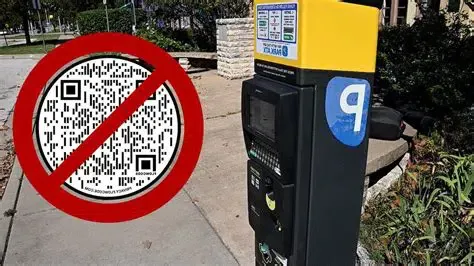
According to investigative reporting from WUSA9, QR-code scams exploit convenience by masking the destination server until after optical recognition occurs. While mobile camera viewports routinely display destination URL previews, homoglyph domain manipulations (such as substituting lookalike Unicode characters) and truncated screen prompts often escape scrutiny by users scanning codes in fast-paced public environments.
The risk of physical imposter fraud extends across multiple commercial venues. In an analysis of broader scam patterns by the Associated Press, cybersecurity professionals noted that QR-code sticker tampering is surfacing in hospitality environments, including restaurants and cafes where tabletop payment codes are replaced with rogue stickers. Furthermore, FTC fraud statistics cited in the reporting indicate that consumers reported losing billions of dollars to imposter scams across various communication channels, underscoring how deceptive touchpoints can undermine user confidence.
+-------------------------------------------------------------------------+
|                  FTC PARKING METER QUISHING ATTACK VECTOR               |
+-------------------------------------------------------------------------+
|                                                                         |
|  [ Legitimate Physical Asset: Parking Meter / Municipal Payment Sign ]  |
|         |                                                               |
|         |-- (Adversary Pastes Counterfeit QR Sticker Over Surface)      |
|         v                                                               |
|  [ Tampered Physical Surface Displayed to Public ]                      |
|         |                                                               |
|         |-- (Motorist Scans Sticker via Native Camera)                  |
|         v                                                               |
|  [ Mobile Browser Opens Adversary-Controlled URL ]                      |
|         |                                                               |
|         v                                                               |
|  [ Spoofed Parking Payment Portal ]                                     |
|         |                                                               |
|         +---------------------------------------+                       |
|         |                                       |                       |
|         v                                       v                       |
|  [ Card Data & Credentials Stolen ]    [ Parking Session Unpaid ]       |
|         |                                       |                       |
|         v                                       v                       |
|  [ Financial Theft / Identity Fraud ]  [ Municipal Citation Issued ]    |
|                                                                         |
+-------------------------------------------------------------------------+
This attack pattern illustrates an operational boundary: ordinary printed QR surfaces do not inherently authenticate the physical label or its issuer. Because physical paper, acrylic, and metal displays cannot verify their own structural integrity, securing real-world digital handoffs requires distinct defensive controls across physical, transport, and application layers.
The Analogous Risk: Offline Referral Tracking and Attribution Tampering
While municipal parking scams focus on payment credential theft, the same physical substitution primitive could also affect offline marketing materials and partner referral programs. Enterprise brands place millions of physical QR codes across retail store counters, promotional packaging, conference displays, and out-of-home posters to drive customer acquisition.

In conventional growth campaigns, an offline referral code frequently encodes a static plaintext tracking link:
https://promo.example.com/join?channel_id=store_108&promoter_id=rep_4401
When offline referral tracking relies on unprotected static strings, growth systems encounter two distinct security challenges:
- Physical Label Substitution: An unauthorized party can physically place an adhesive label over a retail display or partner poster. If the replacement code points to a competing affiliate account or a fraudulent spoof site, prospective customers scan the rogue code, diverting commercial credit or exposing users to phishing.
- Query Parameter Manipulation: If a user scans a legitimate printed code that opens an unverified web intermediary, unprotected query strings can be stripped, rewritten, or appended by untrusted browser extensions or intermediate redirect scripts, undermining referral accounting.
+-------------------------------------------------------------------------+
|                OFFLINE REFERRAL THREAT TAXONOMY                         |
+-------------------------------------------------------------------------+
|                                                                         |
|  [ Physical Promotional Asset (e.g., In-Store Partner Poster) ]         |
|         |                                                               |
|         +---------------------------------------+                       |
|         |                                       |                       |
|         v                                       v                       |
|  (Attack 1: Physical Substitution)     (Attack 2: Parameter Tampering)  |
|  Adversary pastes replacement label    Plaintext query string modified  |
|  over legitimate in-store poster       during client-side redirection   |
|         |                                       |                       |
|         v                                       v                       |
|  [ Points to Rogue Domain / Channel ]  [ Promoter ID Rewritten ]        |
|         |                                       |                       |
|         v                                       v                       |
|  [ Referral Credit Siphoned / Lost ]   [ Misattributed Channel Payout ] |
|                                                                         |
+-------------------------------------------------------------------------+
To maintain verifiable referral context, security architects must categorize physical and digital threats correctly:
| Attack Vector | Underlying Mechanism | Primary Business Impact | Architectural Countermeasure |
|---|---|---|---|
| Physical Sticker Overlay | Counterfeit label pasted over legitimate poster QR | Traffic directed to attacker domain or rival affiliate | Tamper-evident materials, routine audits, and verified app links |
| Parameter Manipulation | Modification of plaintext promoter_id or channel_id |
Misattributed commission payouts and inaccurate channel analytics | Server-side cryptographic token signing (HMAC-SHA256) |
| Code Scraping & Replay | Static campaign tokens copied and posted to coupon forums | Out-of-region, non-incremental digital claims | Token lifecycle management, replay prevention, and server-side rules |
| Automated Click Inflow | Scripted bots triggering web redirect endpoints | Skewed top-of-funnel conversion metrics | Web-tier rate limiting and anomaly telemetry |
A Three-Layer Architecture: Physical, Transport, and Payload Defense
A common misconception in mobile engineering is that cryptographic URL signatures can prevent physical QR-code substitution. In reality, if an attacker affixes a counterfeit sticker pointing to an attacker-controlled domain, the victim’s device never queries the legitimate brand’s infrastructure. Consequently, a comprehensive defense requires three coordinated layers:
+-------------------------------------------------------------------------+
|                   THREE-LAYER OFFLINE REFERRAL DEFENSE                  |
+-------------------------------------------------------------------------+
|                                                                         |
|  LAYER 1: PHYSICAL INTEGRITY                                            |
|  - Tamper-evident substrates (destructible vinyl, void-release tape)    |
|  - Protected enclosures (acrylic frames, behind-glass displays)         |
|  - Routine physical inspection protocols for public-facing assets       |
|         |                                                               |
|         v                                                               |
|  LAYER 2: DOMAIN-TO-APP ASSOCIATION & ROUTING TRUST                    |
|  - Clear, user-visible branding displaying the official HTTPS domain    |
|  - Verified Apple Universal Links / Android App Links                   |
|  - Ensures tampered third-party domains cannot invoke the native app    |
|         |                                                               |
|         v                                                               |
|  LAYER 3: PAYLOAD & TOKEN INTEGRITY                                     |
|  - Server-generated cryptographic tokens (HMAC-SHA256 signature)        |
|  - Server-side signature and timestamp verification on ingestion        |
|  - Campaign lifecycle controls preventing unauthorized token reuse      |
|                                                                         |
+-------------------------------------------------------------------------+
Layer 1: Physical Integrity and Inspection
Physical controls mitigate label-overlay attacks. High-value retail assets should employ tamper-evident materials—such as destructible vinyl labels that fragment upon attempted removal—or display barcodes behind protective glass and digital display terminals. In-store staff should conduct periodic visual inspections to verify that promotional displays remain unaltered.
Layer 2: Domain-to-App Association and Routing Trust via Verified App Links
When a user scans an authentic physical barcode, verified application linking mechanisms—such as Apple Universal Links and Android App Links—establish verified domain-to-app routing. By validating domain associations through OS-verified association files served over HTTPS from verified domains (apple-app-site-association and assetlinks.json), the operating system routes installed users directly into the designated native application without traversing unverified intermediate browser redirects. If a fraudulent sticker directing to an unverified third-party domain is scanned, the merchant’s native application will not intercept the link, allowing security-conscious users to recognize domain mismatches in the browser address bar.
Layer 3: Payload Integrity via Server-Side Signature Verification
To prevent intermediaries from modifying query parameters, referral links should encode signed tokens rather than bare plaintext strings. A secure attribution service generates an HMAC-SHA256 signature binding the channel identifier, campaign parameters, and an issuance timestamp using a server-side secret key:
When the link is opened, the receiving web server verifies the signature using the server-side secret key. If an adversary modifies pid=rep_4401 to substitute a different affiliate account, the signature fails and attribution credit is denied. For dynamic screen displays, tokens can incorporate a short Time-to-Live (TTL); for static printed materials (such as permanent store posters), servers enforce campaign-level validity windows and status checks.
// Illustrative server-side implementation for validating cryptographically signed offline referral tokens.
// In production, this logic executes on an authenticated backend service or ingestion gateway
// to keep the symmetric secret key confidential and prevent exposure within client binaries.

import Foundation
import CryptoKit

struct SignedReferralPayload {
    let channelId: String
    let promoterId: String
    let timestamp: TimeInterval
    let signatureHex: String
}

enum TokenValidationError: Error {
    case invalidURLStructure
    case missingRequiredClaims
    case tokenExpired(age: TimeInterval)
    case signatureInvalid
}

final class ReferralTokenVerifier {
    private let serverSecretKey: SymmetricKey

    /// Initializes the verifier with a securely stored server-side master key
    init(secretKeyData: Data) {
        self.serverSecretKey = SymmetricKey(data: secretKeyData)
    }

    /// Verifies the HMAC-SHA256 signature and validity window of an incoming referral request
    func verifyToken(from url: URL, maxAgeSeconds: TimeInterval = 86400) throws -> SignedReferralPayload {
        guard let components = URLComponents(url: url, resolvingAgainstBaseURL: true),
              let queryItems = components.queryItems else {
            throw TokenValidationError.invalidURLStructure
        }

        // Extract canonical attribution claims
        guard let channelId = queryItems.first(where: { $0.name == "cid" })?.value,
              let promoterId = queryItems.first(where: { $0.name == "pid" })?.value,
              let timestampStr = queryItems.first(where: { $0.name == "ts" })?.value,
              let timestamp = TimeInterval(timestampStr),
              let providedSignatureHex = queryItems.first(where: { $0.name == "sig" })?.value else {
            throw TokenValidationError.missingRequiredClaims
        }

        // 1. Verify token freshness if an expiration window is configured
        let currentTimestamp = Date().timeIntervalSince1970
        let tokenAge = currentTimestamp - timestamp
        if tokenAge > maxAgeSeconds || tokenAge < -60 { // Rejects expired or future-dated tokens
            throw TokenValidationError.tokenExpired(age: tokenAge)
        }

        // 2. Reconstruct the canonical message string: "cid={cid}&pid={pid}&ts={ts}"
        let canonicalMessage = "cid=\(channelId)&pid=\(promoterId)&ts=\(timestampStr)"
        guard let messageData = canonicalMessage.data(using: .utf8),
              let providedSignatureData = Data(hexString: providedSignatureHex) else {
            throw TokenValidationError.invalidURLStructure
        }

        // 3. Cryptographic constant-time verification using CryptoKit
        guard HMAC<SHA256>.isValidAuthenticationCode(providedSignatureData,
                                                     authenticating: messageData,
                                                     using: self.serverSecretKey) else {
            throw TokenValidationError.signatureInvalid
        }

        return SignedReferralPayload(
            channelId: channelId,
            promoterId: promoterId,
            timestamp: timestamp,
            signatureHex: providedSignatureHex
        )
    }
}

private extension Data {
    /// Helper to convert hexadecimal representation into raw Data bytes
    init?(hexString: String) {
        let len = hexString.count / 2
        var data = Data(capacity: len)
        var index = hexString.startIndex
        for _ in 0..<len {
            let nextIndex = hexString.index(index, offsetBy: 2)
            if let byte = UInt8(hexString[index..<nextIndex], radix: 16) {
                data.append(byte)
            } else {
                return nil
            }
            index = nextIndex
        }
        self = data
    }
}
Downstream Mobile Acquisition and Install-Boundary Context
While server-side parameter signing verifies the integrity of an incoming referral link, mobile user acquisition introduces a separate architectural challenge: managing offline attribution when the prospective customer does not have the native application installed.
In an offline acquisition funnel, a customer encountering an in-store promotional poster is frequently a first-time visitor. If the user scans a verified referral QR code without the application installed, the operating system routes the request to a mobile web fallback.
+-------------------------------------------------------------------------+
|              SEPARATE OFFLINE ACQUISITION INSTALL JOURNEY               |
+-------------------------------------------------------------------------+
|                                                                         |
|  [ Physical Retail Touchpoint: Authentic In-Store QR Code ]             |
|         |                                                               |
|         |-- (Customer Scans Code with Mobile Camera)                    |
|         v                                                               |
|  [ Legitimate HTTPS Web Landing Page ]                                  |
|         |                                                               |
|         |-- (Server Ingestion Validates Token Signature & Status)       |
|         v                                                               |
|  [ User Directs to App Store / Google Play via Download CTA ]           |
|         |                                                               |
|         v                                                               |
|  [ Store Installation Barrier: Standard Store Flow Does Not             |
|    Automatically Reconstruct Arbitrary Web Context on First Launch ]    |
|         |                                                               |
|         v                                                               |
|  [ Application Cold Boot: First Launch Execution ]                      |
|         |                                                               |
|         v                                                               |
|  [ Deferred Deep Linking Engine: Server-Assisted Signal Matching ]      |
|         |                                                               |
|         v                                                               |
|  [ Eligible Context Restored: App Applies Attribution & Routing Logic ] |
|                                                                         |
+-------------------------------------------------------------------------+
When the user navigates from the mobile web landing page to the Apple App Store or Google Play Store, standard store installation flows do not automatically recreate the full originating web URL and arbitrary campaign context on first launch; platform-specific referrer mechanisms may expose limited install metadata.
To bridge this install boundary without forcing customers to manually type physical coupon codes (免填邀请码), engineering teams deploy Deferred Deep Linking (DDL) architectures. Platforms such as Branch, AppsFlyer, Adjust, or Opoinstall pair pre-install web click metadata with first-launch application profiles using server-assisted matching.
Depending on the provider, offline attribution architectures can include:
- Channel and Source Validation: Attribution platforms ingest validated promotional parameters on the web tier, caching the campaign metadata before the store redirect.
- Cold Boot Parameter Restoration: Upon first launch, the mobile client SDK queries the attribution backend to retrieve the cached referral payload, allowing the application to credit the physical store channel and display relevant onboarding promotions.
- Provider-Specific Anomaly Telemetry: Some attribution and measurement platforms provide specialized monitoring to detect abnormal traffic patterns or timing discrepancies, with specific detection rules depending on vendor implementation.
According to platform documentation on the Opoinstall homepage, this deferred parameter restoration framework can pair pre-install click metadata with initial cold boots in up to 98% of eligible instances, providing an automated alternative to manual promotional codes.
By coupling physical display precautions with server-side URL signature verification and reliable deferred parameter restoration, organizations can help physical-world discovery connect more reliably and securely to digital application lifecycles.
Frequently Asked Questions (FAQ)
What threat did the FTC highlight regarding QR codes?
Can cryptographic signatures prevent physical QR-code replacement?
How do mobile applications preserve referral context across an app store install?
Key Takeaways for Security and Growth Architects
The FTC’s warning regarding counterfeit parking meter QR codes emphasizes an essential security reality: physical public surfaces are untrusted environments. As organizations expand offline marketing and referral campaigns across retail venues and public events, unverified static links introduce vulnerabilities.
For software architects and growth leaders, securing offline attribution requires an integrated, multi-layered strategy. Physical assets must incorporate tamper-evident designs, mobile links should leverage verified app-linking protocols to maintain domain trust, and parameter integrity should be safeguarded using server-side cryptographic signatures. By connecting these protections with robust deferred deep linking and traffic monitoring, engineering teams can build resilient offline customer acquisition pipelines that withstand real-world threats.
References
-
Federal Trade Commission. (2026). Consumer Alert: See a QR code parked somewhere? Don’t scan it…yet!. FTC Consumer Advice. https://consumer.ftc.gov/consumer-alerts/2026/09/see-qr-code-parked-somewhere-dont-scan-ityet
-
WUSA9. (2026). QR code scams are back. Here’s how to stay safe. https://www.wusa9.com/article/money/wheres-the-money/qr-code-scam-quishing-warning/65-e546dc12-65f8-4ffd-a6f2-3658d2e437a0
-
Associated Press. (2026). Travel scams are getting harder to spot. Here’s how to stay safe. https://apnews.com/article/travel-scams-financial-wellness-safety-1d69aaa34876cf4bd0821da6aeb0f9d6
-
Apple Developer. (2026). Supporting Universal Links in your app. Apple Documentation. https://developer.apple.com/documentation/xcode/supporting-universal-links-in-your-app
-
Android Developers. (2026). Verify Android App Links. Android Documentation. https://developer.android.com/training/app-links/verify-applinks
-
Opoinstall. (2026). Deferred Deep Linking and Parameterized App Installation Overview. https://www.opoinstall.com/
Share this article