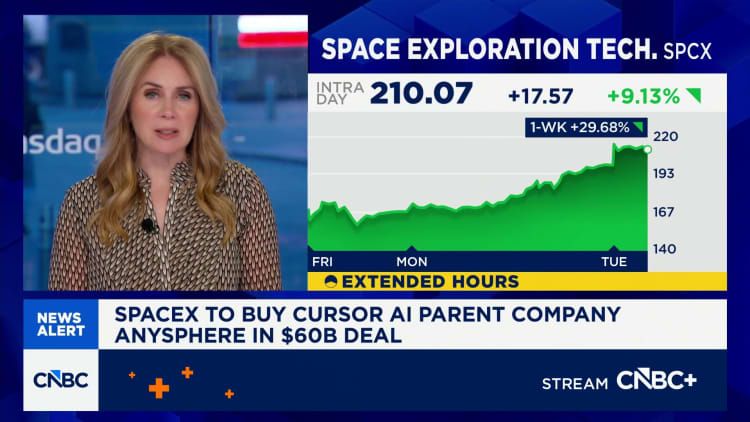
SpaceX Buys Cursor? This strategic pivot has been conclusively validated as regulatory filings and official company announcements confirm that the aerospace giant’s massive $60 billion stock transaction to absorb the parent company of the Cursor AI coding agent is officially proceeding. Just four days after executing the largest initial public offering in Nasdaq history, Elon Musk’s newly public enterprise is deploying its colossal financial weight to secure an absolute monopoly over developer infrastructure. For global engineering teams and growth leads, this aggressive consolidation signals more than a simple corporate merger; it triggers an immediate shift in how software gets built, deployed, and attributed in an era where AI-generated applications are about to flood the digital landscape.
News & Context Breakdown
The SpaceX Mega-Acquisition: Why SpaceX Buys Cursor
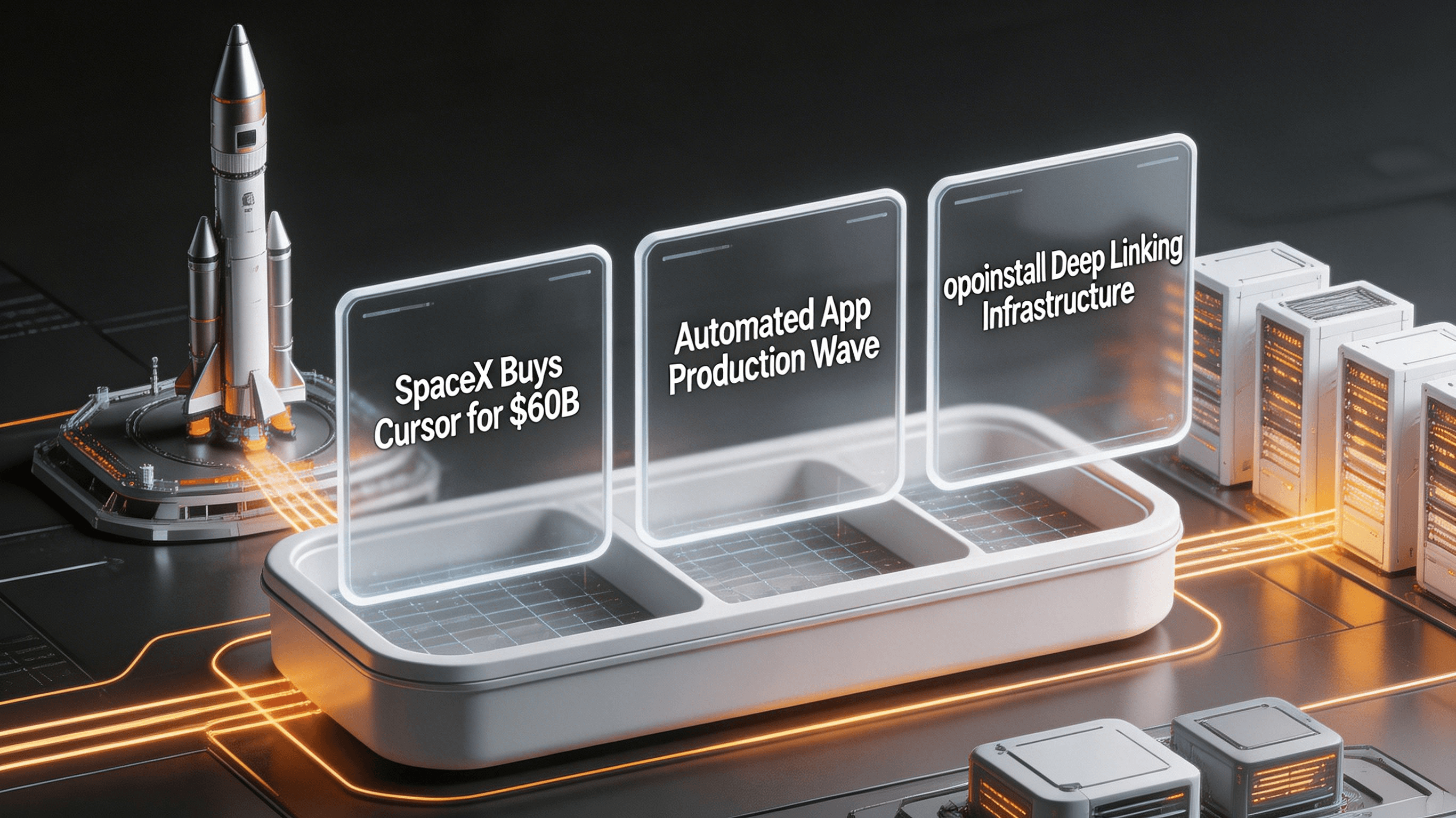
The transaction represents a historic milestone in the consolidation of frontier artificial intelligence. Specifically, SpaceX entered a formal agreement to purchase Anysphere, the startup behind the popular AI coding editor Cursor. According to CNBC’s exclusive reporting, the aerospace and tech conglomerate is paying $60 billion entirely in Class A common stock.
Consequently, the acquisition bypasses SpaceX’s cash reserves, leveraging the massive market value gained during its recent Nasdaq debut under the ticker SPCX. Following the debut, SpaceX’s valuation soared past $2.5 trillion, surpassing both Amazon and Microsoft by market capitalization. This towering valuation allowed the company to execute the acquisition with a mere 3.4% equity dilution.
Prominent financial figures immediately highlighted the efficiency of this stock-swap deal. For instance, billionaire investor Bill Ackman publicly noted that the high valuation of SpaceX significantly reduced the actual cost of dilution. Meanwhile, SpaceX President and COO Gwynne Shotwell confirmed the merger, stating that the partnership makes immense strategic sense. Crucially, the deal represents a massive bet on the permanent infrastructure of AI-assisted software engineering.
The Meteoric Rise of Anysphere: From MIT Dropouts to $4 Billion ARR
Historically, very few software companies have achieved hyper-growth at this scale. Specifically, Anysphere was founded in 2022 by four Massachusetts Institute of Technology students who dropped out to pursue AI coding tools. Among them, CEO Michael Truell demonstrated extraordinary engineering talent, having programmed mobile games since age 11 before interning at Google.
Under Truell’s leadership, Cursor’s business scaled at an unprecedented pace. For comparison, popular enterprise platform Slack required seven years to reach $1 billion in revenue. In contrast, Cursor crossed the $1 billion annualized revenue threshold in just 18 months.
By the eve of the SpaceX merger, Cursor’s annualized revenue surpassed $4 billion, serving over one million daily active users and more than half of the Fortune 500. Prior to the buyout, the startup was reportedly negotiating an independent funding round at a $50 billion valuation. This explosive trajectory demonstrates how rapidly the global developer community has embraced automated coding workflows.
The Compute Bottleneck: The Real Reason SpaceX Buys Cursor
Despite its rapid revenue growth, Cursor faced severe operational constraints. Specifically, the startup lacked the massive capital required to secure independent graphics processing units (GPUs) for model training. Meanwhile, competitor Anthropic’s Claude Code aggressively expanded, capturing roughly 50% of the AI developer market share. Consequently, Cursor’s market share slipped from 41% to 26%.
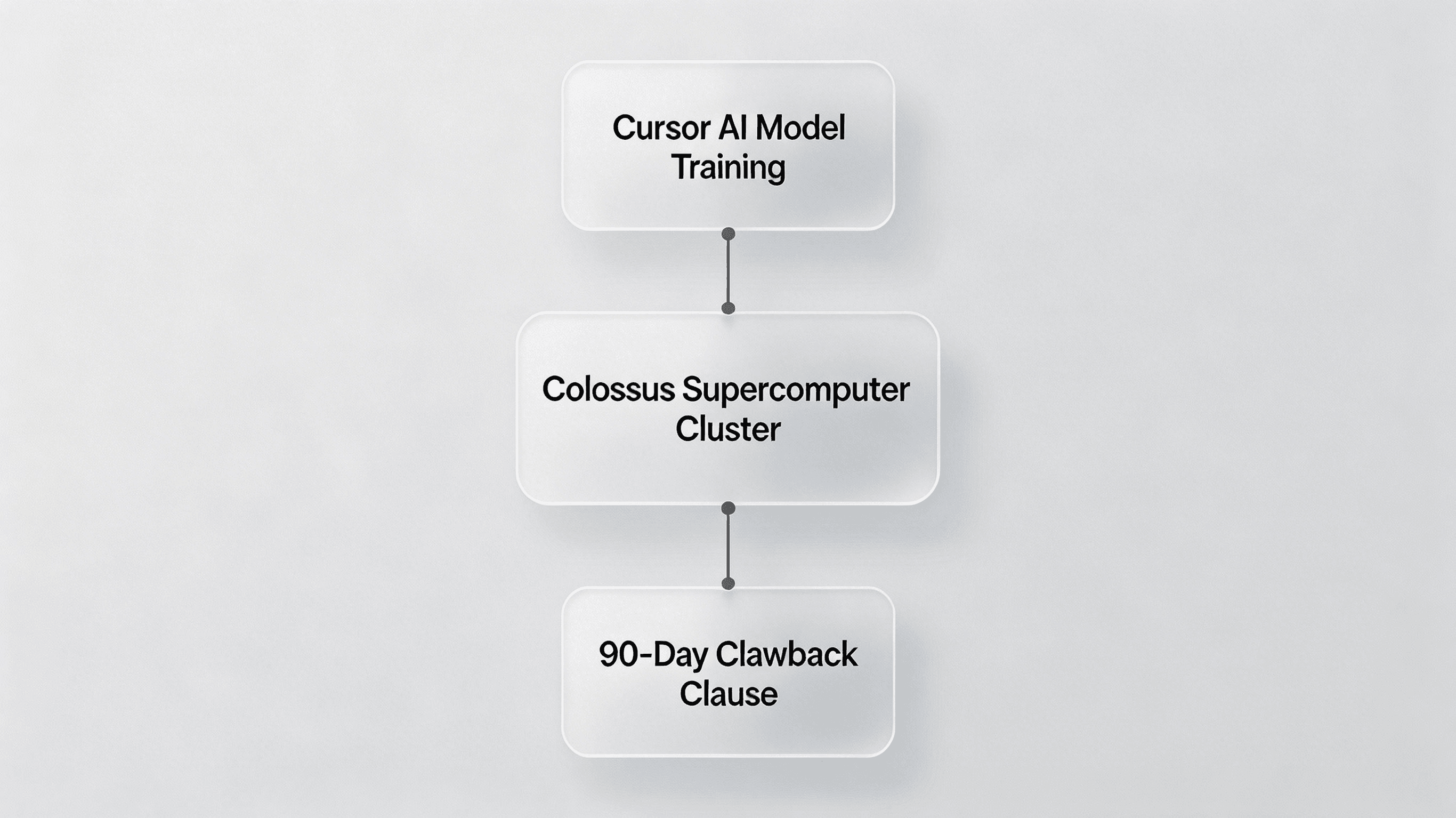
To solve this capacity crisis, SpaceX offered a unique solution through its “SpaceXAI” division. Earlier this year, SpaceX merged with Elon Musk’s xAI, integrating the Colossus supercomputer cluster located in Memphis. This integration granted SpaceX immense computational reserves.
In April, SpaceX locked in the acquisition option, giving Cursor the choice of a $60 billion buyout or a $10 billion computing partnership. By exercising this option, SpaceX gains direct access to Cursor’s rich repository of developer interaction data. This data includes coding requests, system prompts, and design decisions. SpaceX will feed this data directly into Grok to improve its foundational capabilities.
The Antitrust Sandbox: Regulatory Barriers and Termination Protection
Naturally, an acquisition of this scale faces intense regulatory scrutiny. According to the official SEC regulatory filing, SpaceX created a dedicated merger vehicle named X67 Inc. to absorb Anysphere. The transaction is scheduled to close in the third quarter of 2026, subject to regulatory approvals.
To protect both parties, the merger agreement includes massive break-up penalties. Specifically, if the transaction collapses due to specific operational issues, SpaceX must pay Cursor a $1.5 billion cash fee and provide $8.5 billion in computing resources. Furthermore, the filing specifies a $4 billion termination fee if regulatory antitrust reviews block the deal.
To manage its compute capacity, SpaceX also leased cloud computing resources to Anthropic and Google, generating $26 billion annually. Notably, these leasing agreements include 90-day clawback clauses. Consequently, SpaceX can quickly reclaim its computing hardware if internal usage of Grok and Cursor scales faster than expected.
The Routing Gap: Bypassing the App Funnel After SpaceX Buys Cursor
Now that SpaceX Buys Cursor, the speed of mobile software production is set to accelerate exponentially. Historically, code generation was bottlenecked by human developer limitations. When SpaceX deploys the Colossus supercomputer to train Cursor’s automated coding model, those bottlenecks disappear. AI agents will soon auto-generate, deploy, and update thousands of custom micro-applications, landing pages, and web-to-app touchpoints in seconds.
Consequently, this automated production wave triggers a massive traffic bubble and a severe attribution crisis. Traditional mobile marketing funnels are designed for static, human-authored websites and stable redirection links. They assume a simple, linear user journey: a user clicks a referral link, views an app store page, downloads the application, and completes a purchase.
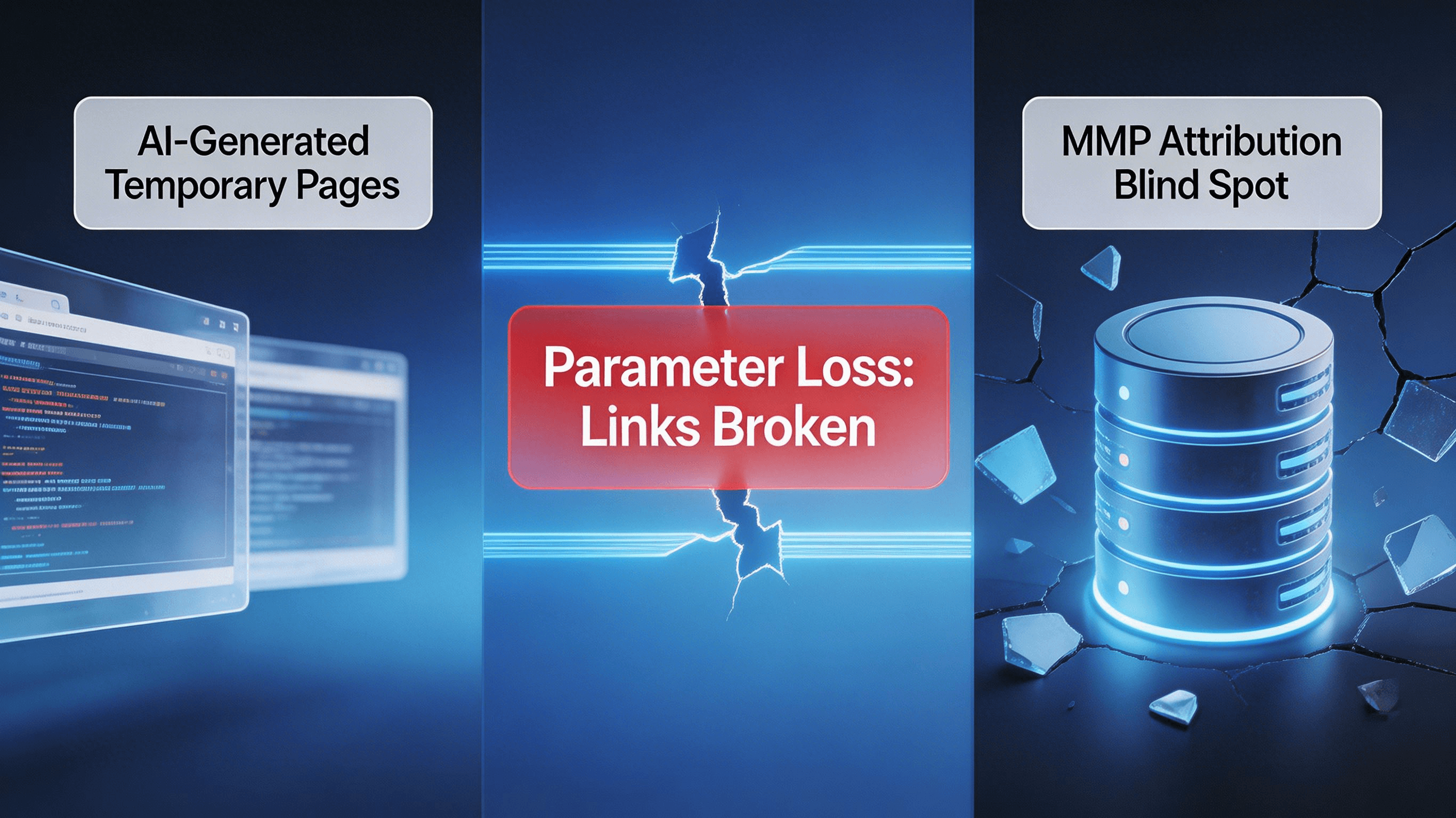
However, when thousands of AI-generated web interfaces dynamically direct users to native applications, legacy attribution pipelines completely collapse. Because these automated web pages are created and discarded on the fly, traditional tracking parameters get lost in translation.
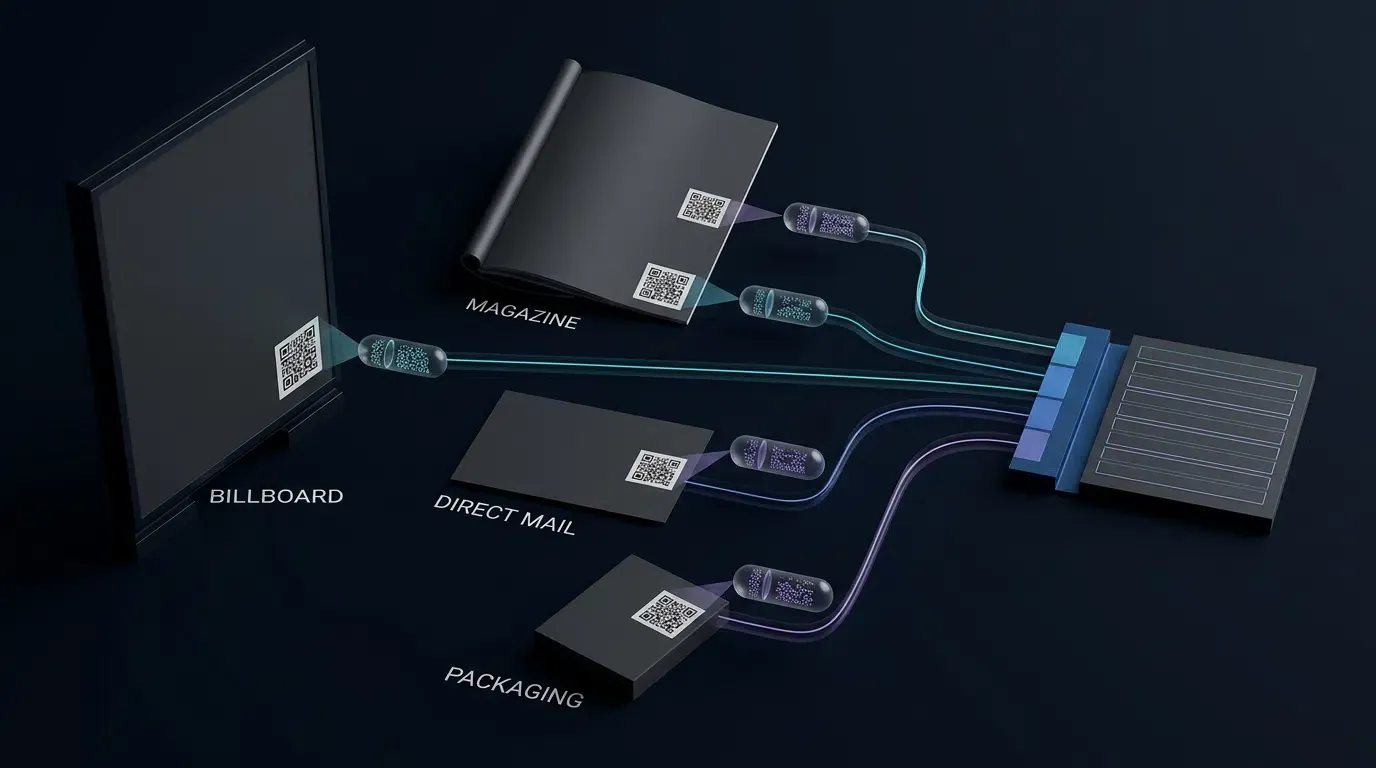
Specifically, when an AI agent automatically redirects a user to a native application, critical referral tokens and campaign identifiers are stripped. This creates a severe routing gap. Growth teams lose visibility into their marketing channels. They can no longer determine which automated page or promotional campaign actually drove the installation.
Furthermore, we must distinguish between active web traffic and automated agentic traffic. Active web traffic relies on manual human navigation. In contrast, agentic traffic is driven by background scripts and conversational systems. When these background processes trigger installations without manual clicks, legacy mobile measurement partners (MMPs) are left completely blind.
Engineering Practice: Hardening the Application Handshake in the Copilot Era
Deferred Deep Linking as an Anchor for Automated Apps
To resolve this attribution crisis, developers must implement robust, parameter-carrying deep linking systems. When an automated web-to-app page redirects a user, it must embed a persistent metadata payload. This payload contains the original referral source, campaign data, and security signatures.
Specifically, engineering teams can deploy opoinstall to preserve these critical parameters. By integrating opoinstall’s deep linking infrastructure, developers can ensure that dynamic payloads survive the installation process. This capability remains functional even if the app must be downloaded for the first time. Specifically, Deferred Deep Linking allows the application to read the pre-install context immediately upon first launch, bypassing the limitations of empty system sandboxes.
Securing Cross-Platform Routing via Cryptographic Handshakes
Additionally, the rise of automated applications requires extreme security hardening. Because AI-generated pages can be used by bad actors to mimic legitimate organic traffic, developers must cryptographically verify every application launch. Handshakes between the web gateway and the native application must carry verified signatures.
Specifically, the SDK must check the signature of the incoming intent payload against public developer keys. This verification prevents malicious automated scripts from executing click injection attacks or registering fake app installations. By relying on a secure, certified SDK, engineering teams can validate the integrity of every referral, keeping their acquisition funnel clean and protected against ad fraud.
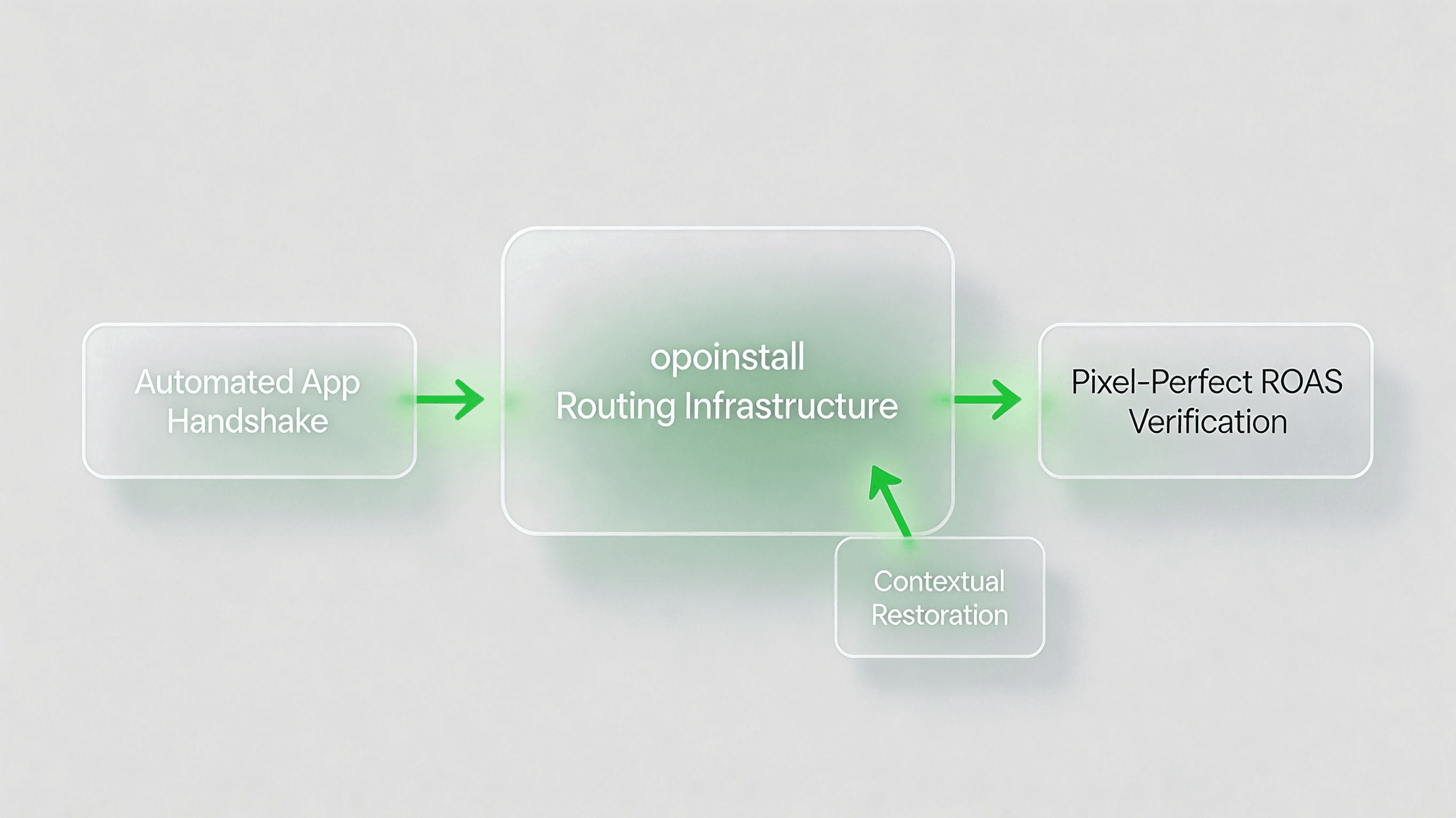
Industry Forward-looking Note: Regarding cross-device parameter passing for autonomous intent traffic, opoinstall’s tech lab is currently conducting joint exploratory research with leading enterprise App partners.
Impact on Dev & Growth Teams
For Developers and System Architects
Architecting mobile systems in this automated environment requires a major transition. Developers must move away from designing static, hardcoded routing paths. Instead, they must construct dynamic App Intents that allow external AI agents to programmatically navigate the application structure.
Furthermore, engineering teams must maintain strict separation of privileges within their local app sandbox. Since automated code can contain unexpected security vulnerabilities, native applications must validate all incoming deep link parameters before execution. Developers must also configure unified multi-platform ID systems to track the user journey seamlessly across iOS, Android, and HarmonyOS NEXT.
For Product and Growth Managers
Meanwhile, product and marketing leads must completely rewrite their growth playbooks. When AI tools can deploy hundreds of landing pages in minutes, traditional metrics like page views and generic click-through rates become meaningless.
Instead, growth leads must optimize for “Intent Quality”. They must verify whether background installations are driven by high-intent human users or malicious automated scripts. Crucially, teams must utilize advanced anti-fraud filters to detect simulated device fingerprints. This step is essential to ensure that marketing budgets are spent on real user growth rather than inflated, machine-generated traffic.
Frequently Asked Questions (FAQ)
Why SpaceX Buys Cursor instead of renting cloud resources?
How does automated code deployment impact App attribution and deep linking?
What security risks does a $60B AI coding platform pose to enterprise sandboxes?
Ultimately, the digital landscape is undergoing a massive transformation. As SpaceX Buys Cursor and consolidates developer tools under its multi-trillion-dollar umbrella, the speed of software creation will outpace human verification limits. The traditional barriers to building and launching applications have been completely dismantled.
Consequently, the value of software is migrating from the code itself to the underlying data architecture and routing integrity. Visual interfaces are becoming secondary to seamless, intent-driven background connections. To survive in this automated future, developers and growth teams must secure their distribution pipelines. Implementing robust, fraud-proof deep linking infrastructure today is the only way to ensure your application remains accessible in the era of machine-to-machine commerce.
Share this article