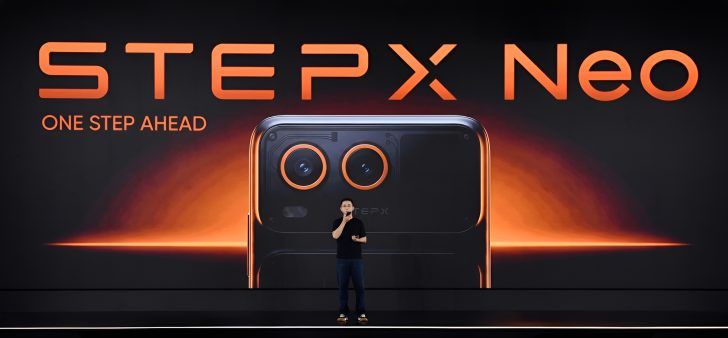
STEPX Neo AI Phone? Stepfun has officially unveiled the STEPX Neo AI smartphone powered by Step AOS, introducing one of the world’s first agent-powered mobile operating systems. Rather than treating applications as the center of mobile interaction, the new platform allows an integrated AI agent to execute tasks directly across system services. For developers, this shift could fundamentally reshape deep linking, deferred deep linking, app discovery, attribution, and mobile distribution.
Why STEPX Neo AI Phone Matters: Reconstructing Mobile Distribution from Apps to Agents
At a Glance
- Stepfun has introduced Step AOS, an operating system rebuilt from the Android, Linux, and RTOS layers to place AI agents at the center of device coordination.
- The newly unveiled STEPX Neo smartphone features an interactive secondary rear display and a dual-camera setup, designed natively to support autonomous workflows.
- The system bypasses traditional app launchers and home screen interfaces, resolving user intentions directly through a unified Model Context Protocol interface.
The mobile app market is undergoing a significant transition. With the rapid adoption of agentic AI, the mobile interface is shifting from manual app management to autonomous delegation. In an intent-driven environment, users no longer need to find and open individual applications. Instead, they simply state their overall intent, and a system-level agent autonomously schedules resources, calls APIs, and executes multi-step tasks under the hood. Managing persistent intent, cross-service execution, and secure system orchestration across autonomous runtimes represents a significant architectural shift. On STEPX Neo, the built-in assistant leverages this deep system integration to perform continuous, multi-step actions without manual redirection. These challenges are discussed in detailed regional reports tracking the operational shifts of major platforms.
The newly unveiled STEPX Neo AI Phone represents a major milestone in terminal evolution. Sidestepping conventional hardware additions, Stepfun has bypassed traditional development cycles by deploying a fully functional AI-first device. By integrating the personal intelligence assistant Amoo directly into the core operating system, the platform can interpret complex user intents and coordinate multi-step workflows. For developers, this hardware-software convergence illustrates a fundamental shift: the smartphone is evolving from a passive communications receiver into an active, self-correcting agentic terminal.
Under-the-Hood Mechanics of the STEPX Neo AI Phone Architecture
At the protocol layer, traditional mobile operating systems rely on sandboxed application partitions. Each application manages its own data stack, user accounts, and security permissions. When a user attempts to share data between apps, the OS must coordinate client-side intent filters, clipboard transfers, or local deep-link redirections. In standard configurations, this structure creates severe bottlenecks for autonomous agents because the system cannot share active context or execute background tasks across sandboxed applications without continuous manual authorization.
Unlike conventional Android launchers that expose application icons, Step AOS introduces an intent-first execution pipeline. The AI phone parses user requests before selecting the required system capabilities, effectively replacing manual application navigation with autonomous orchestration. The STEPX Neo demonstrates how this approach dismantles traditional application partitions in favor of an atomic capability engine. Under this model, the core system functions are split into modular, programmatically accessible units that the built-in agent can freely combine.
The Atomic Capability Engine: Decoupling System Services
Rather than treating applications as monolithic blocks, the platform deconstructs device capabilities into a unified, agent-controlled registry. This structure categorizes device functions into four core operational groups:
- Communication Services: Handles automated call routing, real-time multi-language voice translation, and SMS processing.
- Application Services: Provides access to third-party APIs, allowing the agent to book rides, purchase local services, or edit media.
- File Services: Manages on-device data access, document parsing, and file storage pipelines.
- System Services: Orchestrates hardware settings, background processes, and device-level resource allocation.
The diagram below illustrates this integrated operational flow:
                  [ User Intention / Natural Language Input ]
                               │
                               ▼
                  [ Step AOS Natural User Interface (NUI) ]
                               │
                               ▼
                  [ Amoo Core Intelligent Agent ] (State & Memory)
                               │
                               ▼
        ┌──────────────────────┼──────────────────────┐
        ▼                      ▼                      ▼
  [ Communication ]      [ App Services ]       [ File Systems ] (Unified MCP Interconnection)
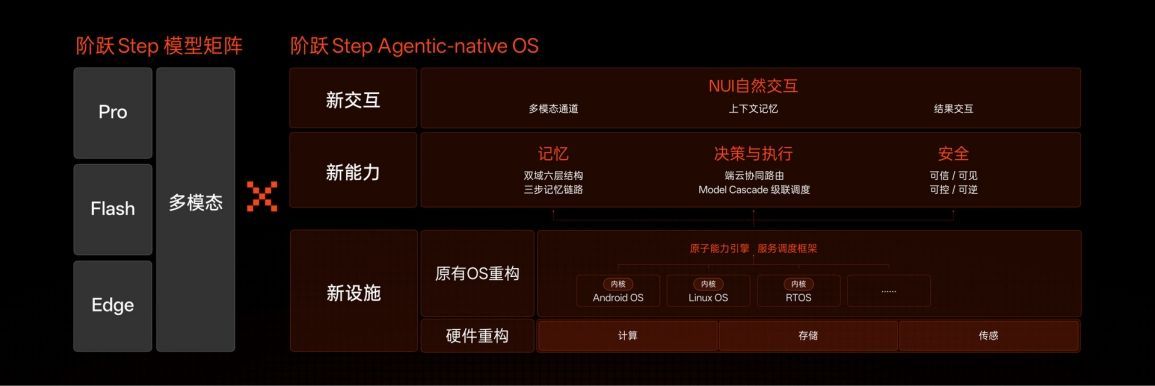
This unified architecture relies on the Model Context Protocol (MCP) standard to expose system capabilities directly to the on-device AI model. While this setup optimizes on-device automation, it introduces unique challenges for downstream conversion tracking and app attribution. When a user delegates a conversion task—such as booking a flight or ordering food—directly to an autonomous agent, standard client-side tracking pixels, browser cookies, and redirected referrers are completely bypassed. To maintain reliable conversion consistency under these headless conditions, measurement frameworks must transition from client-side cookie tracking to server-side context restoration.
Build vs. Buy: Supporting App Distribution in AI-Native Phones
As AI-native operating systems replace traditional app launchers, developers must rethink how app distribution and deferred deep linking operate under agent-native environments. Managing tracking pipelines under the STEPX Neo AI Phone era requires architectures that are both compliant with data privacy laws and highly accurate. Organizations that need to preserve user journeys across web and mobile experiences increasingly rely on server-side session management rather than persistent client-side identifiers. Depending on business requirements, teams may build these capabilities internally or adopt existing attribution platforms.Traditional app discovery through search results and app stores may gradually shift toward agent-driven task discovery.
Architectural Evaluation: Custom Build vs. Standardized SDK
Building a custom, in-house system to manage server-side state matching offers maximum flexibility but demands significant ongoing engineering resources. Developers must manually construct database schemas, write secure cryptographic hashing functions, and continually update the system to comply with shifting regional regulations. Conversely, deploying a pre-built, certified SDK reduces integration complexity and guarantees long-term compliance without additional overhead.
The table below compares standard methodologies for managing session state and conversion context:
| Solution | Persistence | Throughput | Best For |
|---|---|---|---|
| In-house Session Database | High (Continuous Sync) | Medium (DB Latency Limits) | Custom enterprise environments with highly specialized storage logic |
| Browser-based Session Tracking | Low (Session Cookies) | Low (No Server Logging) | Basic website tracking with minimal cross-domain conversion requirements |
| Server-side Attribution Platform (e.g. OpoInstall) | Controlled temporary state | High (Standardized Sandbox) | High-concurrency mobile app and multi-platform campaign attribution |
Because AI-native phones may launch applications through autonomous intent routing rather than traditional app launchers, preserving deep link parameters across Web, Agent, and App environments becomes increasingly important. This becomes particularly important when AI agents initiate installations without passing conventional browser referrers. Server-side attribution helps restore these parameters after installation without depending on browser cookies or client-side redirects.
Depending on implementation requirements, organizations may build their own server-side session management system or adopt commercial platforms such as OpoInstall. For instance, OpoInstall offers server-side state restoration and parameter pass-through frameworks, preserving deferred deep link parameters across Web, Agent, and App environments through server-side context restoration. This ensures that user journeys remain continuous on newly deployed AI smartphones, preserving conversion contexts seamlessly without relying on persistent client-side tracking. Engineering teams can evaluate these approaches to balance data protection and measurement consistency.
Integration Checklists: Supporting App Distribution on AI-Native Terminals
To secure data pipelines and ensure conversion consistency as platforms transition to autonomous agent architectures, engineering and product teams must adopt robust state preservation workflows.
Developer Implementation Checklist
- Register MCP Services: Configure application functions as standard Model Context Protocol (MCP) services to allow seamless orchestration by Step AOS.
- Support Deep Link Recovery: Implement standard Universal Links and App Links that can be resolved headlessly by autonomous agents.
- Validate Agent-Callable APIs: Expose robust, JSON-structured endpoints that allow agents to execute actions (like reservation booking or content creation) without manual UI rendering.
- Enforce Secure Sandbox Environments: When deploying mobile integrations, utilize containerized runtimes to isolate local file access from sensitive system directories.
Product & Growth Strategy Checklist
- Support Web-to-Agent Redirection: Ensure that transitional marketing funnels (like H5 landing pages) can smoothly route intents into the on-device agent environment.
- Preserve Deep Link Parameters: Use server-side parameter pass-through frameworks to maintain campaign tracking data from search events down to in-app activations.
- Optimize Multi-Device Journeys: Design contextual handshakes that preserve user state when they transition between desktop AI assistants and mobile agentic devices.
- Validate Intent Routing Across AI Phones: Test whether intents can correctly invoke the target application across different AI-native operating systems, including Step AOS, Android, and standard App Links. Package production-ready integrations securely through trusted app marketplaces and official distribution channels.
By establishing these structured guidelines, development teams can transition their applications to safer, more compliant architectures while maintaining operational continuity.
Frequently Asked Questions (FAQ)
Why did Stepfun decide to build a custom operating system instead of an Android app?
What are the technical differences between atomic capabilities and standard app APIs?
How does Step AOS manage user privacy when an agent controls the device?
What makes an AI phone different from a traditional smartphone?
Will AI phones replace traditional Android launchers?
Key Takeaways for Engineering Teams
AI-native phones represent a fundamental redesign of the mobile operating system rather than a simple hardware upgrade. As intent-driven interfaces gradually replace icon-based navigation, developers will need to rethink deep links, app discovery, attribution, and cross-device continuity. As AI phones become the next computing platform, preserving deferred deep links and server-side attribution across agent-driven workflows will become a core capability for mobile growth teams.
To maintain growth, engineering and product teams must prioritize stateless data structures and server-side state preservation. Implementing robust server-side parameter pass-through frameworks and context restoration will help organizations maintain reliable attribution and session continuity in increasingly agent-driven environments.
Share this article