What changes if Stripe acquires OpenRouter for more than $7 billion? Bloomberg reported on August 16, 2026 that Stripe had finalized an agreement to acquire the AI model gateway, which would bring a company that routes requests across hundreds of models into the same corporate group as the payments infrastructure it already uses. For developers, the more immediate question is how AI model routing, token usage, and billing could evolve under common ownership. Rather than managing fragmented vendor contracts, engineering teams are navigating a shifting landscape where model inference, token metering, and payment settlement may operate within a single coordinated corporate entity.
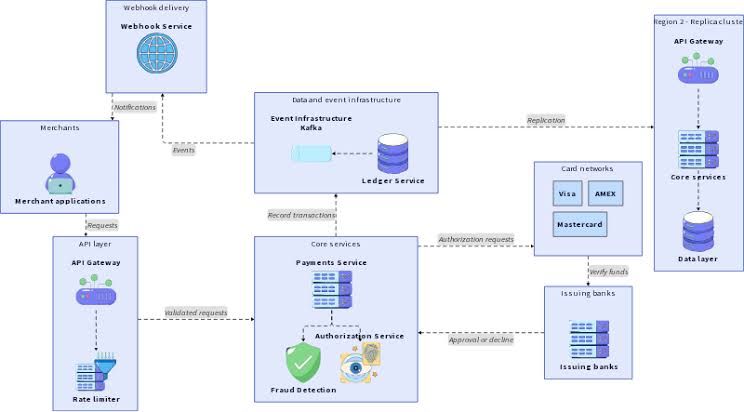
Why Stripe Is Acquiring OpenRouter
At a Glance
-
Bloomberg reported that Stripe agreed to acquire OpenRouter in a transaction valued at more than $7 billion, representing more than five times its May Series B valuation.
-
OpenRouter routes requests across more than 400 distinct models for over 8 million users, charging a 5.5 percent platform fee on pay-as-you-go credit purchases.
-
The proposed transaction would bring token consumption and payment infrastructure under one corporate owner, potentially changing the neutrality dynamics of independent AI gateways.
OpenRouter addresses a specific integration problem: developers can access hundreds of AI models through a single API instead of maintaining separate integrations with each model provider. For early-stage startups and enterprise engineering teams alike, integrating generative AI has introduced operational friction. Developers frequently juggle dozens of distinct API keys, disparate rate limits, inconsistent uptime guarantees, and fragmented monthly billing cycles across providers like OpenAI, Anthropic, Google, and open-source hosting platforms.
OpenRouter, founded in 2023 by former OpenSea co-founder Alex Atallah, addresses this fragmentation by establishing a unified API gateway. By exposing an interface compatible with standard OpenAI client libraries, the platform allows developers to query hundreds of models through a single access point. The gateway supports model fallback, configurable provider routing, usage telemetry, and consolidated billing, charging a 5.5 percent platform fee on credit purchases for pay-as-you-go usage.
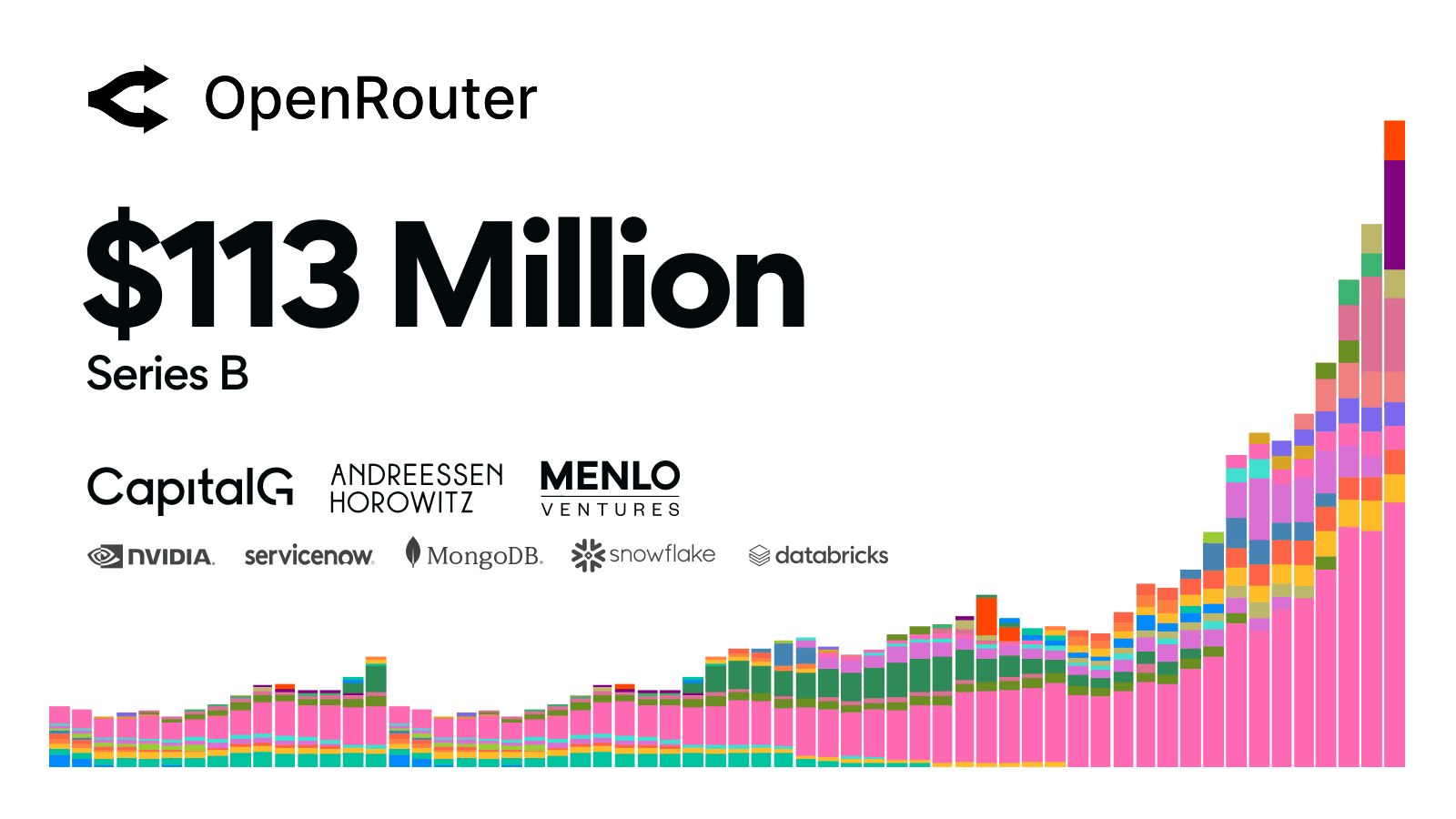
OpenRouter’s reported acquisition price is notable against its May 2026 Series B, when the company raised $113 million at a $1.3 billion valuation led by Alphabet’s growth fund CapitalG, alongside Sequoia Capital, Andreessen Horowitz, and Menlo Ventures. The reported price would value the company at more than five times that valuation.
How OpenRouter Handles Multi-Model Routing
At the architectural level, the emergence of multi-agent workflows and autonomous systems has transformed API consumption from sporadic, human-triggered queries into high-frequency, machine-to-machine transactions. When autonomous agents operate continuously, they require dynamic model switching—directing simple classification tasks to low-cost models while escalating complex reasoning tasks to frontier systems.
Stripe was already providing payment, invoicing, tax, and fraud infrastructure to OpenRouter before the reported acquisition. Bringing both layers under one corporate umbrella connects the routing decision directly to the underlying financial settlement system.
A Simplified AI Request and Billing Flow
A simplified request flow through a unified gateway architecture can be represented as follows:
-
Ingestion and Authentication: The incoming request reaches the gateway through an OpenAI-compatible API endpoint, where authentication and account-level controls are applied.
-
Dynamic Route Selection: The gateway selects an eligible provider based on configured routing preferences, availability, price, and performance characteristics.
-
Usage Telemetry & Billing: The system records token usage and billing information associated with the completed request.
The diagram below provides a conceptual view of how OpenRouter routing and Stripe billing infrastructure could interact if the reported acquisition closes:
[Client Application / Agent]
             │
             ▼ (Unified OpenAI-Compatible API Call)
[OpenRouter AI Gateway]
             │
             ├──► [Target Model Provider (OpenAI / Anthropic / Google)]
             │
             ▼ (Usage & Telemetry Data)
    [Stripe Billing & Payments] (Invoicing, Tax & Settlement)
This consolidation highlights important architectural considerations for developers. OpenRouter did not sell its own proprietary models, which helped position it as an independent routing layer. If the reported acquisition closes, the entity operating the routing layer would also own the payments infrastructure used by OpenRouter, raising questions about whether future routing algorithms, volume discounts, or bundled billing terms could favor specific ecosystem partners. Furthermore, routing application traffic through a single centralized gateway concentrates operational risk, making gateway uptime and fallback configurations critical.
Build vs. Buy: Managed AI Gateways vs. Custom Routing
Engineering teams evaluating multi-model integration must decide between constructing custom routing layers in-house or adopting managed gateway platforms. Constructing an in-house proxy requires building custom token-counting parsers, load balancers, rate-limit queues, and credential vaults. Conversely, utilizing a managed gateway simplifies development but incurs platform fees and introduces an external dependency.
The table below compares architectural trade-offs across common integration approaches:
| Dimension | In-House Routing Proxy | Managed AI Gateway (OpenRouter) | Direct Provider APIs |
|---|---|---|---|
| Integration Effort | High (Custom token counters & failover) | Low (Unified API integration) | Moderate (Multiple client SDKs) |
| Vendor Flexibility | High (Manual endpoint configuration) | High (Abstracted multi-model catalog) | Moderate (Requires integrating each provider) |
| Billing Complexity | High (Separate vendor invoices) | Low (Consolidated invoice + 5.5% fee) | High (Multiple independent vendor bills) |
| Infrastructure Overhead | High (Internal proxy maintenance) | Minimal (Managed external service) | Minimal (Direct cloud calls) |
| Single Point of Failure | Managed internally | Dependent on gateway uptime | No shared gateway dependency; each provider remains an independent failure domain |
| Best For | Strict internal data governance & custom clusters | Multi-model prototyping & cost routing | Production workloads requiring direct provider control |
When evaluating these options, engineering organizations must determine whether their primary priority is operational simplicity or complete architectural independence. Teams that adopt managed gateways benefit from rapid prototyping and centralized billing, whereas organizations with specialized compliance or data-residency mandates may choose to maintain direct provider connections.
Integration Checklists: Managing Gateway Routing and Billing APIs
To prepare data pipelines and billing workflows for the evolution of AI gateway platforms, engineering and finance teams should follow a structured evaluation checklist.
Developer Implementation Checklist
-
Implement Local Circuit Breakers: Configure client-side fallback logic to redirect traffic directly to primary model providers if the centralized gateway experiences latency spikes or downtime.
-
Audit Token Metering Telemetry: Cross-reference gateway token usage logs against internal application-level token counters to detect potential billing discrepancies.
-
Abstract Gateway Client Libraries: Ensure model invocation wrappers remain decoupled from proprietary gateway features, allowing rapid switching between direct endpoints and alternative proxies.
Product & Financial Strategy Checklist
-
Audit Platform Take-Rate Overheads: Evaluate whether the 5.5 percent platform fee on credit purchases remains cost-effective compared to managing direct enterprise volume agreements with major model providers.
-
Review Data Retention and Training Policies: Confirm how the gateway handles prompts, outputs, logs, and customer data, verifying whether any data may be retained or used for model training.
-
Monitor API Latency Overheads: Benchmark the network latency introduced by gateway proxy hops against direct provider connections across target geographical regions.
Frequently Asked Questions (FAQ)
What is OpenRouter and why is Stripe acquiring it?
How does OpenRouter handle model failover and fee calculation?
What are the primary risks of using a centralized AI model gateway?
How does Stripe already support OpenRouter's infrastructure?
Key Takeaways for Engineering Teams
Stripe’s reported agreement to acquire OpenRouter shows how AI model access and developer billing are becoming increasingly connected. For engineering teams, that makes flexible integration layers more important as applications rely on multiple model providers.
For engineering teams, this development highlights the importance of maintaining flexible, decoupled integration layers. While managed gateways provide immediate access to a broad catalog of models and simplified billing, engineering organizations must balance these operational conveniences against single-point-of-failure risks, platform fee overheads, and long-term routing governance.
References
Share this article