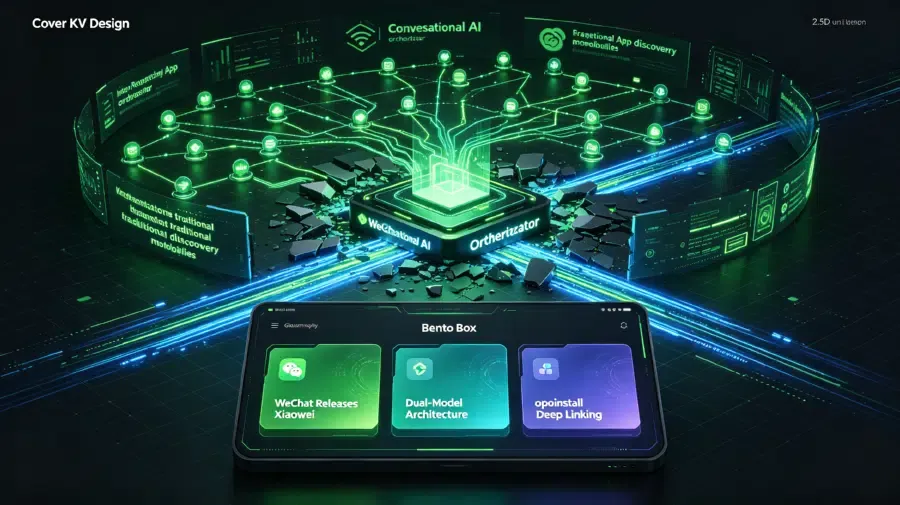
WeChat Releases Xiaowei? This strategic pivot has been conclusively validated as Tencent officially launches its native conversational orchestrator to manage its massive mobile services ecosystem. On June 17, 2026, WeChat Pay formally rolled out its ‘AI Dedicated Card’ (AI专属卡) as outlined in WeChat Pay’s official announcement, establishing a dedicated, main-account-isolated wallet designed to authorize machine-to-machine transactions. For global growth teams, the rapid adoption of this WeChat Releases Xiaowei deployment triggers an immediate attribution crisis because background-scheduled agentic checkouts execute purchases autonomously without human ad clicks or traditional store redirects.

Deconstructing Tencent’s Conversational Orchestrator: Inside the WeLM Framework
The Dual-Model Architecture: WeLM and DeepSeek Hybrid Scheduling
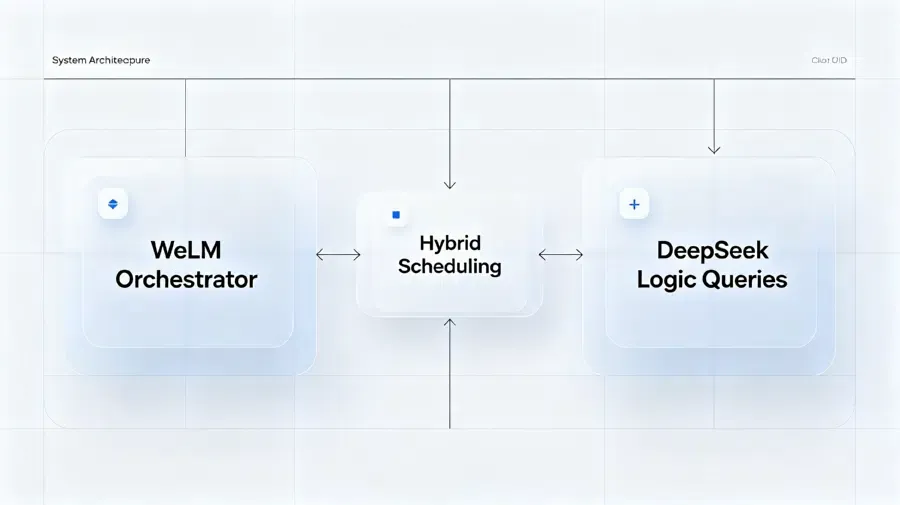
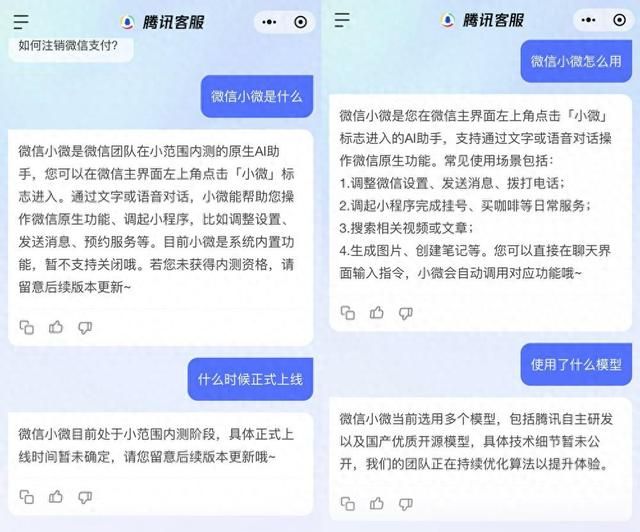
Tencent’s newly released financial and conversational features rely on a highly optimized hybrid model architecture. Specifically, the system utilizes WeLM, a large Chinese language model independently developed by the WeChat team, as its primary orchestrator.
To handle complex analytical tasks, the system dynamically schedules DeepSeek to process advanced logical queries. According to technical documentation, this dual-model setup ensures high-precision intent parsing while maintaining low latency.
Consequently, Xiaowei can execute system-level commands and retrieve external data with remarkable speed. By executing models locally and utilizing cloud-based hybrid scaling, Tencent bypasses the heavy compute limitations that cripple standalone assistants.
From Conversational Prompts to Zero-Interface Mini-Program Execution
Furthermore, this native integration completely bypasses the traditional user interface of the mobile web. On June 8, 2026, WeChat published its official guidelines for developers to access the WeChat AI ecosystem.
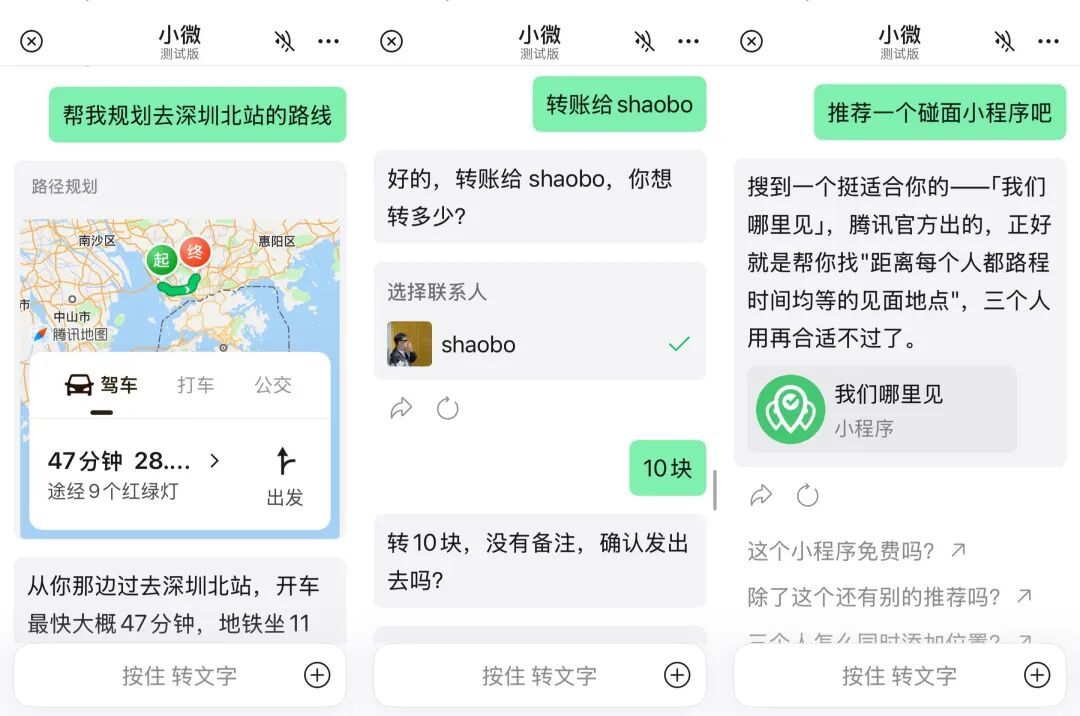
Notably, this document outlines two primary integration pathways: “automatic” and “development” modes. Through these modes, Xiaowei can programmatically query and launch mini-programs like Meituan, JD.com, and Ctrip.
For instance, a user can simply state a desire to purchase coffee or book a flight. Xiaowei automatically identifies the user’s intent, launches the corresponding mini-program, and compiles the checkout details in the background.
The “One-Sentence Code” Engine: Redefining Vibe Coding
Perhaps the most disruptive capability of the new platform is its natural language code compilation. Selected beta users can now construct functional software tools using plain-text prompts.
Specifically, a user can instruct Xiaowei to build a running tracker or an anniversary recorder. Within seconds, the system compiles a working mini-program prototype complete with database stubs, buttons, and simple metrics.
Although these generated mini-programs remain restricted to personal use, they represent a massive leap in software democratization. By allowing non-technical users to build and run custom tools on demand, Tencent is turning Vibe Coding into a practical, mainstream reality.
The Social Radar: Analytical Telemetry and Friendship Graphs
Additionally, Xiaowei has unprecedented access to WeChat’s underlying social layer. Because the assistant operates natively within the system, it can analyze real-time communication feeds and content preferences.
Notably, a user can ask Xiaowei to identify which videos or articles their acquaintances are currently liking. The system securely parses the social graph, producing structured, aggregated summaries of group chat topics and trending media.
This deep analytical capability is difficult for any third-party AI to replicate. It transforms the 1.4-billion-user relationship chain and content accumulation that WeChat has built up over the years into an active, conversational resource.
The Disappearing Interface: Bypassing the App Funnel in Agentic Ecosystems
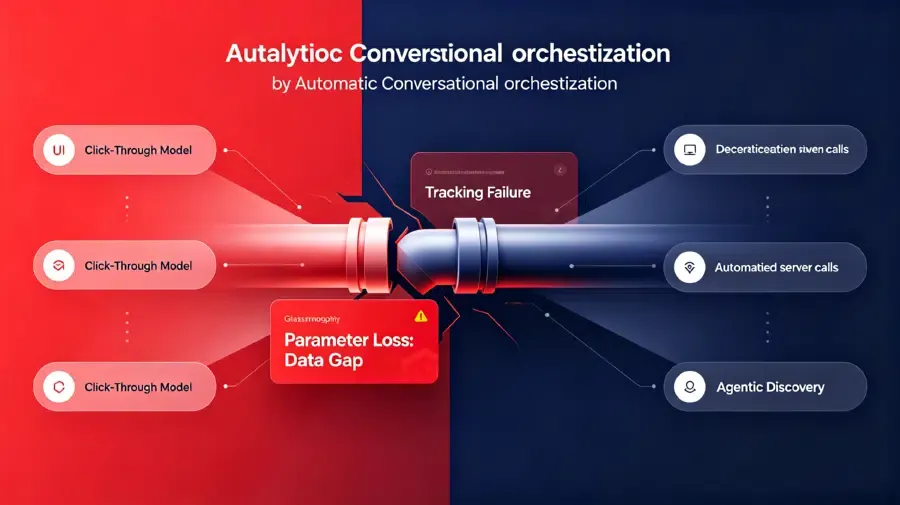
The Erosion of the Click-Through Model
The deployment of the standard signals a major shift in how applications are discovered and executed. Historically, the mobile internet relied on visual web interfaces and manual user clicks. Businesses optimized search rankings and visual ads to guide users to their application storefronts.
However, as agentic discovery standardizes, the traditional user journey begins to erode. Agents will locate services programmatically, bypassing human-focused marketing funnels entirely.
Consequently, we observe a transition from active web traffic to intent-driven traffic. Humans no longer navigate through multiple links to perform a task. Instead, background software queries catalogs directly, leaving traditional ad tracking completely obsolete.
The Challenge of Parameters Loss in Agentic Discovery
Traditional app routing depends on cookies and URL redirections to map the user journey. When an agent automates the tool discovery, these redirection mechanics are eliminated.
The agent establishes a direct API handshake. As a result, critical referral parameters and marketing attribution tags are stripped during transit.
Mobile measurement platforms receive empty parameter packages. Consequently, developers lose the ability to track the origin of the sale, creating a massive data gap.
Reference Architectures: Restoring Referral Metadata Across Non-Android Runtimes
Rebuilding the Parameter Handshake
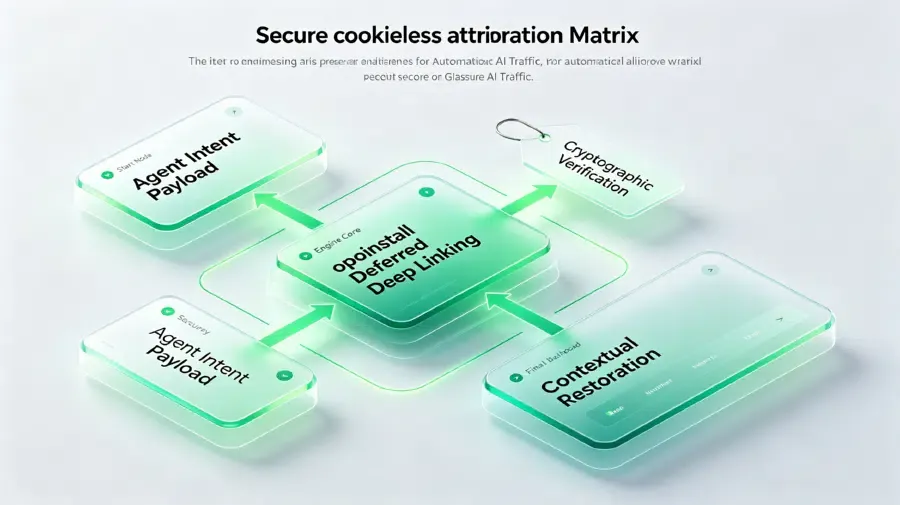
To bridge this semantic routing gap, software architects must deploy secure parameter-preservation frameworks. When an external agent invokes an application, it must transmit a verified payload containing the user’s original intent, referral parameters, and security tokens.
Crucially, developers can establish a resilient solution using the Deferred Deep Linking framework. This system ensures that dynamic payload parameters survive background installation loops. Even if the device lacks the native application, the contextual restoration infrastructure preserves the intent payload, passing it securely to the app upon first launch.
Cryptographic Verification for Machine-to-Machine Transactions
Additionally, securing these automated transactions requires strict cryptographic handshakes. Because background agents operate without visual human supervision, malicious scripts can attempt to spoof transaction requests.
To prevent this, every deep link routing request must carry a verifiable cryptographic signature. The application must validate this signature against public developer registries before executing any action.
Enforcing a secure Deferred Deep Linking framework allows development teams to execute these validations automatically. This process protects the application sandbox from fraudulent installations and secures the transaction pipeline against ad fraud.
Industry Forward-looking Note: Regarding cross-device parameter passing for autonomous intent traffic, opoinstall’s tech lab is currently conducting joint exploratory research with leading enterprise App partners.
Impact on Dev & Growth Teams
For Developers and System Architects
Integrating a native WeChat Pay AI Card into the application architecture requires a major shift in development practices. Engineers must transition from designing traditional visual navigation paths to constructing detailed App Intents. These intents allow system-level agents to read app structures and query data programmatically.
Furthermore, developers must implement strict signature verification to validate all incoming deep link payloads. This validation prevents rogue agents from executing local sandbox escapes or triggering fraudulent purchases. Architects must also configure unified multi-platform ID systems to track the user journey across iOS, Android, and HarmonyOS NEXT.
For Product and Growth Managers
Meanwhile, product and marketing leads must redefine their growth metrics. In an agentic environment, traditional KPI metrics like page views, bounce rates, and session lengths lose their value.
Instead, growth leads must optimize for “Intent Capture Rates”. They must ensure their application provides highly structured, machine-readable metadata that agents can parse easily.
Additionally, teams must deploy advanced anti-fraud filters to identify and block automated script-based downloads. This protection ensures that acquisition budgets are spent on real user growth rather than inflated, machine-generated traffic.
Frequently Asked Questions (FAQ)
How does the WeChat Pay AI Card prevent unauthorized spending?
Why does conversational app orchestration trigger an attribution crisis?
How can developers verify agent-initiated deep links?
Ultimately, the traditional click-based economy is facing a rapid decline. As payment networks and device operating systems transition to autonomous agentic architectures, the value of software is shifting to the underlying routing layer.
Consequently, building robust, parameter-secure deep linking backbones is no longer a luxury. It is a baseline operational requirement. By preparing your application architecture for the agentic economy today, you ensure your software remains accessible, verified, and profitable in the post-screen era.
Share this article