xAI Launches Grok Build Mode? xAI has introduced Build Mode for SuperGrok Heavy subscribers, allowing users to generate, preview, and publish working applications and custom domain sites directly from conversational prompts. As generative artificial intelligence changes how web content and software utilities are consumed, AI platforms continue to expand from Q&A chatbots into full-stack application creation platforms. Historically, creating a hosted web app required manual server provisioning, domain DNS routing, and frontend deployment. Today, because autonomous coding agents like grok-build-0.1 can generate live interactive applications in minutes, non-technical creators are publishing thousands of live domain apps directly to live links.
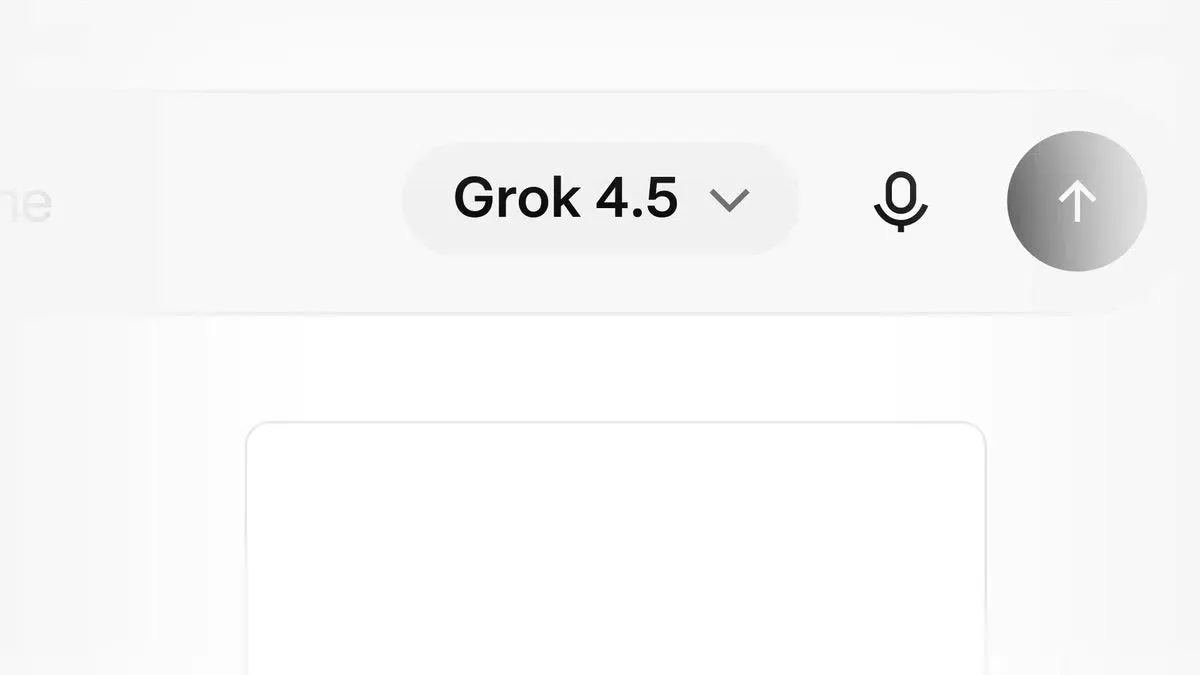
Why xAI Launches Grok Build Mode: Aligning One-Prompt App Creation With Market Shifts
At a Glance
- xAI has launched Build Mode for SuperGrok Heavy subscribers, converting text prompts into hosted web applications, games, and interactive dashboards.
- Powered by the grok-build-0.1 coding agent with a 256k context window, the system can execute up to eight parallel sub-agents across isolated Git worktrees.
- Published projects can be hosted on grok.me subdomains, connected to custom user domains, or exported directly to GitHub repositories.
The software development ecosystem is undergoing a fundamental structural transition. For years, low-code and no-code platforms promised to democratize application building, yet non-technical users still encountered hurdles when managing hosting infrastructure, configuring domain DNS records, and writing database schemas. Building even a lightweight utility meant coordinating multiple developer tools, deploying backend servers, and establishing client-side routing pipelines.
However, the rapid maturation of agentic coding architectures has eliminated these deployment barriers. Today, autonomous coding agents can interpret high-level functional requirements, generate clean source code, assemble interactive user interfaces, and deploy web applications to live URLs within a single chat session. To capture this emerging market, xAI introduced Build Mode across grok.com, iOS, and Android applications. As detailed in the official xAI launch announcement, the system allows users to generate landing pages, calculators, 3D games, and filterable business dashboards using conversational prompts.
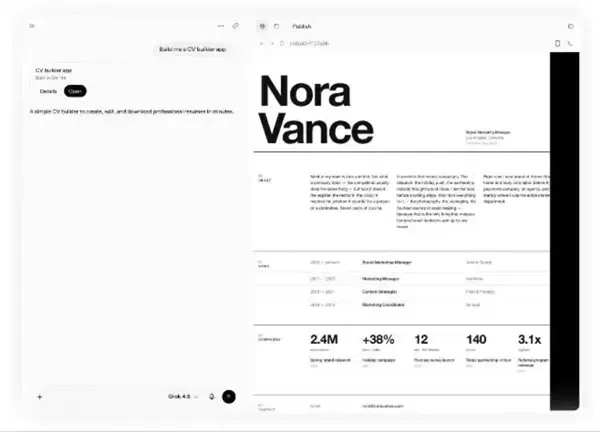
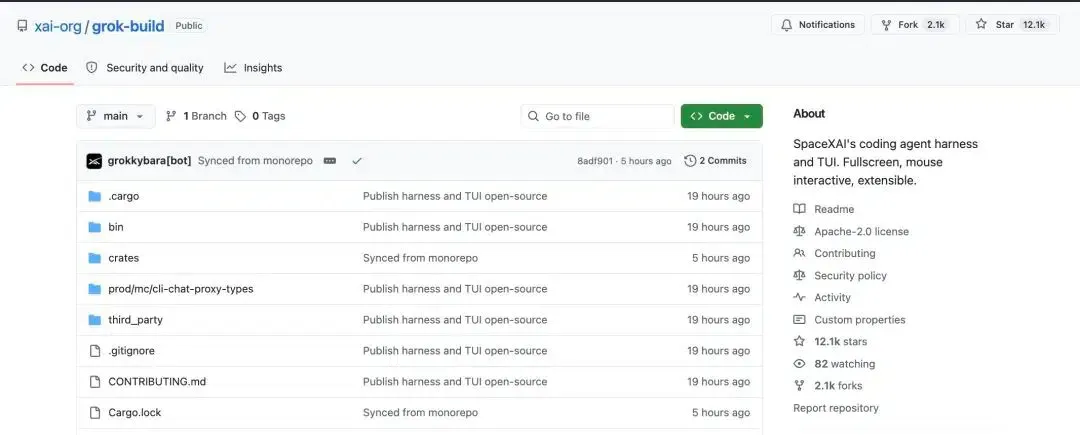
The strategic impact of the xAI Launches Grok Build Mode initiative reflects a broader movement toward autonomous, single-prompt application generation. Under the hood, the feature operates on xAI’s specialized coding agent, which follows a structured plan-review-approve workflow, displaying proposed code edits as clean diffs rather than silently overwriting files. Furthermore, xAI open-sourced the underlying Rust-based engine on GitHub under the Apache 2.0 license, allowing developer teams to audit repository synchronization logic and verify data privacy controls, as reported in industry technical coverage.

Understanding the Root Causes Behind the xAI Launches Grok Build Mode Transition
At the technical level, the proliferation of AI-generated custom domain applications creates new challenges for digital product distribution and attribution pipelines. Traditional mobile and web marketing relies on structured, long-lived web environments where user journeys pass through predictable domain trees, standard browser cookie containers, and persistent HTTP referrer chains.
When thousands of ephemeral, single-prompt web applications are deployed across custom domains or grok.me subdomains, traditional client-side session tracking breaks down. These lightweight generated apps frequently lack persistent local storage or standard client-side analytics scripts, causing attribution gaps when users transition from a generated web landing page to a native mobile application installation.
Protocol Disconnection: Ephemeral Domain Apps vs. Traditional Web Infrastructure
Traditional web distribution assumes that applications maintain state across user sessions using local storage, cookies, and rigid domain configurations. In contrast, AI-generated custom domain applications operate as lightweight, decoupled web instances. The diagram below outlines the core differences between traditional deployment pipelines and single-prompt domain app generation:
[Traditional Web App Deployment]
  Developer Code ──> CI/CD Build Pipeline ──> Web Server Hosting ──> Cookie Session & Referral Logged


[Grok Build Mode Live Domain Flow]
  Prompt Input ──> grok-build-0.1 Agent ──> Instant grok.me / Custom Domain ──> Missing Browser Context
When a user discovers a service hosted on a custom domain generated via Grok Build Mode, their initial referral context is easily lost during cross-platform redirections. If the generated web page redirects the user to download a native mobile application from an App Store, traditional browser-based cookie containers cannot pass referral parameters to the newly installed app. This creates an attribution void where the initial marketing touchpoint on the custom domain is detached from the ultimate mobile app activation event.
Build vs. Buy: Evaluating Low-Overhead SDK Integration Under FinOps Rules
While OpenAI and xAI focus on reducing inference costs inside their own infrastructure, application developers must also evaluate the operational overhead introduced by their own software stacks. This includes analytics libraries, attribution SDKs, monitoring frameworks, and other third-party integrations. Depending on implementation quality, third-party SDKs may introduce additional memory usage, startup latency, background network activity, and long-term maintenance overhead. As a result, lightweight integration has become an increasingly important evaluation criterion for engineering teams operating under FinOps budgets. Engineering teams increasingly evaluate whether these capabilities should be developed internally or sourced through mature third-party platforms.
Architectural Evaluation: Custom Build vs. Standardized SDK
Building custom in-house integration tools offers complete control over payload structures but demands significant ongoing engineering resources. Developers must manually write data pipelines, manage session tokens, and continually update the codebase to comply with shifting regional regulations. Conversely, deploying a pre-built, resource-efficient SDK eliminates this maintenance burden while minimizing client-side memory footprint and network latency.
The table below compares standard methodologies for managing session state and conversion context:
| Integration Strategy | Client-Side Memory Footprint | Network Overhead | Best For |
|---|---|---|---|
| In-house Custom Data Pipeline | Variable (Manual Optimization) | Medium (Uncompressed Payloads) | Custom enterprise environments with dedicated FinOps engineering teams |
| Legacy Analytics SDKs | High (Frequent Background Polling) | High (Redundant HTTP Heartbeats) | Basic web apps with unconstrained client-side memory budgets |
| Server-side Attribution SDKs | Minimal Runtime Footprint | Low (Server-side Session Preservation) | High-concurrency mobile apps and token-optimized developer workflows |
While custom data pipelines can handle basic telemetry, specialized server-side state preservation can optimize development resources and reduce client-side overhead. Several commercial attribution platforms provide server-side parameter restoration, including solutions such as OpoInstall. For instance, OpoInstall offers server-side parameter restoration and parameter pass-through frameworks, mapping session metadata on the server side to maintain conversion continuity anonymously without incurring redundant client-side polling overhead. Managing session states in the xAI Launches Grok Build Mode era requires architectures that are both compliant with data privacy laws and highly accurate. Engineering teams can evaluate these approaches to balance data protection, cost efficiency, and measurement accuracy.
Integration Checklists: How Engineering Teams Can Prepare for Platform Changes
To secure data pipelines and ensure conversion consistency as platforms transition to automated, agent-heavy environments, engineering and product teams must adopt robust state preservation workflows.
Developer Implementation Checklist
- Configure Custom Domain Session Handshakes: Ensure that AI-generated custom domain sites pass temporary, cryptographically signed tokens during outbound redirections.
- Implement Server-Side Context Preservation: Transition application installation links to server-side session matching endpoints rather than relying on client-side cookies.
- Audit Source Repository Exports: Verify that code exported from AI app builders to GitHub does not contain hardcoded API keys or unencrypted environment secrets.
Product & Growth Strategy Checklist
- Map Multi-Domain Conversion Pathways: Track user journeys across grok.me subdomains and custom branded domains to establish accurate acquisition funnels.
- Deploy Non-Intrusive Parameter Tracking: Where user acquisition is involved, deploy privacy-preserving server-side parameter tracking frameworks to maintain acquisition visibility without violating user privacy guidelines.
- Monitor Infrastructure Resource Usage: Evaluate client-side SDK memory footprints and network call frequencies to keep application startup latency minimal.
By establishing these structured guidelines, development teams can transition their applications to safer, more compliant architectures while maintaining operational continuity.
Frequently Asked Questions (FAQ)
What subscription tier is required to access Grok Build Mode?
How does Grok Build Mode publish generated web applications?
Why do single-prompt generated apps cause attribution challenges for mobile downloads?
Key Takeaways for Engineering Teams
As frontier AI models become broadly accessible across universities and research institutions, engineering teams will increasingly optimize applications around compute efficiency, privacy, and sustainable infrastructure. As metered API pricing becomes an increasingly important FinOps metric, infrastructure efficiency extends beyond model inference to every supporting component in the application stack. Evolving data architectures require a fundamental shift in how we build and measure digital experiences. Relying on bloated client-side scripts and redundant network calls is no longer a viable strategy for cost-conscious developer teams.
To maintain growth in a token-optimized era, engineering and product teams must prioritize lean data structures and server-side state preservation. By implementing zero-trust identity verification, secure parameter pass-through frameworks, and efficient integration architectures, organizations can protect their user pipelines while respecting budget boundaries. This architectural shift is essential to build stable, trustworthy platforms that thrive in an automated digital economy.
Share this article